Otāhuhu College Observation | Wednesday 16 June 2021
The title is an adaptation of the phrase ‘Haramai te toki,’ which is part of a longer phrase that normally wraps up a traditional karakia (incantation or prayer) to signal group agreeance and unity. I have adapted this phrase to reference the northern idiom of ‘Haramai tētahi āhua! Which is used to express how ‘amazing’ something or someone is. Here, ‘Toki’ is used to mean both ‘adze’ and ‘champion, star, gun.’ The title aptly describes Tā Jay Mason, a kaiwhakairo (carver) and a gun kaiako (teacher).
Matua Jordan, my kaiāwhina (student and teacher aide), and I had the privilege of spending a whole day with Tā Jay and his Te Reo Māori and Whakairo classes. The purpose of our visit to Ōtāhuhu College was to learn and observe.
Tā Jay received us with a kind smile and a strong rūrū before we set off to his classroom.
Learning Environment
The manaakitanga and whanaungatanga of the teacher and classroom environment are felt from the moment you step into the classroom. There is an open door policy where tauira can enter at any time. In addition, tauira are encouraged to help themselves to the kai in the classroom wharekai (dining area).
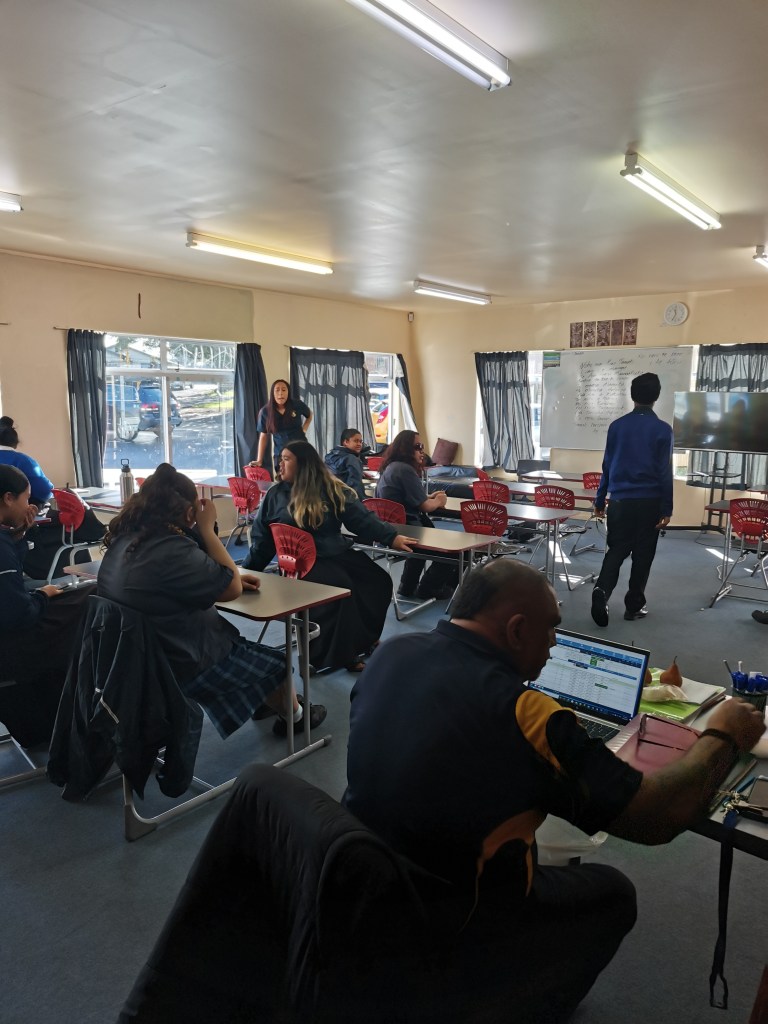
The room was equivalent to the size of a one-bedroom housing unit and was adjacent to the visitor carparks. Inside the classroom, tauira sat on two-seater tables in five rows, in two files. There were no computers. Brown-hued walls were adorned with beautiful whakairo (carvings) and artworks made by past tauira. The room was infiltrated with light through large sliding windows on one side of the class. The whiteboard was situated at the front, and at the back was the teacher’s desk. Joined to the back of the classroom was a built-in wharekai where Tā Jay kept his stash of kai for his tauira when they got hungry.
The first class we observed was his senior multi-level class. It was immediately apparent that his tauira respected him and enjoyed being in his class; as they turned up to class on time, they did not once look at their cell phones, and they were engaged in their classwork during the entire class. The class opened with a karakia supplemented with the mōteatea (traditional chant) Noho Mai Kiwi Tāmaki. Next, we exchanged mihi (greetings), introductions, and waiata (song), after which the tauira resumed their mahi.
Compared to Tāmaki College, the school did not have much technology, but the tauira were happy enough to work in their workbooks and worksheets. Although it was old-school, it was refreshing.
The tauira have a great rapport with Tā Jay, and he cultivates a safe and welcoming space in the classroom for his tauira to ‘be’ Māori.
Planning
In the senior class, I observed that the assessments were the learning. Tā Jay did not have learning intentions and success criteria written anywhere. The senior’s primary goal was to complete their assessments, and each tauira was working on different topics and genres. For example, the Level 2 (Year 12) tauira worked on their second Waihanga Tuhinga (writing) assessment and unit standard work. Two tauira were doing proposals; one was doing an editorial, completing a booklet about Parihaka, writing about a famous person, i.e., Whina Cooper, and writing a recipe. Each tauira was given agency over the choice of assessment type, assessment topic, and assessment genre they did.
Pitch
Although we did not get to see him teach te reo Māori, Tā Jay did his best to pitch the assessment work to the varying levels of his tauira. He only scaffolded his juniors’ sentence structure work, but not so much his seniors as he believed they should already have a good grasp of them. At the senior level, the tauira’s scaffolds are removed and are given the reigns to drive their learning. Empowering learners to drive their learning correlates with student achievement.
Without perhaps knowing it, but by pulling back, Tā Jay had fostered a learning environment that allowed these tauira to build their self-efficacy and self-regulation skills necessary to become independent learners. But, intentional or not, it remains to be seen whether his ‘no-instruction’ approach positively impacts the acquisition of te reo Māori for the tauira.
Challenges
There are a few challenges, he mentions, that have impacted his ability to make a good go at teaching te reo Māori to his tauira. His reo is limited, for one, and he is not a trained kaiako reo Māori. The school originally hired Tā Jay to run the whakairo programme at their kura. Whakairo, he said, was his passion and area of expertise. However, after the resignation of the previous kaiako reo Māori, he was assigned to the role. As a result, Tā Jay assumes the roles of both tohunga whakairo and kaiako reo Māori. In addition, he often receives new tauira who have transferred from other kura into his senior classes. So not only does Tā Jay don two hats, but he also has to adjust and adapt to the influx of new tauira and the te reo Māori capital, or the lack thereof, they bring with them. As the sole kaiako in his department, Tā Jay said that he is doing the best he can with what he has (personal communication, June 16, 2021).
It is a common story in mainstream schools to have only one kaiako in the Māori department. We are usually the face of everything Māori in mainstream schools. Kaiako reo Māori are often called upon as the pōwhiri expert, the karanga/kaikōrero, the kapa haka tutor, translator, counsellor, iwi and whānau liaison, and the organiser of the Matariki and Te Wiki o te Reo Māori celebrations. Kaiako Māori shoulder most of the responsibility of raising tauira Māori achievement, visibility, and pride in their identity. Being the sole kaiako reo Māori in a Western-central mainstream school can be, for most, a very heavy burden to bear. Many opt out or are poached. Ōtāhuhu College is a case in point. The previous kaiako reo Māori, whom I know, left teaching to help her whānau run their business.
While the implementation of mana ōrite mō te Mātauranga Māori into secondary schools is exciting and long overdue, it is likely to become another drain on our existing kaiako reo Māori who will no doubt be leading this kaupapa for their schools from the front.
Presence
Tā Jay had a genuine, authentic, and manaaki teacher presence. The language he used with his tauira reinforced the whanaungatanga, aroha, and manaakitanga he has for his tauira. The tauira have a great rapport with Tā Jay, and he has cultivated a safe and welcoming space in the classroom for his tauira to ‘be’ Māori.
Push
Although there is no real push from Tā Jay in his te reo Māori classes, his tauira demonstrated high engagement levels in their work because tauira are put in a position to push their learning. As agentic learners and learning drivers, each tauira are provided with assessment work zoned within their proximal cognitive development zones . According to Gibbs’ and Poskitt’s extensive literature review (2010), the level of individual challenge is one of the motivational and interest factors that have proven to increase engagement.
There is a strong push in his whakairo class. Available to all tauira in the school, his whakairo students are comprised mostly of the school’s ‘at-risk’ tauira. These are tauira who are at risk of fully disengaging from school. When I walked into the workshops, they were overflowing with tauira and the tapping noises of their carving mallets. The tauira were fully immersed and engaged in their work. Students made money by selling their mahi. Some tauira were in the process of completing commission work for external clients.
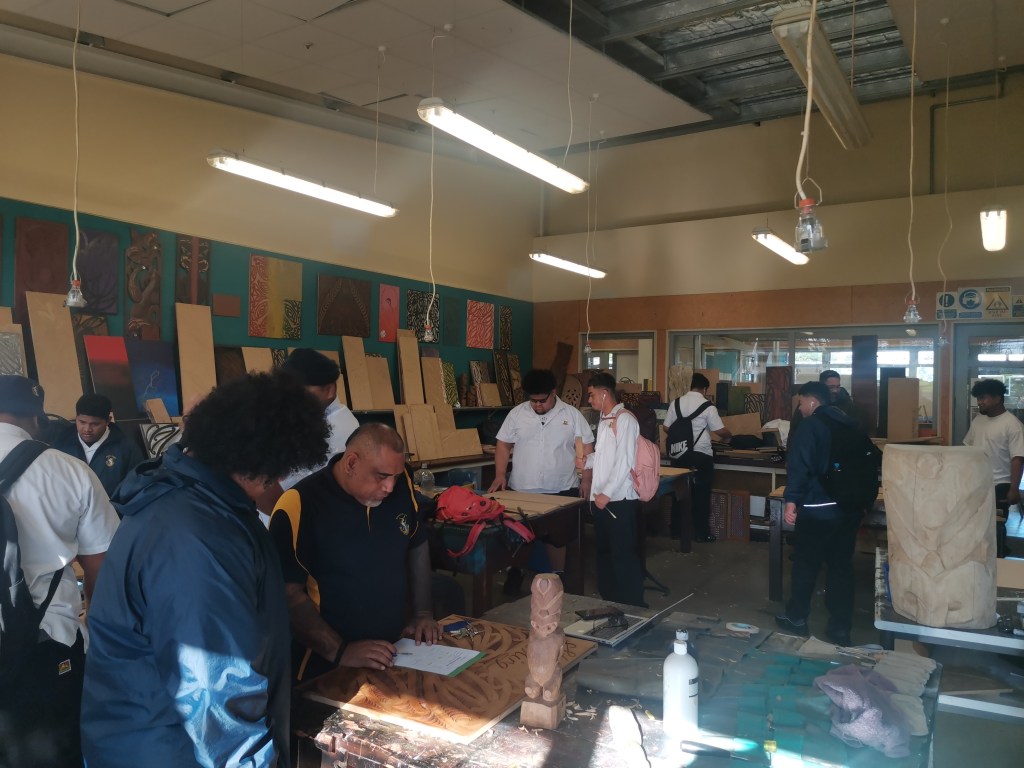
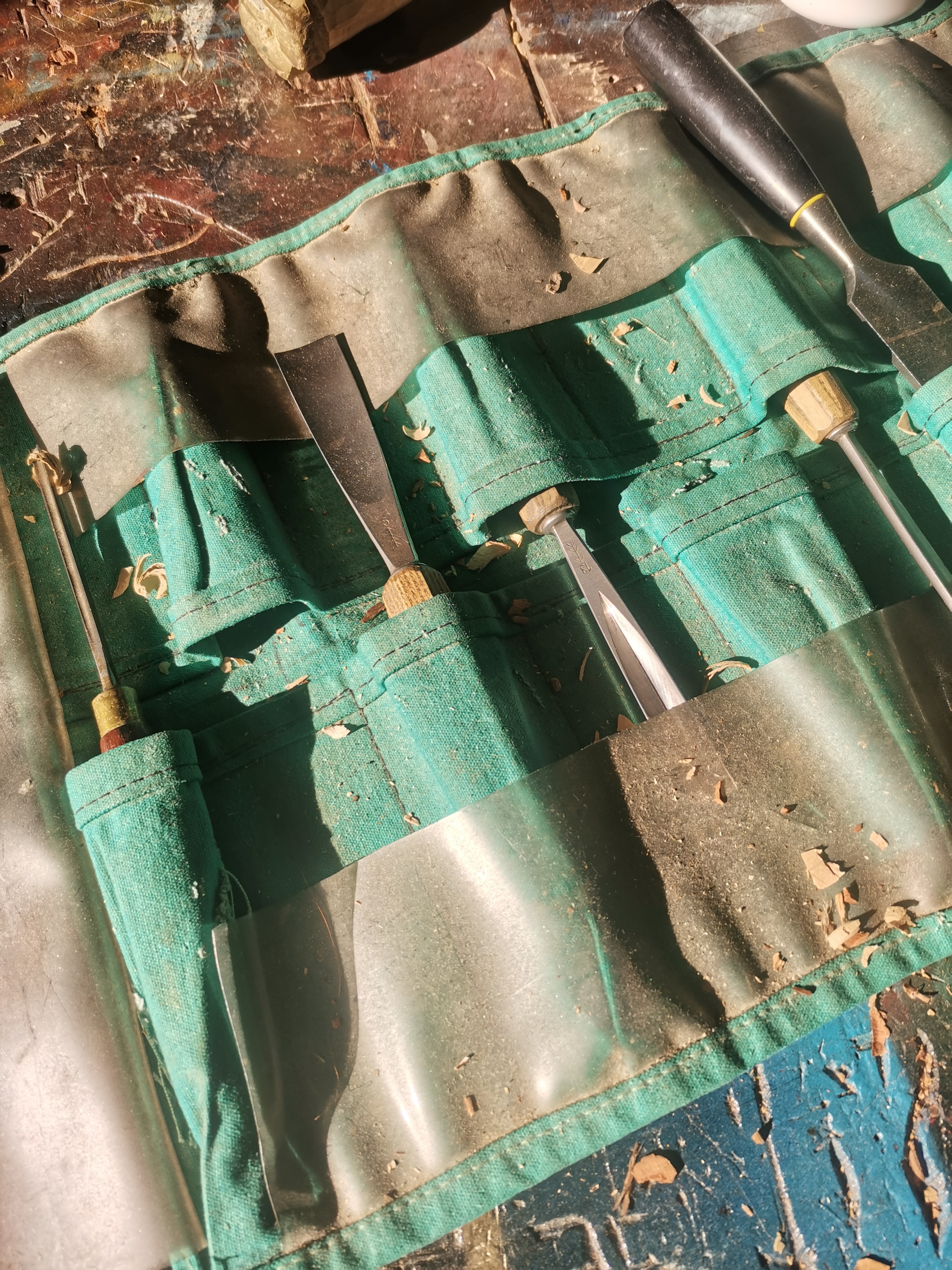
So, how was Tā Jay’s whakairo class such a success? We can find the answers in the research and literature on cultural relationships for responsive pedagogy (Berryman et al., 2018), culturally responsive learning environments (Bishop & Berryman, 2009), student engagement (Finn & Rock, 1997; Gibbs & Poskitt, 2010), flow experience (Shernoff et al., 2003), student well-being (Jang-Jones & McGregor, 2019), autonomy-supportive teacher behaviours (Bishop & Berryman, 2009), sense of belonging in school (Hughes et al., 2015), and brotherhoods (Reynolds, 2018). To retain his tauira, Tā Jay has harnessed the power of all of the above and reinforced them with aroha (love), manaakitanga (kindness & support) , whanaungatanga (kinship), and whakapapa (genealogy).
Tā Jay has seen the positive changes his whakairo classes have affected in engaging disengaged tauira. The work is meaningful, enjoyable, hands-on, and rewarding. Whakairo appeals to the cultural, personal, and situational interests of his tauira. For the tauira Māori, whakairo is an art form that represents their whakapapa and identity. It provides all tauira with a sense of purpose and belonging. The peer and teacher support implied by a positive sense of belonging in Tā Jay’s whakairo classes appeared to be a protective factor against negative outcomes such as dropping out of school.
How can cultural practices such as whakairo be carried over to learning te reo Māori in mainstream schools? Whakairo and kapa haka, both currently absent from my school, maybe the extrinsic motivational interventions I need to pique my tauira’s interest in learning te reo Māori. I believe that to love a language is first to love the culture, especially where there is little interest or no relevance in learning the reo for our tauira.
..to love a language is first to love the culture
NGĀ TOHUTORO
Berryman, M., Lawrence, D., & Lamont, R. (2018). Cultural relationships for responsive pedagogy. Set: research information for teachers, 1, 3-10.
Bishop, R., & Berryman, M. (2009). The Te Kotahitanga effective teaching profile. Set: Research information for teachers, 2(2), 27-33.
Finn, J.D. and Rock, D.A. (1997). Academic Success among Students at Risk for School Failure. Journal of Applied Psychology, 82, 221-234.
Gibbs, R., & Poskitt, J. M. (2010). Student Engagement in the Middle Years of Schooling (years 7–10). Ministry of Education. https://www.educationcounts.govt.nz/publications/schooling/introduction
Hughes, J. N., Im, M. H. & Allee, P. J. (2015). Effect of school belonging trajectories in grades 6-8 on
achievement: Gender and ethnic differences. Journal of School Psychology, 53(6), 493-507.
Jang-Jones, A., & McGregor, A. (2019, December). PISA 2018: New Zealand Student’s Wellbeing – School climate & student mindsets of 15-year-olds. Ministry of Education. https://www.educationcounts.govt.nz/publications/schooling2/large-scale-international-assessments/pisa-2018-student-wellbeing
Reynolds, M. (2018). “They Always Have My Back: A Strengths-Based Approach to Understanding the Value(s) of Pasifika Brotherhoods in Education in Aotearoa New Zealand. International Journal of Multicultural Education, 20(2), 1–23. https://doi.org/10.18251/ijme.v20i2.1515
Shernoff, D. J., Csikszentmihalyi, M., Shneider, B., & Shernoff, E. S. (2003). Student engagement in high school classrooms from the perspective of flow theory. School Psychology Quarterly, 18(2), 158–176. https://doi.org/10.1521/scpq.18.2.158.21860
 Te Kōpaki a Ruiha Epiha