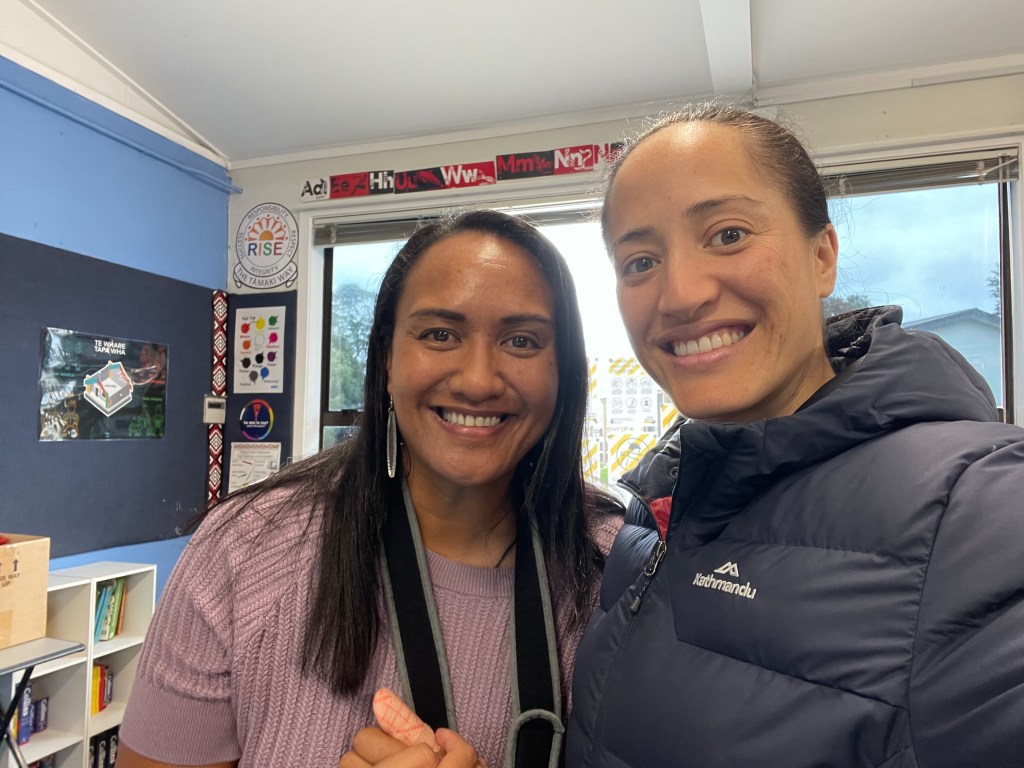
Today I engaged in a triadic kōrerorero and wānanga with my Tāmaki College and Ako Mātātupu (Teach First NZ) kaihāpai. Brenton Moyes, Nyra Marshall, and Dr. Jannie van Hees make up the three strong pillars of my whare ako. These three people are the pillars that have kept me from toppling over these past two years. They all have enriched my practice as a fledgling kaiako in transformative ways. E kore e ea i te kupu aku whakawhetai ki ēnei tokotoru. Words cannot express my gratitude to these three amazing people.

Make the most of what you have
“Do the best we can with the kids we have before us” (Moyes, personal communication, 18 April 2022). So too often, kaiako get down about the ākonga that are not coming to class, and I must remember that I must make the most of what is right in front of me.
Look at data
I need to look at data regarding attendance, attitude, behaviour, and academic performance for Māori ākonga at Tāmaki College to get an overview of how ākonga Māori are doing in at our kura. This data will also be useful for when Matua Harley and I run a PLUG on Tātaiako for our school staff in June.
Ākonga retention and attendance
How do I keep my ākonga in Te Reo Māori class? How do I keep my ākonga motivated to learn and attend classes? I need to research and ask around about strategies to retain ākonga.
Fear of failure
There is a fear of failure at Tāmaki College. Too often than not, ākonga are not turning up when assessments are due. How can I mitigate or minimise this fear?
Upcoming changes to NCEA
I need to prepare for the upcoming changes to NCEA – it would pay to arrange another wānanga with my kaihāpai again to unpack the external/internal standards and design rigorous programs that will enable my ākonga to transition well into these changes.
Backward mapping
When designing programs for my senior ākonga, Brenton Moyes suggested backward mapping. I have never heard of this term before. Backward mapping is when you decide what you want the Year 13 ākonga to achieve. You start with the Year 13 program and then work your way backward.
School observations – observations of schools, are a necessity for study requirements, but it will also be beneficial to identify the schools that are piloting the changes to NCEA. Observation of pilot schools will allow me to talk to kaiako about what is working and what is not.
Preferred ways of learning vs. integrated communicative modes
Jannie spoke about the debunked theory of preferred ways of learning (e.g., kinaesthetic learning, visual learner, etc.) and that we favour them at different times in our lives. According to Jannie, integrated communicative modes offer higher chances of retrievability if you are a learner of a language. Jannie’s kōrero always resonates with me and what I am trying to achieve. Our ākonga in English medium schools are second and even third language learners of te reo Māori. Therefore, I need to work closely with ELT/ESOL kaiako as their strategies are transferable.
Keep the project manageable
I need to keep my project manageable. Ways of keeping my project manageable are by keeping the focus on one class and one context/topic. There is the added pressure of completing assessments and gaining credits. However, I argue that assessments and credits mean nothing if my ākonga cannot independently write/say/understand one paragraph in te reo Māori. The sole purpose of the resource packs I will be creating is to build proficiency in te reo Māori through meaning-making so that my ākonga can gain the necessary linguistic repertoire to complete an assessment confidently.
Gifting the resource packs to whānau
I was hesitant to gift the resource packs to whānau due to my biases and doubts. However, a kōrero by Nyra reminded me of Te Mātawai’s vision to reposition te reo Māori as the nurturing first language in our homes, communities, and amongst the people. (Poia Rewi, personal communication, 5 October 2021). After all, it is in our homes where te reo Māori is transmitted to the next generation.
 Te Kōpaki a Ruiha Epiha