Today is the first day I have started using a different teaching approach (task-based teaching and learning) using a different resource. I used a resource pack that I had purchased from Jannie van Hees who is our English language specialist here at my school. Before using the pack, I sat in one of her ELL classes to observe how she used the resource with her ākonga.
The resource pack is called “The School – Te Kura” and includes a A3 size visual. The image is a frontal view of a school which is populated with children, students, parents, teachers, a principal, a receptionist, a caretaker who are all engaged in various activities. The image also includes school buildings such as a library, classrooms, office, school hall, toilet block, and a rugby field in the far distance. There is a rich repertoire of language that can be explored through using this one visual.
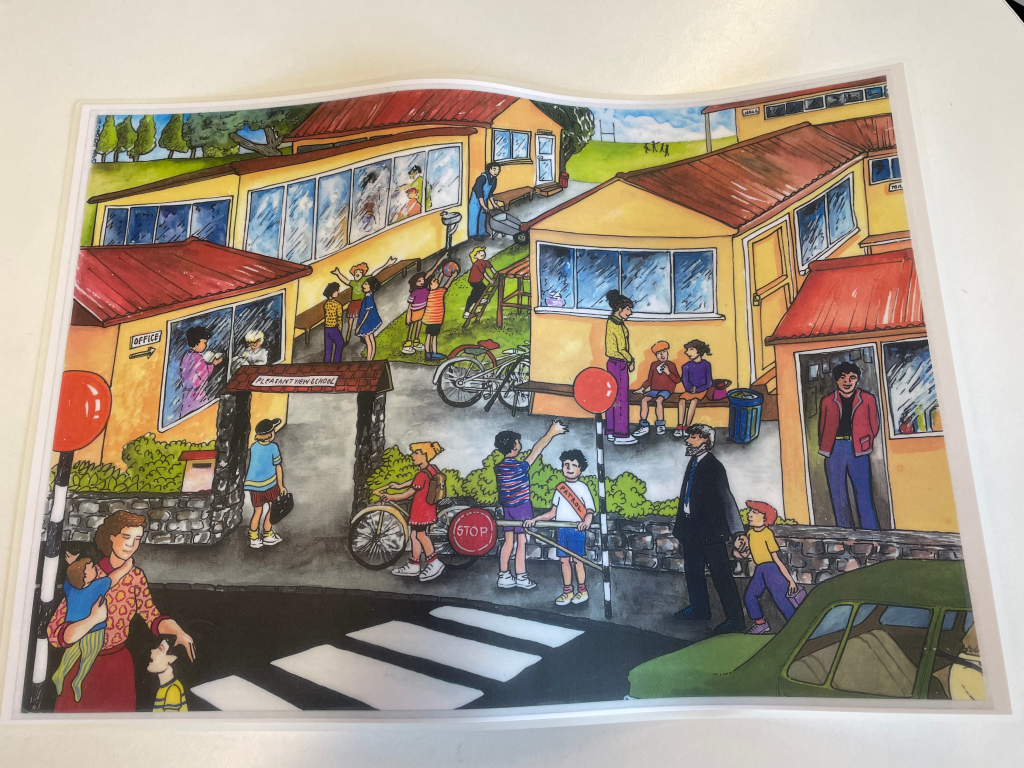
It also includes smaller A4 packs with different levels of complexity language strips in them. The strips are mainly in English. I am currently creating Māori language strips to go with the English ones.

The following is how the resource pack was used and taught:
- I sat the class around one big table
- A laminated image of a school scene was handed out and shared between 2-3 students
- 48 strips with school-specific vocabulary on them were spread out on the table for all ākonga to see
- I wrote the Māori translations for each word on the whiteboard
- I got each ākonga to say the new kupu, and then write them in their pukapuka
- I modelled the first task, which was a pointing task – for example, point on the picture the location of the kaitiaki kura? Tohua mai te kaitiaki kura? Kei hea te kaitiaki kura?
- I then organised the ākonga into pairs where they were tasked with asking and answering the following questions:
- He aha tēnei?
- Kei hea te noun?
This took the whole period.
Critical reflections:
- More scaffolding is needed to teach question forms ‘Kei hea’ and ‘He aha’ and answers.
- I asked the ākonga at the end if they enjoyed this new resource, which they answered yes to.
- I noticed one ākonga who was not engaging or participating – I have yet to had a one-on-one conversation with this ākonga.
- I can see this getting a bit repetitive, perhaps I will need to incorporate other strategies in order to keep ākonga engaged in the learning…only time will tell.
 Te Kōpaki a Ruiha Epiha