It has been just over a week since I changed my pedagogy and resource. The scaffolded resource I have been using for the lower-level learners of te reo Māori in my classes have been working for most of my ākonga. The pedagogy change to task-based teaching and learning has positively impacted the learning for my ākonga who have come with little to no te reo Māori linguistic repertoire. I have not yet figured out how to maximise the use of the resource for my more advanced ākonga.
My ākonga were getting bored with just the visual and the language strips, therefore I have also been incorporating some communicative language strategies and games to make the learning more fun and engaging. These games also serve as follow-up tasks to help embed the new vocabulary we are learning.
The following are examples of communicative language learning resources that I have created:
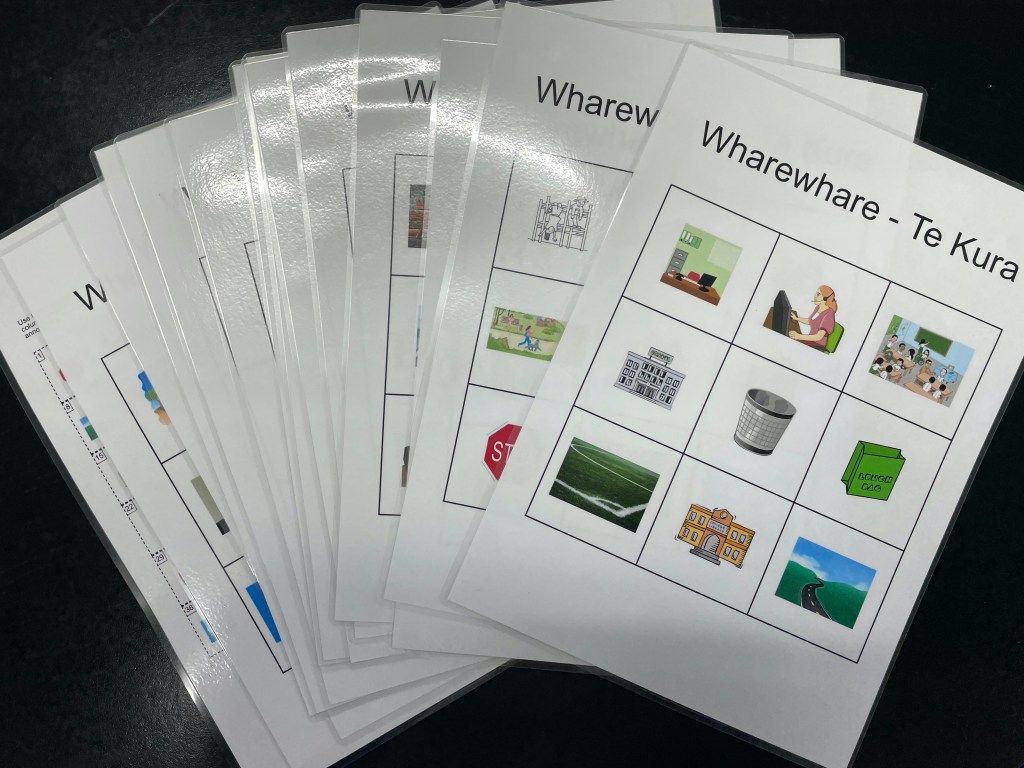
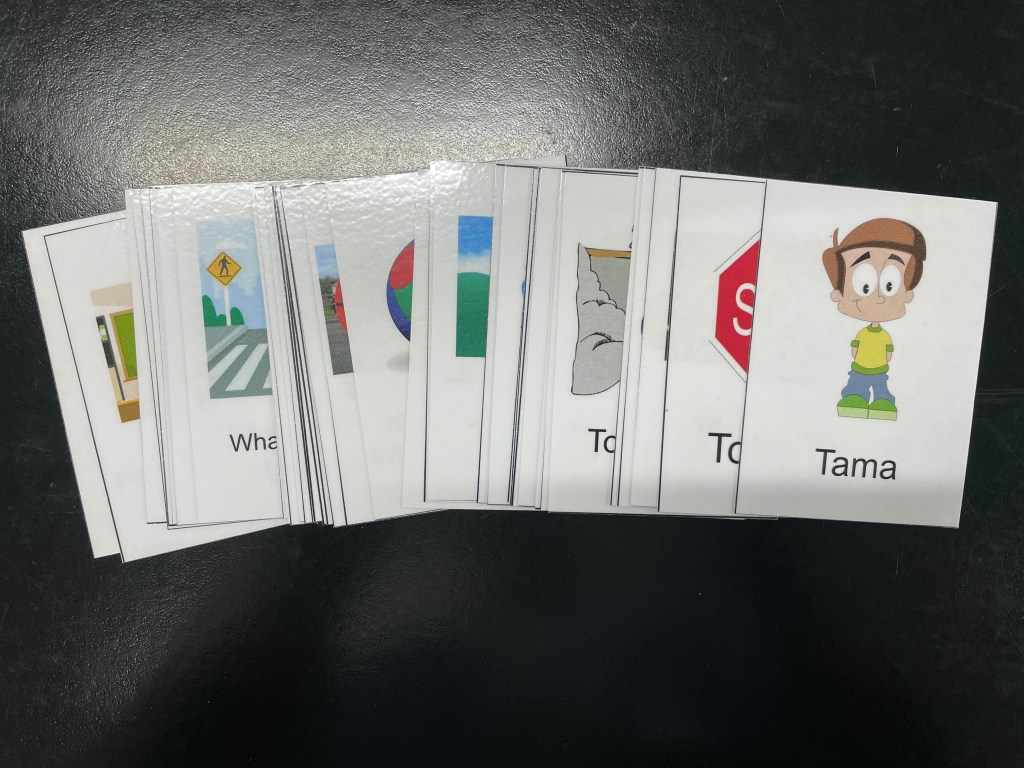


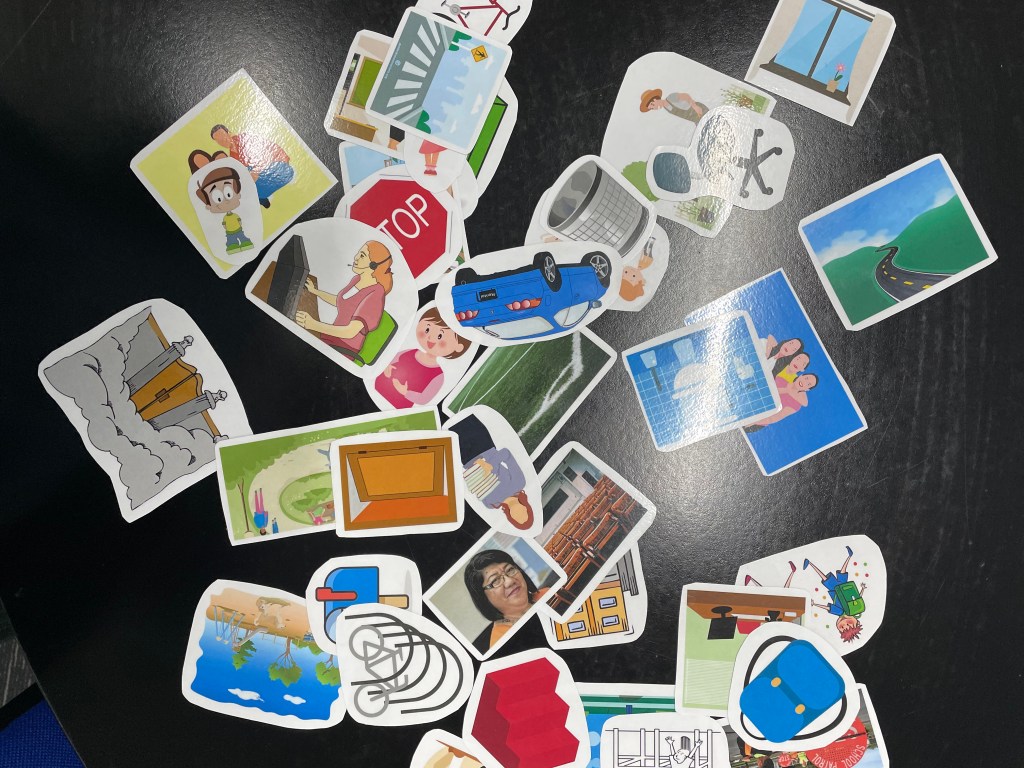
Using these communicative language teaching strategies in conjunction with the resource pack has proven to increase the engagement of my ākonga. There are a number of students who have been picking up the vocabulary very fast. There are some who are struggling a bit with the new vocabulary. I have been using the resource pack to practice pātai (questions) and whakautu (answers), reremahi (verbal sentences), rerewāhi (location sentences), and rereāhua (descriptive sentences), and to learn tūwāhi (prepositions), tūmahi (verbs), tūingoa (nouns).
Pātai include:
- He aha tēnei?
- Kei hea te/ngā noun?
- Kei te aha te/ngā noun?
Whakautu include:
- He noun tēnā.
- Kei preposition te/ngā noun i te noun.
- Kei te verb te/ngā noun i/ki te noun.
I have had to explicitly teach these structures before providing opportunities for students to make meaning. After undergoing formative assessment with my ākonga, I can see that they have a good understanding of the ‘He aha’ question form and are able to answer ‘He aha’ questions confidently and accurately. There is more work and mileage needed for the ‘Kei hea’ and ‘Kei te aha’ question forms, especially the latter. I will also need to reinforce tūwāhi (prepositions), rerewāhi (location sentences), tūmahi (verbs) and reremahi (verbal sentences) with my ākonga.
It is vital that I carefully scaffold my ākonga so as not to burden them or work outside of their zone of proximal development. This is still something I am still learning how to do competently.
Critical Reflections:
- Too many words: perhaps I have tried to introduce too many words at once. I feel I have spent way too much time on learning vocabulary and have not yet progressed to more complex sentence learning yet as a result. In the future, I would introduce a smaller number of words at a time.
- This stuff is way too easy for my more advanced students. What complimentary exercises or resources can I create to keep my advanced students from getting bored?
- There are three students who are not engaging or participating in the tasks and games I set out for them. Do I need to create customised learning plans for these students? Do I need to have a one-on-one with these ākonga?
- Attendance rates are quite low for my seniors: attendance rates for 2022 from term 1 week 1 to term 2 week 5 are as follows:
- Y11: average of 71% attendance rate
- Y12: average of 55% attendance rate
- Y13: average of 50% attendance rate
- I need to call a hui with all parents and whānau of our ākonga as these attendance rates are a real concern.
- I need to have Jannie come in and observe me using these resources to get some feedback and feedforward on my practice.
 Te Kōpaki a Ruiha Epiha