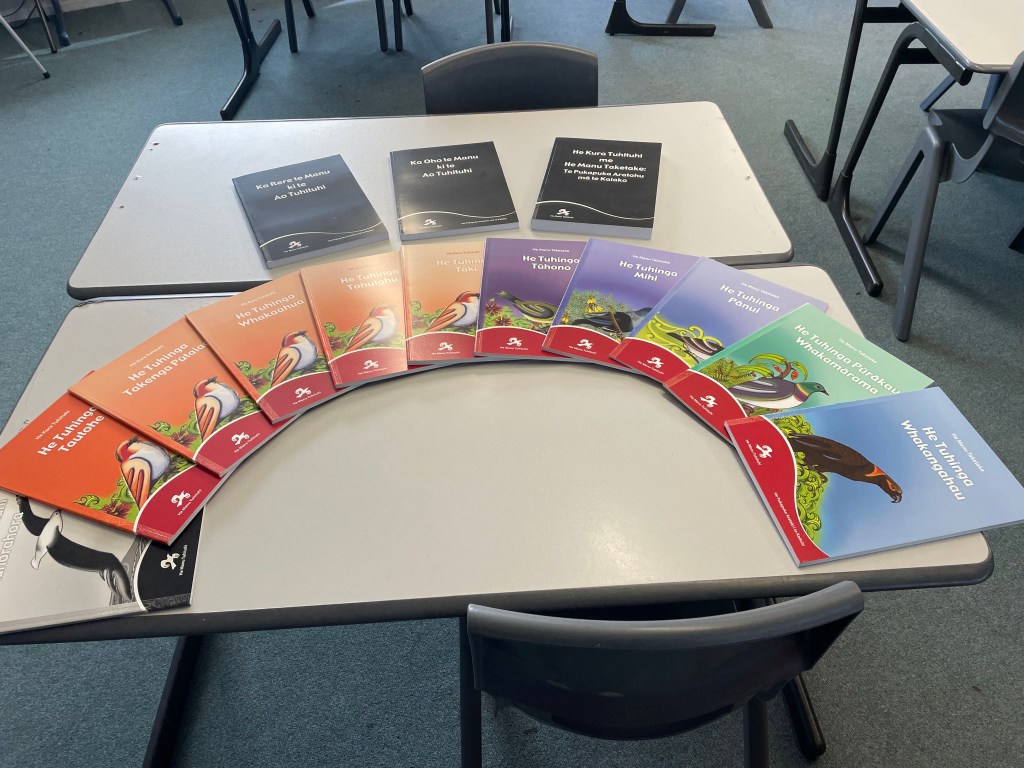
I have been using a myriad of rauemi, including those by Te Tāhuhu o te Mātauranga, Ako Panuku, Ian Cormack and Nadine McKinnon. I have used the communicative language tasks of He Reo Tupu, He Reo Ora resource, the TBLT resources created by Jannie van Hees and Sarah Payne, the purpose-based learning He Manu Tuhituhi writing resources, the controlled tasks and worksheets by Ian Cormack and Nadine McKinnon.
In my professional teacher observations, I have discovered that a one size fits-all approach is never the best approach. Employing all the above rauemi have worked well for my tauira. I started with a resource that uses TBTL strategies to help fill some gaps for ākonga who have not yet grasped the basic concepts of te reo Māori. I moved on to the He Reo Tupu, He Reo Ora resource to build their confidence and competency in communicative language learning, mainly kōrero and whakarongo. Once I felt they were making meaning through context and through the tasks, I employed the grammar and vocabulary strategies I had learnt at the Ako Panuku workshops I have attended to strengthen their pānui and tuhituhi skills. I am now using the He Manu Tuhituhi writing resource to further complement and enhance their writing skills in preparation for their internal and external assessments. Notice here I started with kōrero and whakarongo, who are identified as the mātāmua o te Whānau Reo, and have ended with the pōtiki o te Whānau Reo, which is tuhituhi (click here to see blog post about Te Whānau Reo).
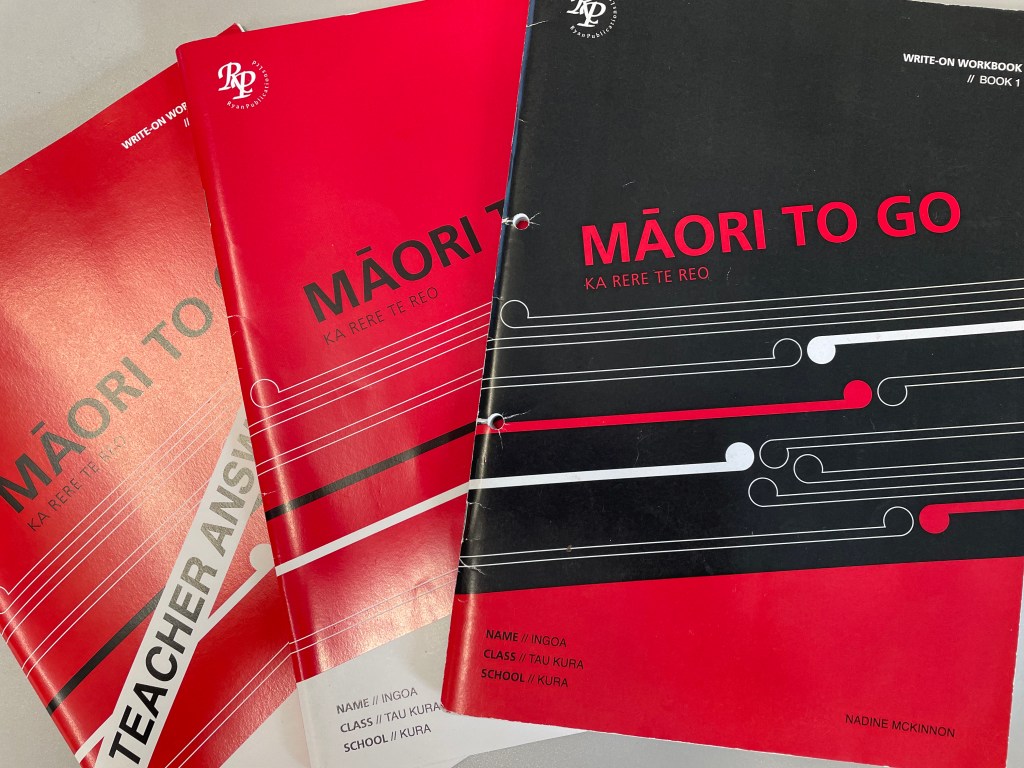
Although many linguists, particularly Jannie, argue that worksheets are not an ideal language teaching tool. I would argue that there is a time and place for worksheets in teaching and learning languages. They are an excellent classroom management tool, and for allowing ākonga to work individually to reinforce concepts just taught. They add variety and can also be fun! Learning a language should be fun after all. I have used the worksheets and activity booklets created by Ian Cormack and Nadine McKinnon. The worksheets from McKinnon’s ‘Māori to Go’ series were a hit in my classes.

I would like to try other well-known communicative rauemi such as, John C. Moorfield’s Te Whanake series, and MOE’s Ka Mau te Wehi. The latter needs a bit of a spruce up, but it is the only rauemi that aligns directly with the New Zealand Curriculum. It is a good example of how there can be a marriage between the meaning-making focus of communicative and TBLT approaches with a controlled syllabus such as the NZC and Te Aho Arataki Marau.
 Te Kōpaki a Ruiha Epiha