Away School Visit #11
Observation of Selwyn College | Wednesday 19 October 2022
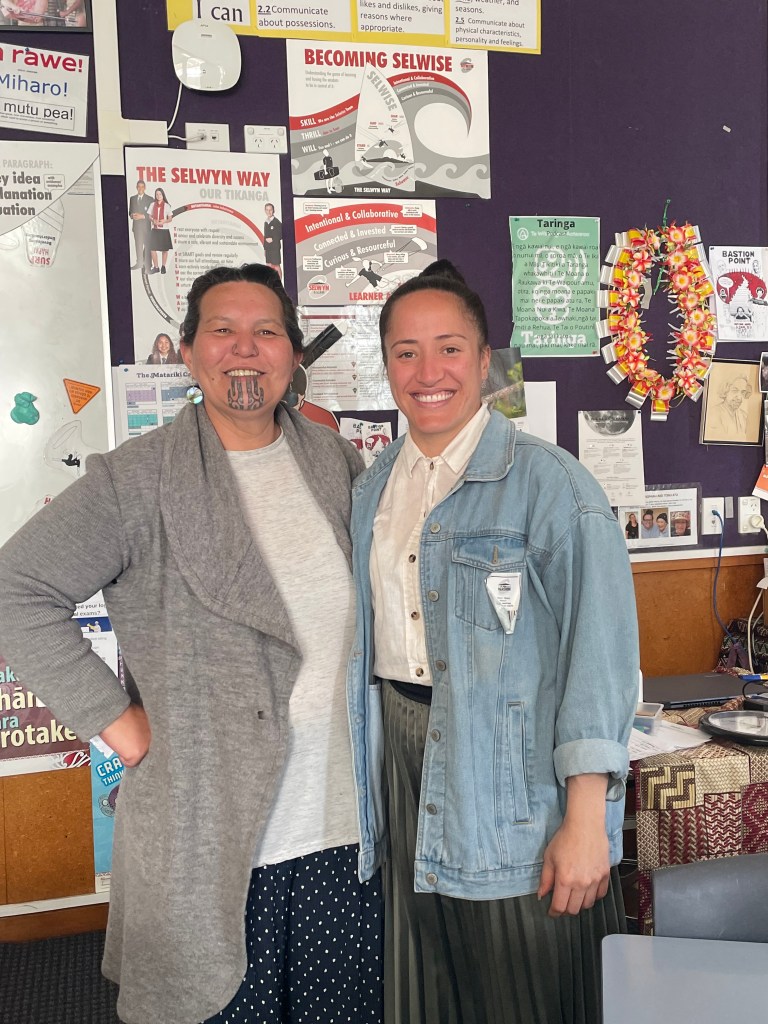
Whaea Whī is Ngāti Whātua o Ōrākei and holds the forte as mana whenua of her kura. I liken her to the kāhu pōkere or the black hawk that is the central figure on the front of her whare tupuna, Tumutumuwhenua, on the pā. A symbol of kaitiakitanga, the kāhu pōkere protects those in its care by carefully surveying its territories to ascertain the intention of others. Whaea Whī is the kāhu pōkere personified. She protects her ākonga, her reo, her culture, and herself with a clear resolve. Whaea Whī teaches with a purpose, to remind her ākonga of their responsibility to their reo, to our reo as tangata whenua, as mana whenua, and as tangata tiriti.
Ngā Akomanga
Year 9
This was her first time meeting this class.
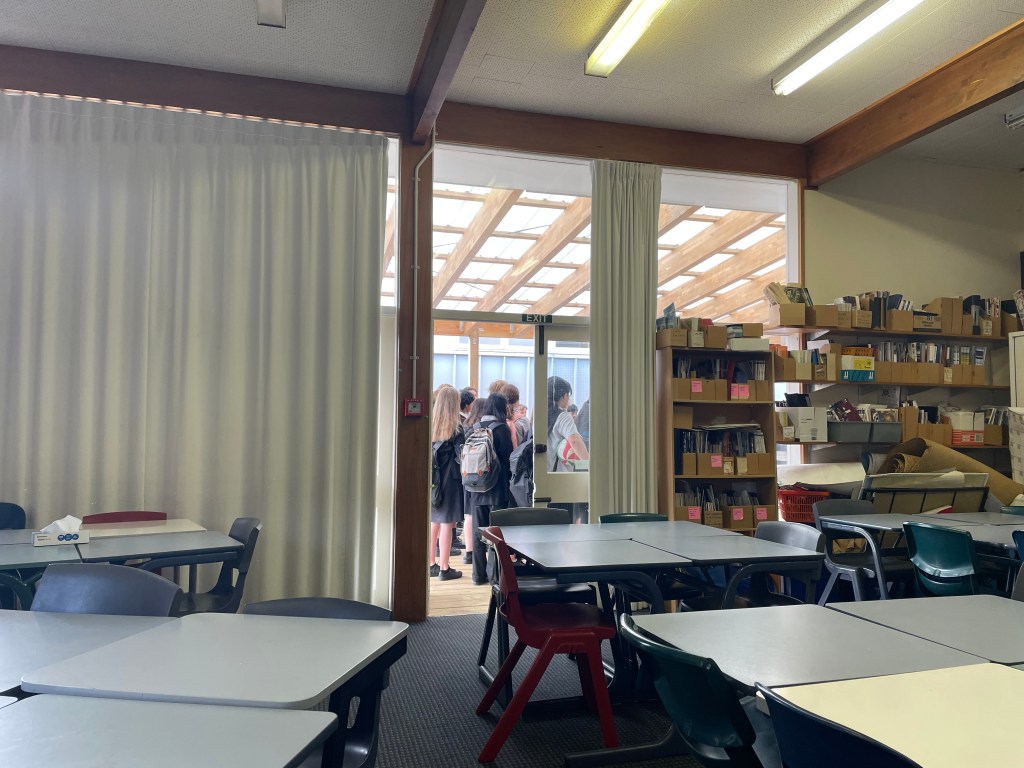
Outside the door, Whaea explains tikanga and etiquette of entering onto a marae as well as proper attire
Karakia Tīmatanga
Ko Ranginui e tū iho nei, ko Papatūānuku e takoto ake nei. Tēnā koutou, tēnā koutou, tēnā koutou katoa.
Performs actions for each line, which is a great retention tactic.
Hei Mahi Tuhituhi
Introductions in te reo Māori.
- Groups of 3
- Discuss what the questions are for the answers on the list, for example:
- Ko Ruiha tōku ingoa
- Ko wai tō ingoa?
- Students write sentences in their pukapuka
Things that stood out for me:
- Uses canva to draw up attractive lessons
- Uses show-me boards – I’m going to get some of these
- Ākonga are engaged in their mahi tuhituhi
- Uses a lot of repetition
- Stresses the importance of knowing the language and the responsibility of each and every New Zealander (Māori and non-Māori) to transmit our indigenous language.
There is a different Y9 class every week – Y9 is only does te reo Māori once a year.
Te Pua Mātauranga – whānau group (all Māori) – in the past
Mentoring Class – mixture of Year 9 to Year 13
Te Kahu Pōkere (name of kapa Haka of the School)
Mixed Class (Y11 & Y12)
Ngā Tangata Rongonui
In preparation for the exams, Whaea Whī groups the ākonga and gets them to look into important Māori leaders. She provided a week deadline for the mahi.
Three Groups
- each member of the group given one thing to focus on for each person and collate together in the shared document
- Group 1: Tā Apirana Ngata
- Group 2: Iritana Tāwhiwhirangi
- Group 3: Wharehuia Milroy
Differentiation
Year 11 – write some background information about the person (i.e. pepeha, whakapapa, why they are famous, āhua, famous quotes)
Year 12 – korero mō ngā wawata o te tangata rongonui (what were their dreams and aspirations for themselves and their people?)
A & O category
He Kura Te Mokopuna
- H = hangarau (technology)
- K = Kai (food)
- T = Tāonga (portable man-made things)
- M = Mahi (actions)
What is important about the A & O category? It is the possessives.
Possessives
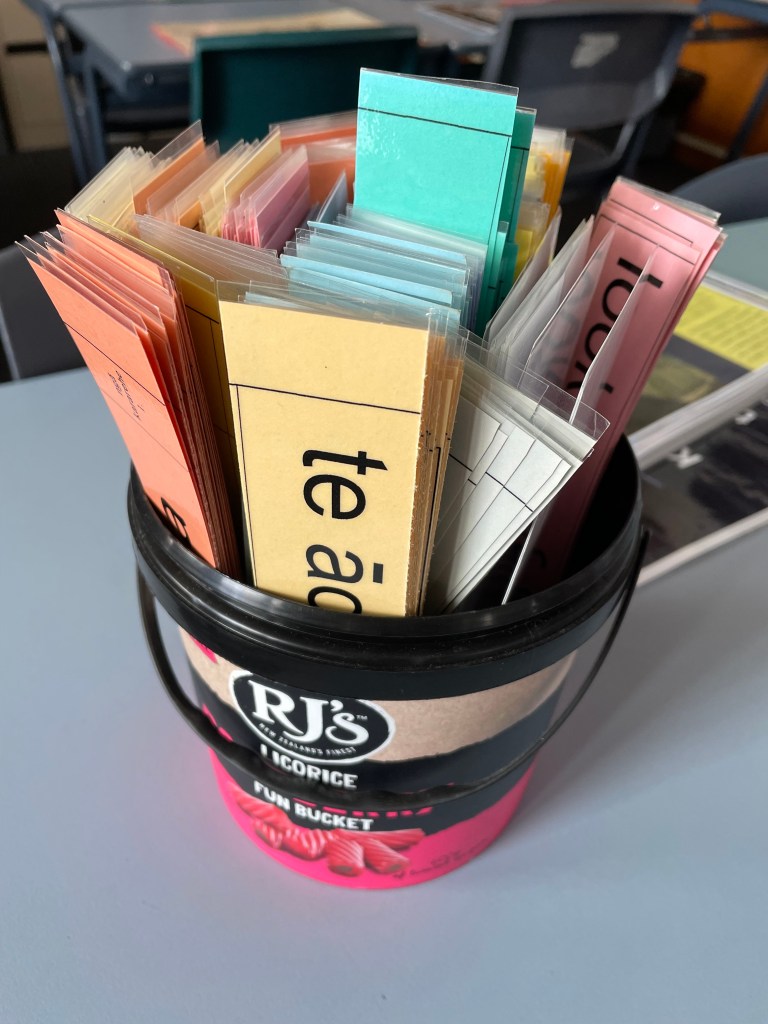
Rauemi she whipped out was a tin with different laminated kupu (colour coded – looove).
Hei Mahi Rirohanga
She pulls out the nouns words from the container and says a sentence in English containing a possessive + a noun (e.g. his car) and gets students to verbally translate it in te reo Māori to reinforce the correct use of possessives according to the A & O categories.
Five fingers for ‘O’ category
- Live in it
- Wear it
- Travel in it
- Respect (elders)
- Part of something
Things that stood out for me:
- At the end of class, Whaea Whī asks students who have given their reo a go at home during the holidays – almost the whole class stands.
- Teaching the A category – I need to explicitly teach the ‘A’ category.
- Ākonga are engaged in their mahi.
- Ākonga are still struggling with the basics (a & o category), which I can relate to.
- Whaea Whī teaches using the whiteboard.
Taking the Year 11 standards out, will allow us kaiako to help fill the gaps or catch our tamariki up to Level 7 and 8 of TAAM.
Year 9
This is her Year 9 class she has for the whole year.
Karakia Tīmatanga (Matariki)
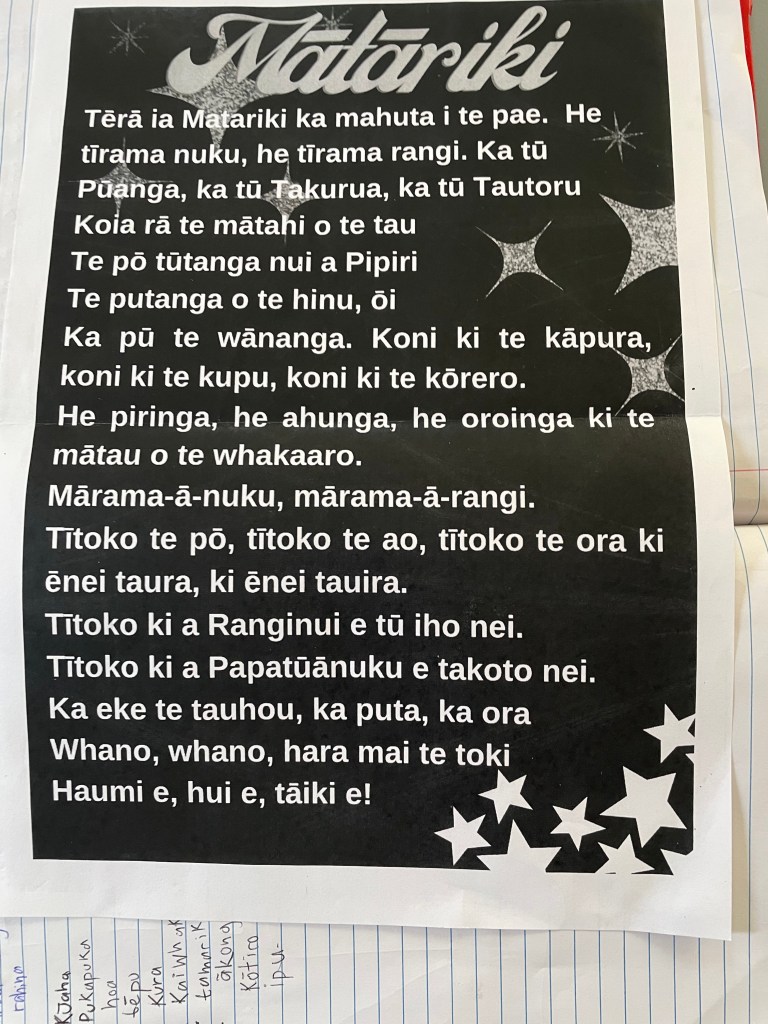
Co-writes the date on the whiteboard in te reo Māori
Hei Mahi Kōrero
Asks students to quickly look at their notes of their pepeha/whakapapa.
Simple introductory questions and answers.
Whakawhiti kōrero – pair work – one ākonga asks the questions and the other answers, and they switch roles.
Things that stood out for me:
- Whaea Whī has a Year 9 class for the whole year – that is my dream!
- Ākonga knew a lot of te reo already and were able to say sentences in te reo Māori.
- Uses Chatterbix Kids to make bitmojis karakia, kōrero or sing waiata Māori.
- Chatterbix Kids is a free application. You take any photo, or select an image in your gallery, draw a line to make a mouth, and record your voice. This is great for the kaiako or ākonga to record karakia, waiata, kōrero, and messages in a fun way and without having to show their face if they don’t want to.
Uses McKinnons’ and Cormack’s series but very rarely, as they do not always suit the needs of the ākonga at a particular time. And can only find bits of usable mahi in the books for her ākonga.
Whaea Whī creates her own rauemi.
Year 10
Questions and Answers
Answering questions: Kei te aha koe? E aha ana koe?
He rautaki whakakōrero
- Whole class asks: E aha ana koe? Kei te aha koe?
- Selected ākonga answers
Correct use of the particle ‘ki’
e.g. E haere ana ahau ki te maunga/ Kei e haere ahau ki te maunga
Whole class: Ki te aha?
Selected ākonga answers
e.g. Ki te Oma
Whole class: Māhea koe haere ai?
Selected ākonga answers
e.g. mā runga pahi/ taraka/ motokā/ wēne/ tēkehi
Whaea Whī asks in Pākehā to check understanding:
Where did (student name) go?
What did (student name) do there?
How did (student name) get there?
Whole class: E hia te utu?
Selected ākonga
Āhea koe haere ai?
She stresses the importance of pronunciation through repetition
Students go outside to create two circles
Uses waiata and manawataki to help with retention of information and learnings
What are some things she does that others do not do?
hand actions to help with retention of information and kupu hou
 Te Kōpaki a Ruiha Epiha