Observation of Howick College | Wednesday 3 August 2022
Away School Visit #5
He Kaiako Rongo ā-Manawa
I spent most of the day with Whaea Eleanor Biddle-Robinson. The main purpose of this observation was to kōrero with her about her many responsibilities, and to see what strategies and resources she finds useful in her teaching practice.
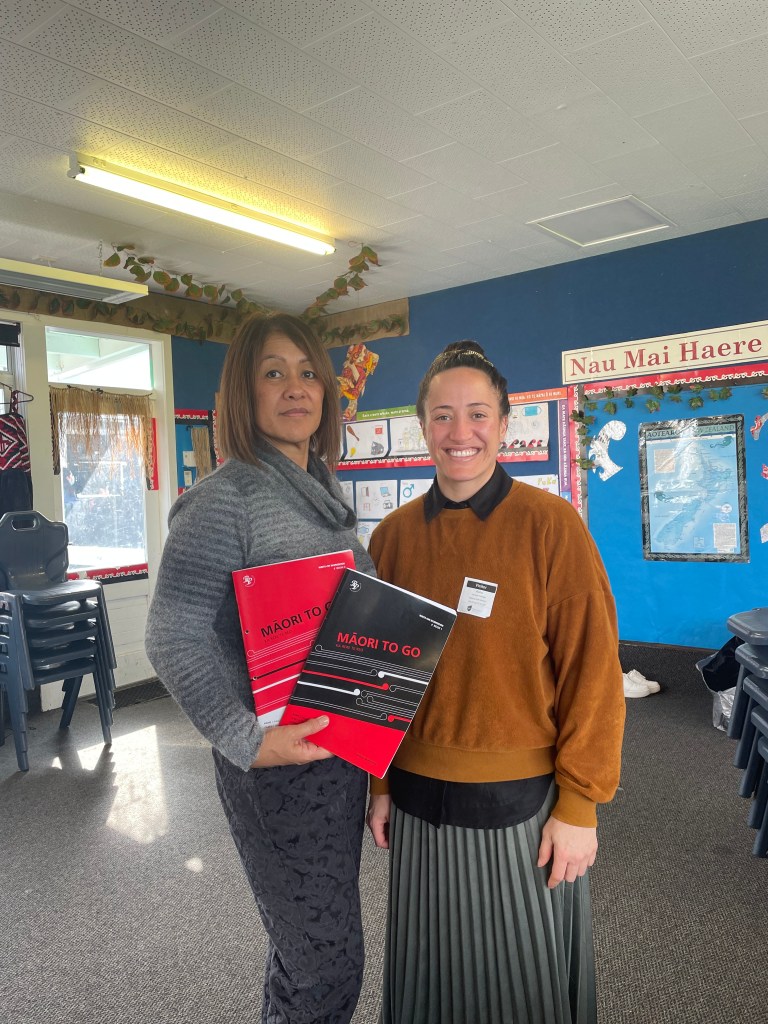
Whaea Eleanor
Whaea Eleanor wears multiple pōtae, including kaiako and HOD Te Reo Māori, cultural responsive coach for staff, Kapa Haka coordinator and manager, and the leader of the Paihere Rangatiratanga home group.
What kind of kaiako is Whaea Eleanor?
Whaea is an intuitive kaiako and reads the wairua of each of her ākonga to determine what and how she will teach.
How does Whaea Eleanor teach her classes?
She models a lot for her ākonga. When teaching her teina classes (Year 9 and 10), she starts with strengthening their whakarongo (listening) and whakaatu (presentation) skills through various tasks.
Her tuakana classes are given preset mahi and are taught to be independent learners. Although I did not see it, she says she models and scaffolds her tuakana classes and has reflection time with her ākonga through regular wānanga.
I had observed Whaea Eleanor when her Year 9s were rotated. Today was her first time meeting her new Year 9 class. This was how she ran her class:
- Karakia – Whakataka te hau
- Whakawhanaungatanga – Ko wai tō ingoa? Ākonga introduced themselves in Te Reo Māori.
- Opened Māori To Go Book 1 (McKinnon, 2016: 5) – greetings, farewells, and acknowledgements, attention is given to macrons, vowel sounds, addressing friends (informal), and addressing strangers (formal)
- Split into groups of 4-5 to create a skit using the lost of kupu on page 5
- Presentation of skits
- Class concludes
What is something Eleanor does that I need to do more of?
To reinforce new vocabulary, Whaea Eleanor splits her large teinga class into groups of 4-5 to create skits using the list of kupu they had just revised. I do not use skits at all in my lessons, which is something I would like to try and explore.
What Year Levels does she teach? How long for?
She teaches Year 9 through to Year 13. Te Reo Māori is compulsory for Year 9, but it is a taster course. Like Tāmaki College, the Year 9 cohort are rotated on a quarterly basis. Her Year 10 is a full year course. Year 10 at Tāmaki College is a half year course, but I am pursuing a full year course. The strength of my senior classes are dependent on the strength of my junior classes.
What resources does Whaea Eleanor use?
The Maori To Go (2016) two book series by Nadine McKinnon are a go-to for Whaea Eleanor. She provides the pros and cons of using these books below.
Cons:
- no robust learning
- surface level learning
- does not tick all the boxes
- do not teach Te Reo Māori
Pros:
- suits their learning community
- good for individual work
- good for extension work
- covers a lot of topics
In order to make effective use of this resource, it must be mixed in or used with other strategies and resources. It cannot be used as a stand-alone resource.
Coaching Portfolio
Whaea Eleanor uses a Māori perspective and approach (i.e. kaupapa Māori) to coach ten teachers on how to be culturally responsive teachers for their ākonga Māori. She also coaches these ten kaiako on Treaty competency and how to be bi-cultural and bi-literate in their kura.

Te Whānau o Ōwairoa Kapa Haka
This is one of the portfolios that Whaea Eleanor holds at her kura. When I had arrived at Whaea Eleanor’s classroom, two of her ākonga were helping to prepare the haka uniforms and costumes for their rehearsals that night.
Paihere Rangatiratanga
This is a home class consisting of ākonga that are hand-picked by Whaea Eleanor. Criteria for being included into this home class is that ākonga must love their language, culture, and Te Ao Māori. These ākonga are mentored to assume leadership roles, to facilitate staff PLD, to lead pōwhiri, to run karakia at assemblies, among other things. It is compulsory for ākonga of this group to join Te Whānau o Ōwairoa Kapa Haka. The main kaupapa of this group, other than leadership, is whanaungatanga or sustaining connections and relationships between tuakana and teina in Howick College and with other schools.
He Kaiako Wīwī
I was able to spend period 5 with Mrs. Giordana Santosuosso and observe her Year 10 French Class. My main purpose for this observation was to see what strategies and resources she used to teach her class. I also wanted to talk to some of her students to get some feedback about what their French language learning journey at Howick College. Below are some of the notes I had taken from this observation.
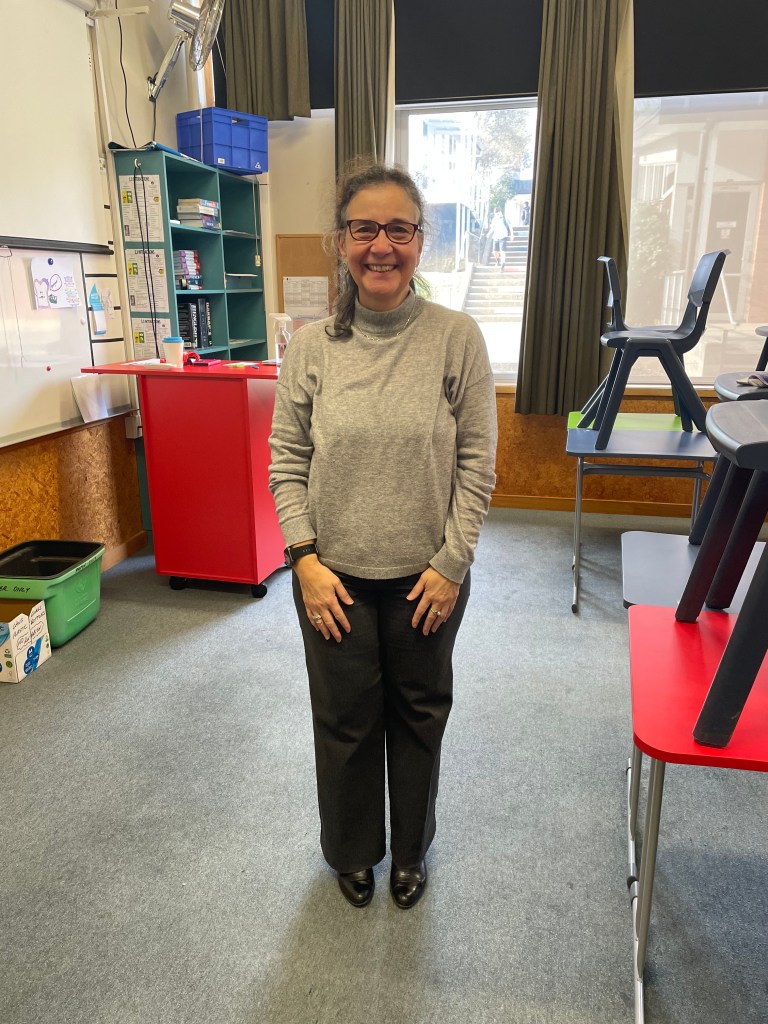
Mrs. Santosuosso
Mrs. Santosuosso is an electric teacher whose approach to her French class was super fun and engaging. She uses both Google Classroom, online digital tools, and student notebooks in her lessons.
What are Mrs. Santosuosso’s routines?
- Students line-up outside
- No phones are permitted in the class
- No Learning Objectives or Intentions are written on the whiteboard
- As soon as students are seated, they are given a Do Now activity on the whiteboard.
Activity One: Wheel of French Words (writing activity)
This activity is great for activating new and newly learned vocabulary.
- Mrs. Santosuosso did vocabulary revision through the use of the digital spinning wheel on https://wheelofnames.com
- The wheel consisted of French words
- Students were split into groups of 4-5
- Students were given mini whiteboards and whiteboard markers (they chose their fastest scribe)
- Mrs. Santosuosso spun the wheel
- Once the wheel stopped, students wrote the English word for the French on their mini whiteboards
- The team that put their mini whiteboard up with the correctly spelt English translation, won points.
Activity Two: Dictation Exercise (listening activity)
This activity is good for improving grammar.
- Mrs. Santosuosso says a word in French
- Students (still in their groups of 4-5) correctly spells the French word on their mini whiteboards.
Activity Three: Google Classroom (extension work)
Independent work is good for classroom management.
- Students were directed to their Google Classroom to do independent work
- Students were so engaged and quiet the whole time while completing their GC work.
What do you like about your French classes?
- “French is my favourite class.”
- “It’s [French class] confusing, but challenging.”
- “I love that we get to write it down, speak, and play games, and being able to work independetly on Google Classroom.”
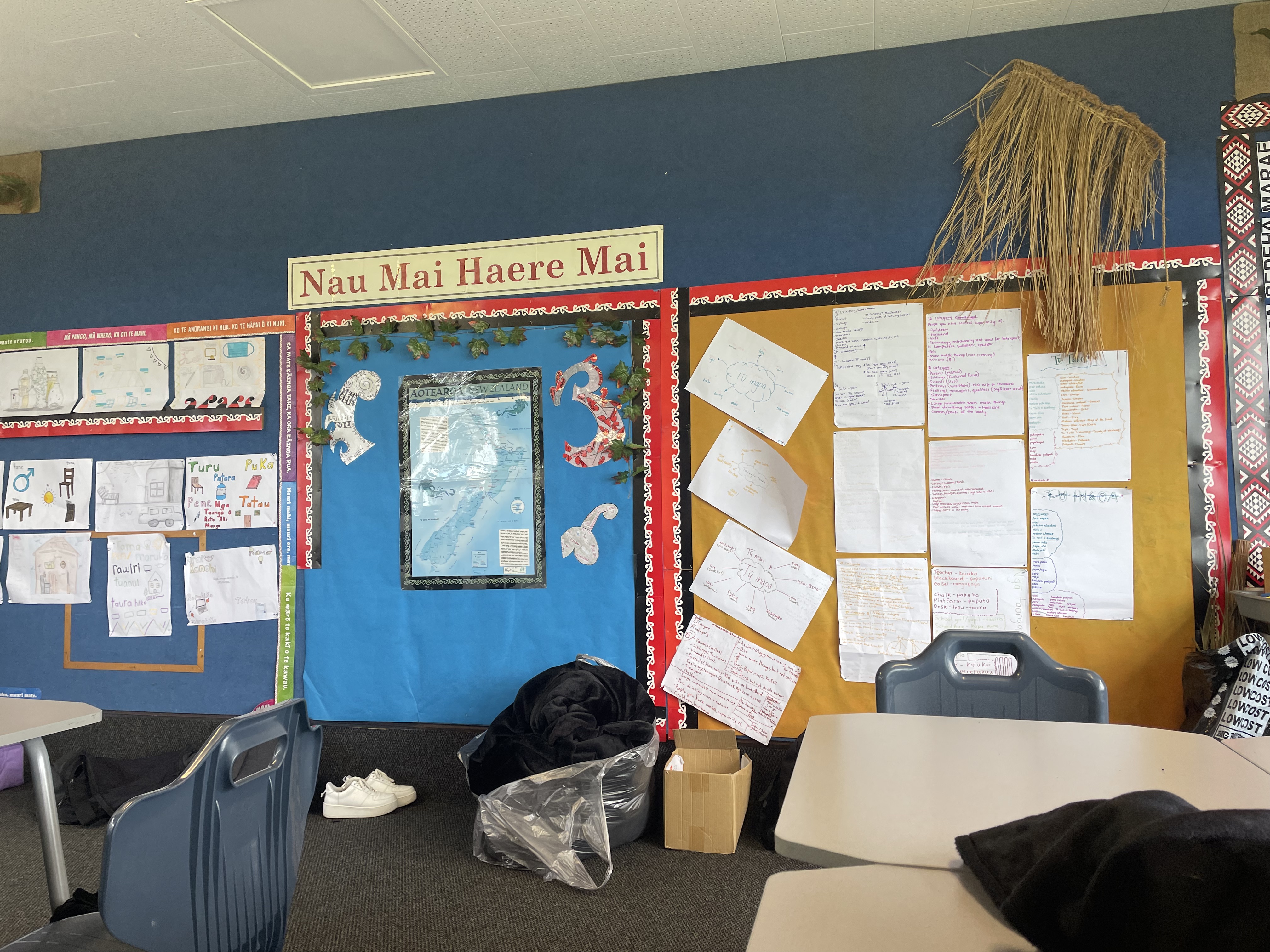
The School
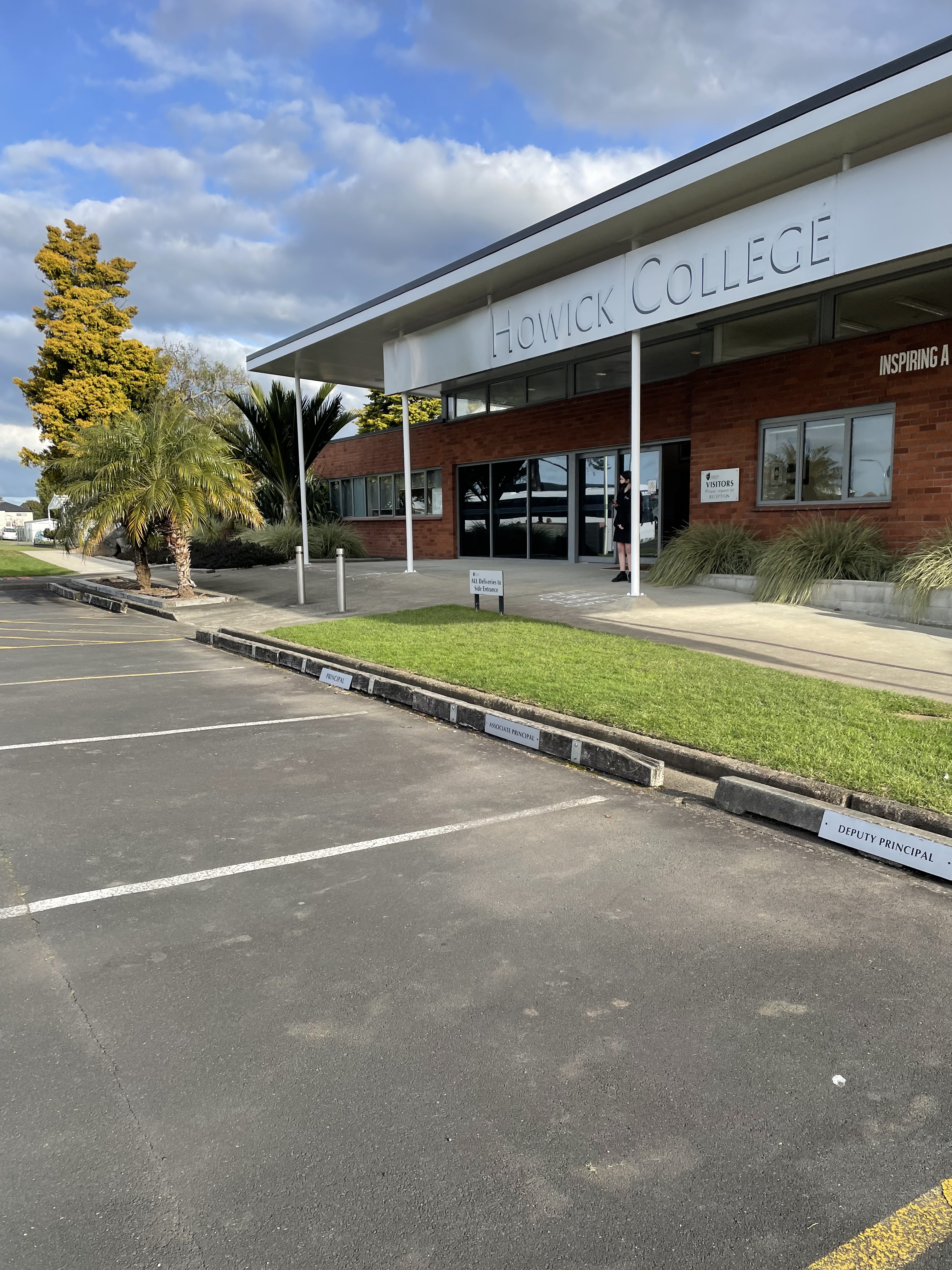
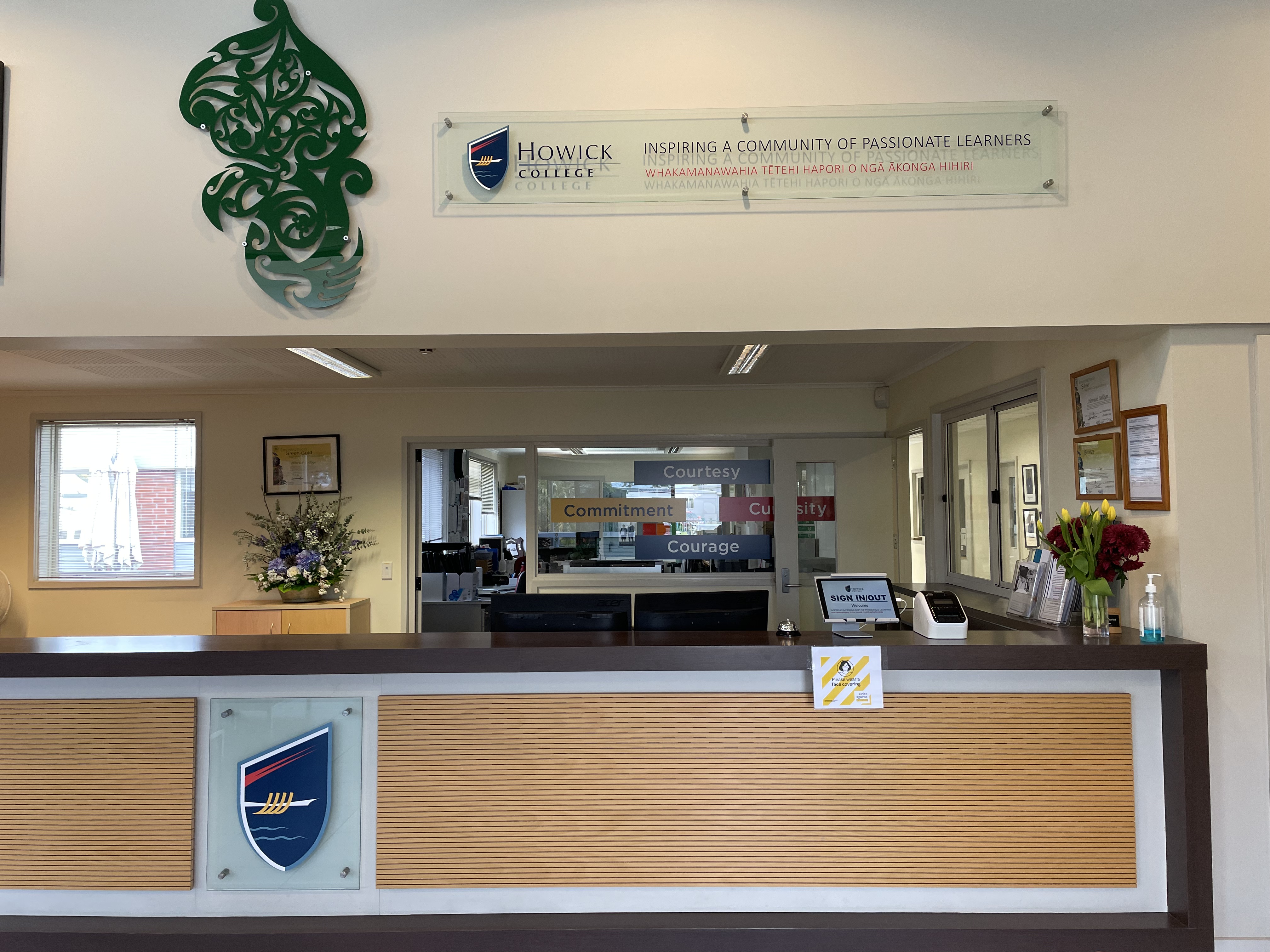
Howick College’s terraced style buildings are situated along an area known by local mana whenua as Ōwairoa. The area is principally associated with Ngai Tai, who trace descent from the Tainui waka. Despite the rich Māori history of the area, there is little visibility of this in Howick College. Interestingly, House names – Bell, MacDonald, Bacot, Irvine, Minerva, Ingham – are associated with early English and Fencible settler history, including: John Thomas Watson Bacot – the surgeon who settled in the area with the Fencibles; Captain Alexander MacDonald – arrived in Auckland in October 1847 and was the Captain in the New Zealand Fencibles; the Bell House – built as the home of one of the first officers of the Fencible soldiers who came from Britain in the late 1840s to settle in Howick and serves as a reminder of the early heritage and lives of the Fencible Settlers. The Bell family would later buy the house, hence the building’s name; Captain John Irvine – he served in India before moving to Howick where he served as the last resident magistrate at the old Howick Courthouse; the Minerva – carried the first of the Fencible soldiers and some of the first settlers to Howick in 1847. Ingham is the only House name that is not associated with the Fencible soldiers, but is named after Mr. Don Ingham, the Founding Principal of Howick College. The Fencibles are retired soldier-settlers who were offered free passage to New Zealand with their wives and families, a cottage and an acre of land in exchange for their services as armed settlers for the defence of Auckland. They would form part of the horde of migrants that were brought over by the infamous (for Māori anyway) New Zealand Company and were also a part of colonial efforts to increase reinforcement and population numbers in Aotearoa. What was a mere 2,000 non-Māori residing in Aotearoa in 1840, quickly became 250,000 as early as the 1850s (Ministry of Culture and Heritage, 2014). After the New Zealand Wars in 1870s, Māori numbers had greatly depleted, many had fled their ancestral whenua, which had opened large areas of land for potential British settlement. The rest is history.
Some Thoughts | Ētahi Whakaaro
History of Howick College
The early settler history is well-documented (see the school, and the Howick Historical Village websites). The same cannot be said for local Māori history. So it is not surprising that when I had asked about the history of the mana whenua in the school’s residing area, little to nothing was known. I would like to see Howick College leadership or mana whenua or both reaching out to teach and learn from one another. These relationships must be formed for their school to fill in the gaps of their school’s history. I do not propose to do away with the early settler history. In order to be truly bi-cultural and bi-literate, the school must first acknowledge and make visible the history of both partners of the Treaty of Waitangi.
Kaiako Māori
The lone kaiako Māori with too many heavy hats is a shared experience among all the kaiako Māori I have observed so far. These kaiako are doing their best to hang in there. Whaea Eleanor is no exception. When I asked why she keeps teaching Te Reo Māori at Howick College, she simply said, “If I don’t do it, who will?” This speaks to her determination, resilience, and aroha for her ākonga Māori, but it also speaks to the scarcity of kaiako Te Reo Māori in the education sector who are willing to teach in English-medium schools.
Te Whānau Reo
Whaea Eleanor is the second kaiako that I have observed who places emphasis on whakarongo with their teina classes. According to Betty Dickson and Rauhina Cooper from Ako Panuku (2022), whakarongo is the foundation of literacy. I intend to include more whakarongo tasks in my planning for my Year 10 classes next year. Although whakaatu is one of the younger siblings of Te Whānau Reo, it is a skill I have not yet tapped into. I will also plan these into my junior and senior lessons.
Rauemi
Ministry of Education resource are not used by Whaea Eleanor, but she uses Nadine McKinnon’s “Māori To Go” series. For her, they are a great resource, but should not be used to teach a unit or as a stand-alone resource. The “Maori To Go” books must be mixed in with other rauemi.
It was in Mrs. Santosuosso where I witnessed the use of new teaching materials to make teaching language fun and engaging. I intend to use the wheelofnames website, and purchase mini whiteboards so as to give these multimodal activities a go with my ākonga.
Comparing Kaiako
I saw more structured and fun strategies and resources used by Mrs. Santosuosso. How Mrs. Santosuosso taught her Year 10 class is how I wish to teach my all my te reo Māori classes. I am also an intuitive kaiako who likes to read the energy of the room before proceeding with my lessons and there are days when there will be chill lessons. However, those high energy days (i.e. Ōturu, Rākaumatohi, Rākaunui moon phases) a lesson like Mrs. Santosuosso would be the go. Learning a language should be fun, and this is exactly what I strive for, to make my lessons fun and engaging for my ākonga. Don’t we all?
 Te Kōpaki a Ruiha Epiha