“Aim high, strive for excellence”
Observation of Manurewa High School | Thursday 11 August 2022
Away School Visit #8
Summary of Observations
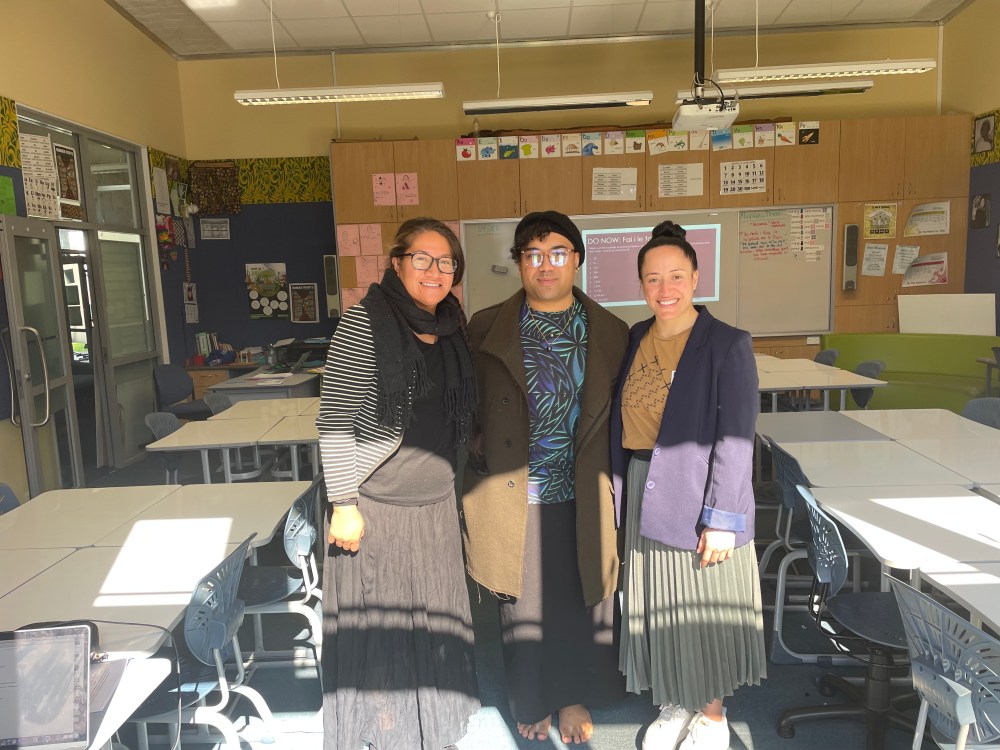
I was fortunate to be able to observe three kaiako. First I hung out with Whaea Ngāhuia and observed her Year 10 Te Reo Māori class. I then sat in Mr. Bronson Seiuli’s Year 9 Sāmoan language class. Lastly, I got to observe Mrs. Sime doing some amazing mahi with her Year 9 Spanish class.
Each kaiako offered pearls of wisdom, and gifted me with plumes to whatu into my korowai o te mātauranga. Like every other observation, I look out for three things:
- The school’s current (Māori) education initiatives (if any) and the general feels regarding mātauranga, and te reo Māori.
- The raeumi they use to teach their respective languages and how well they are received by ākonga (are they engaged? Are they having fun?)
- The classroom set-up and wall displays and how this impacts ākonga learning experiences (do they look to the walls for assistance? Does the seating arrangements affect their learning?)
First Impressions
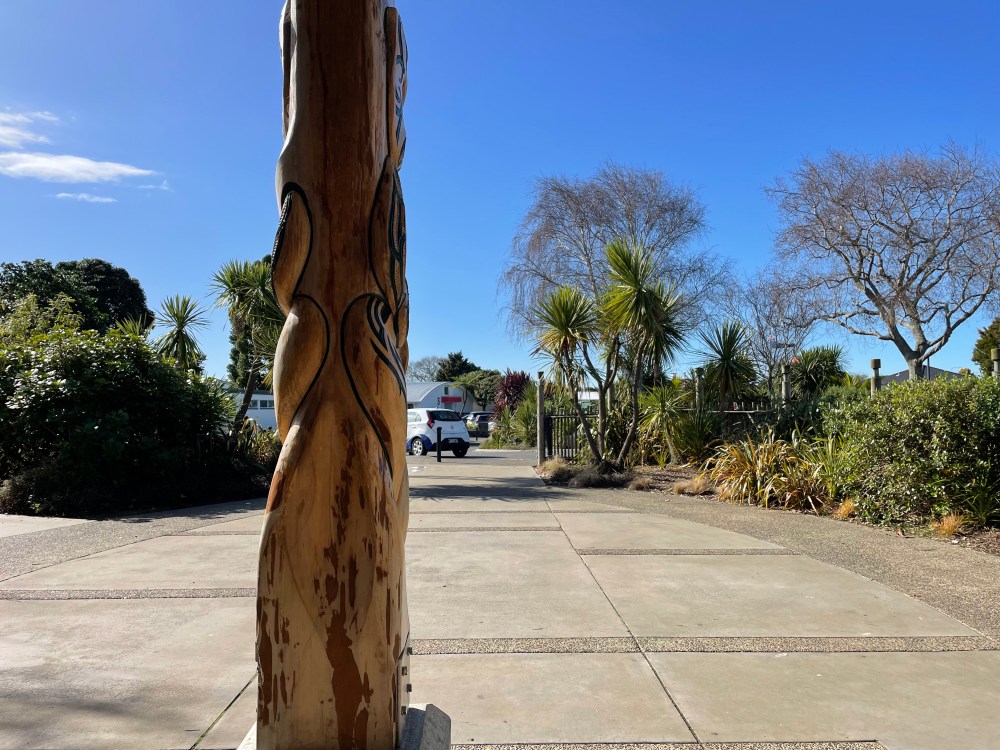
The number of students seen walking into the school gates were impressive. Manurewa High School has approximately 2,500 students enrolled at their kura, the majority of whom are Samoan, with Māori being the second largest ethnic group of the school’s student body (Manurewa High School | Education Review Office, 2018). Near the entrance to the school is a beautifully carved and decorated wharenui named after our ancestral place of origin, Rangiaatea. Rangiaatea’s welcoming raparapa directs me towards the reception area where I am met by Mrs. Sime and Whaea Ngāhuia and who invited me to the school hall to join their weekly 40 minute Ako Connect group session. When the bell rang, it was not a literal bell, but beautiful student voices serenading the school with a Māori song. I have never heard a school bell like that. I wondered if that got annoying after hearing it 5-6 times a day. Nonetheless, my first impressions were that te reo Māori, and kaupapa Māori were strong in this school.
School Frameworks, Initiatives & Programmes
The following are some of the school frameworks, initiatives, and programmes I particularly liked and thought may benefit our kura and department.
Educational Framework
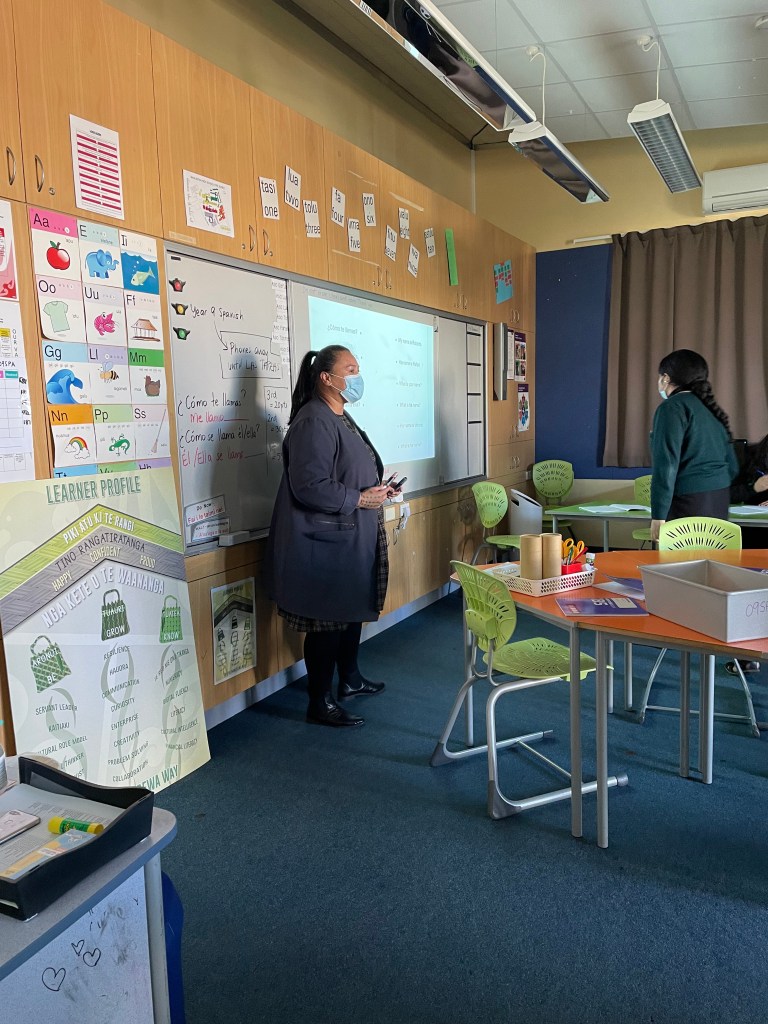
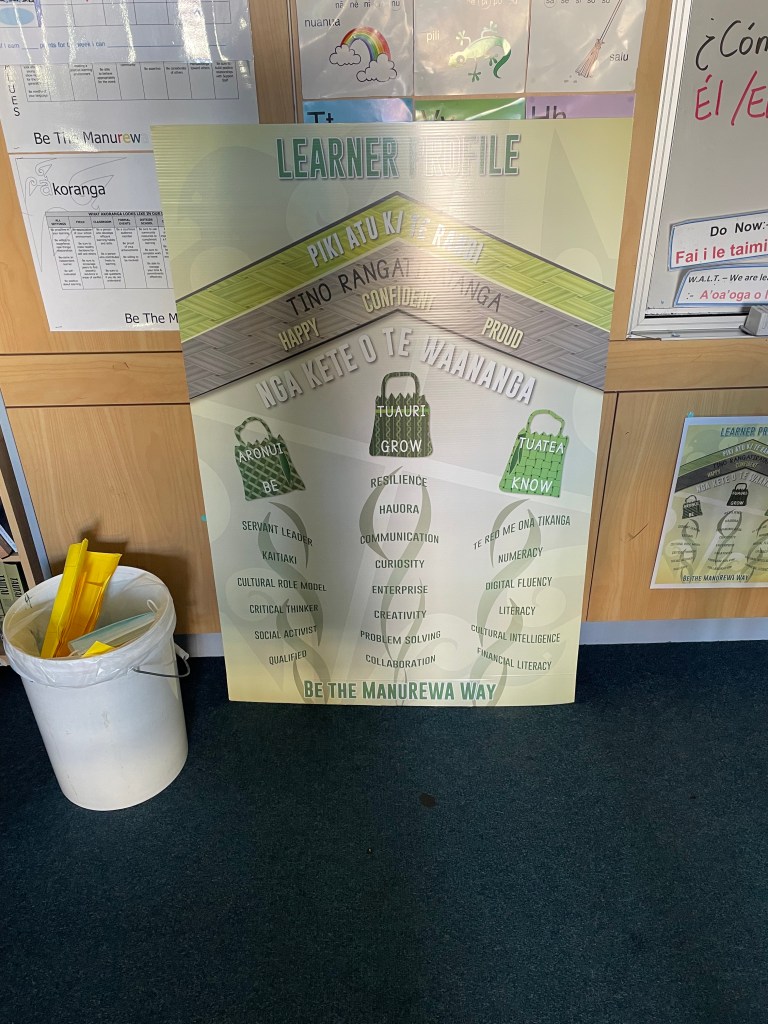
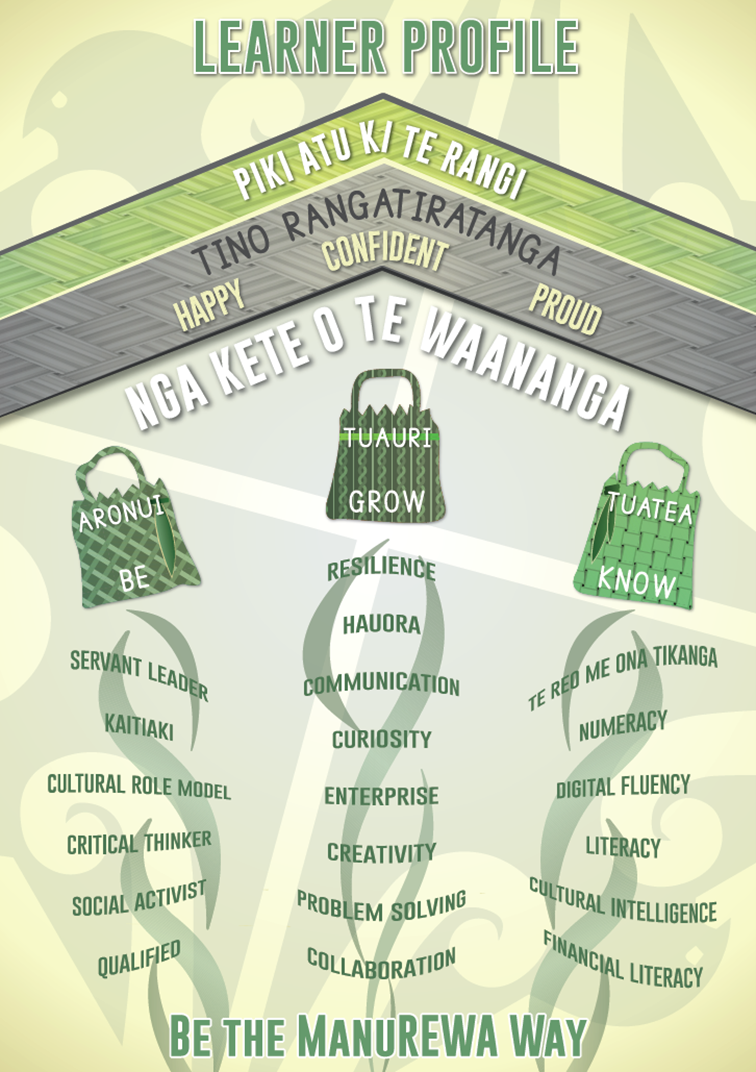
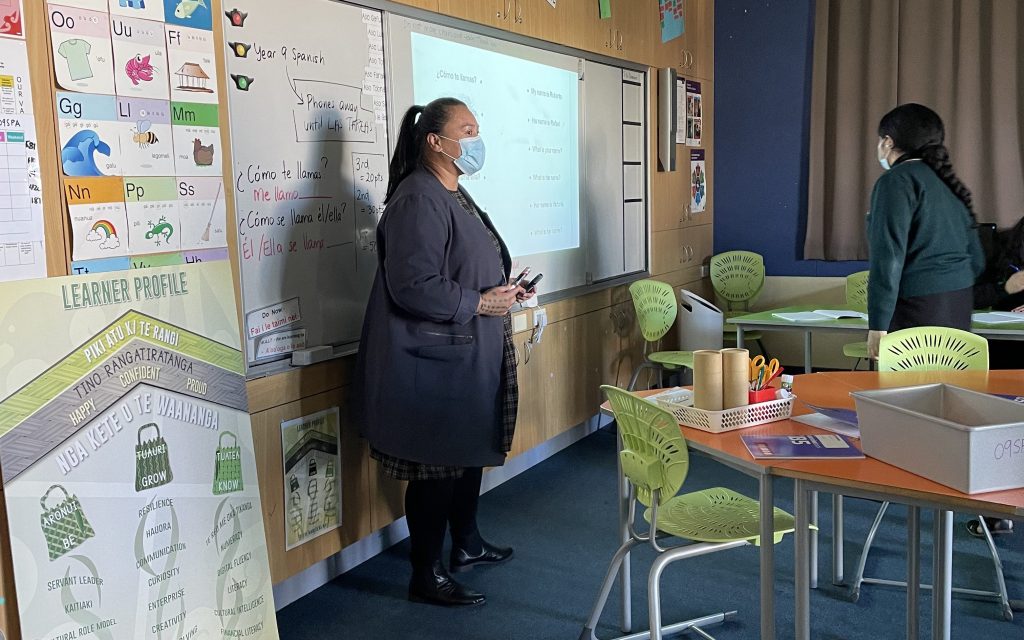
When observing Mrs. Sime’s class, I noticed a large poster board, so I did a little bit of digging on their website to see the deeper meaning behind this kaupapa Māori looking framework.

Te Ara a Tāwhaki
The name of their educational framework is Te Ara a Tāwhaki or Tāwhaki’s Pathway. This framework pays homage to the Tainui tūpuna, Tāwhaki (Sean Ellison et al., 2012). The legend of Tāwhaki, according to Tainui oral tradition, speaks about another variation of the Ngā Kete o te Wānanga pūrākau, which describes Tāwhaki, and not Tāne-nui-a-rangi, as ascending to the heavens and obtaining the three baskets of knowledge (Royal, 2015). The full explanation of their educational framework can be found here (Educational Framework, n.d.).
I really like this framework because it draws on mana whenua pūrākau, Sir. Mason Durie’s Whare Tapawhā model (1998), and is laden with powerful kupu and rerenga Māori such as “kawa,” “piki atu ki te rangi,” and “tino rangatiratanga.” They even use the double vowels which is unique to Tainui.
Te Manu Rewa o Tamapahore
The values pay homage to the Wai-o-hua and Ngāti Pāoa pūrākau entitled ‘Te Manu Rewa o Tamapahore’ or ‘Tamapahore’s Soaring or Drifting Kite (read the full story here). The school’s values takes the word ‘rewa’ to mean ‘soar high’ and which are, according to the school website, “the 4 essential elements that make up our kite or manu aute which we will use in order to soar and aim high (Piki atu ki te rangi) together as a whaanau and school community” (citation). The values are as follows:
R espect
E xcellence
W hanaungatanga
A koranga
1. Ako Connect
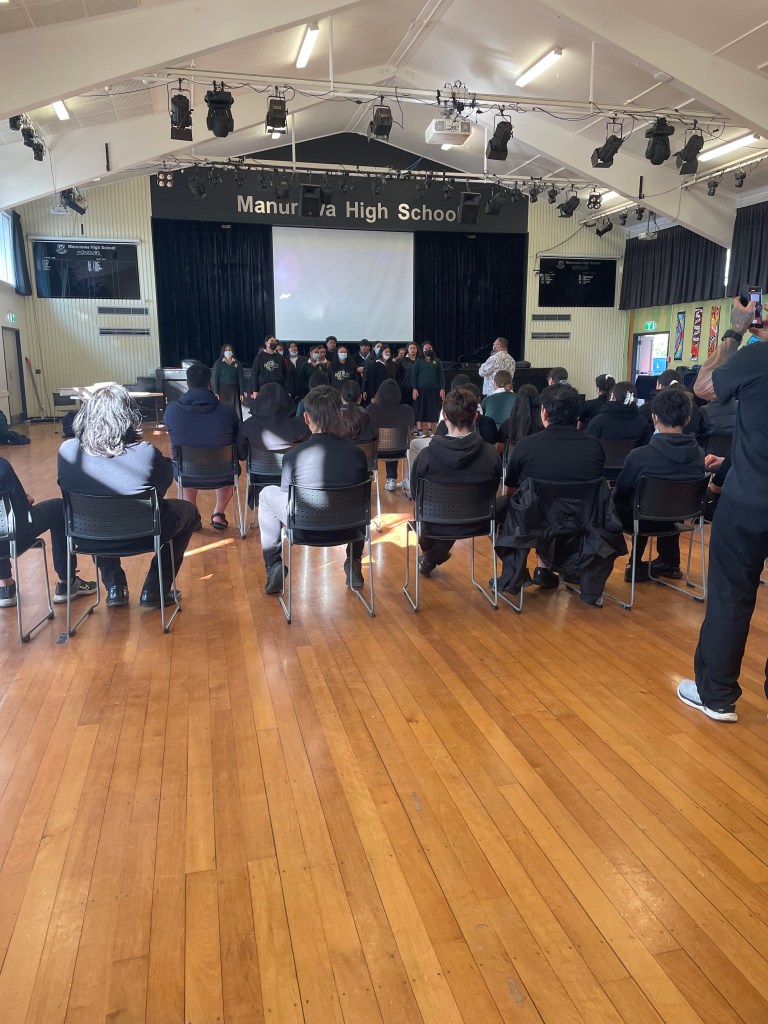
Upon my arrival to the school, I joined the Whānau Māori and the Choir Ako Connect groups. These two groups are only two of many Ako Connect groups and activities that were running at the same time in the school. These groups had come together for the first time to start their day with ice breakers, whakawhanaunga, waiata and haka. It was such a new and unique experience. I had no clue what was going on at the time. I would discover later what it was all about.
What is Ako Connect?
According to the school’s Facebook page, Ako Connect “is a combination of Hauora, Wānanga, Kaitiaki, Online Learning & Literacy. Ako Connect prioritises Taha Whānau (relationships & connections) as an essential aspect of ākonga engagement” (https://tinyurl.com/akoconnectinfo). I would argue it taps on all four walls of Mason Durie’s Te Whare Tapawhā, which is also makes up the foundation of Manurewa High School’s educational framework.
When is Ako Connect?
Every Monday, Thursday, and Friday from 9:00am-9:40am.
What is the intended outcome of Ako Connect?
- Ako Connect was initially set up to help ākonga re-engage back into onsite learning post-lockdown.
- To entice ākonga to attend school
- To maximise learning by enabling ākonga to kick-start their day with a positive attitude, feeling happy, confident, proud, and ready to learn.
Ako Connect Groups/ Activities
Ako Connect is broken down into three groups:
- Identity groups (places and spaces where ākonga have strong relationships) – I had joined one of these ones;
- Hauora groups (opportunities to support ākonga hauora);
- Targeted Ako groups (to help ākonga to get qualified).
Identity groups include…
Art Basketball Business Concert Band Cook Island Group ELL/Reception Health Science Academy HUEMANS (Diversity Council) League Makerspace Māori Whānau Rewake Poly Choir Poly Realms Rewa All Stars Rugby 7s Samoan Group Student Leadership/ Councils Tonga Group Trades Waka AmA
Hauora groups and activities include…
BOARD GAMES breakfast club CARDS CoMPUTER SPACES FIELD & TURF Jigsaw Puzzles Library MEDITATION MINDFUL COLOURING MUSIC NETFLIX PRAISE AND WORSHIP QUIET SPACE TIKTOK/ DANCE WEIGHTS ROOM ZUMBA
Targeted groups include…
SUPPORT WITH LITERACY UNIVERSITY ENTRANCE LEVEL 1 LITERACY NUMERACY GATEWAY SUPPORT WITH cvS/ APPLICATIONS/ STUDENT ALLOWANCES TERTIARY APPLICATIONS/ SCHOLARSHIPS ACADEMIC MENTORING PASSPORT SUPPORT AS A WHĀNAU MEMBER PASSPORT SUPPORT AS A STUDENT
Meeting Ākonga’s Hauora Needs
Ākonga are given the choice to select the Ako Connect group or activity that best meets their hauora needs on a particular morning. These needs can change day-to-day, week-to-week and so will the Ako Connect groups they decide to join. However, when ākonga select a group they must stay in their chosen Ako Connect activity for the entire 40 minutes.
2. Te Waharoa
Manurewa High School offers a two year Mau Rākau programme to ākonga from Year 10 to 12. It is a study and demonstration of Māori weaponry and martia arts. This is an accredited course that sits under the authority of Te Whare Tū Taua, a nationally recognised and accredited programme founded by Dr. Pita Sharples. The programme incorporates te reo Māori, hauora, and tikanga Māori. At the end, ākonga come away with a Level 2 National Certificate in Māori that recognises pūkenga and mātauranga Māori. Pai mutunga!
Ētahi Whakaaro | Some Thoughts
Manurewa High School has the most informative and detailed school website I have visited thus far. I love the whakaaro and kōrero behind their frameworks and values. They are so much more localised and integrate mana whenuatanga and tangata whenuatanga, something clearly missing in my own kura at present. It got me to re-think my own conceptual framework. They prompted me to ask myself: what kōrero pūrākau is there about my local area? Who can I contact from mana whenua (Ngāti Pāoa) about having wānanga pūrākau? How can these pūrākau be incorporated into our school values? At present we have the RISE values, which I personally and culturally does not resonate with me. These are whakaaro I would like to explore further with my kura whānau, ākonga, hapori and mana whenua.
Ako Connect would be something our school would really benefit from. The only question is, who would run all these activities and groups? I see so much potential in this kaupapa, more so than the mentoring classes we currently have. Most of us kaiako are not trained mentors and have no clue what we are doing most of the time. Ako Connect is all about hauora needs, ākonga agency, and positive mindset. These fit in well with what Tāmaki College has been pushing for the last three years that I have been teaching there.
Te Waharoa is something my ākonga and I have been discussing, but have not yet been able to discuss with whānau and the higher-ups. The Kaupeka programme had the potential to be this for my ākonga, but it is still in its infancy. Ruapōtaka marae are still figuring out the community needs and desires for this kaupapa. It is very exciting times!
Observations
Ngā Kaiako | The three teachers I observed
Whaea Ngāhuia Flavell – Te Reo Māori
Tōna Momo
Ngākau māhaki, ngākau aroha, ngākaunui ki te reo – these are all the adjectives that describe this wahine. Her gentle and kind nature fosters a safe learning environment for her ākonga. Although she feels the reo is not important in their kura, she pushes on for the sake of her ākonga and for her reo – ngākau nui ki te reo.
WHĀNAU/ WĀNANGA GROUPS
A cool kaupapa they have is a whānau/wānanga groups (instead of mentoring groups). Ākonga who are in the whānau group are required to take te reo Māori, kapa haka, and leadership roles.
Year 10 Te Reo Māori Class
Learning objective: to respond to questions in te reo Māori.
Whaea Ngahuia teaches from the front of the class at her whiteboard.
- Grammar revision – how to ask and answer questions in te reo Māori, i.e., “Kei te pēhea koe?”
- Goes over the Year 10 assessment topics, including:
- Whakanui tāngata – acknowledging people;
- Hākingakina – sports (popular);
- Take – issue;
- Raru – problem;
- Mehenga – solution.
- Students are directed to go to their online learning platform (Microsoft Teams) where they are tasked with choosing a structure and writing it in their pukapuka.
Ngohe Mātakitaki, Whakarongo, and Tuhituhi | WATCHING, LISTENING, AND WRITING TASK
Sets up the whakaaturanga/ video on TV (using laptop) to play Te Ao Mārama clips.
Ākonga watch a whakaaturanga for each topic and answer the questions relating to them in te reo Māori:
- Whakanui Tangata
- Ko wai te kaiwhakahaere?
- He aha te kaupapa?
- Ko wai te kairīpoata?
- Pāpāho mai:
- Ko wai te tangata e whakanui ana?
- He aha te pūrākau?
- Hākinakina
- He aha te whakaaturanga?
- Ko wai te kaiwhakahaere?
- He aha te whakataetae?
- Kei hea te whakataetae?
- Ko wai te kaiuiui?
- Ko wai ngā kaiwhakataetae?
- Ko wai te kairīpoata?
- Take/Raru/Mehenga
- He aha te whakaaturanga?
- Ko wai te kaiwhakahaere?
- Ko wai te kairīpoata?
- Pāpāho mai:
- He aha te raru?
- He aha te mehenga?
All the ākonga were engaged in their mahi.
The above is an activity I would like to try with my Year 11 class.
Rauemi
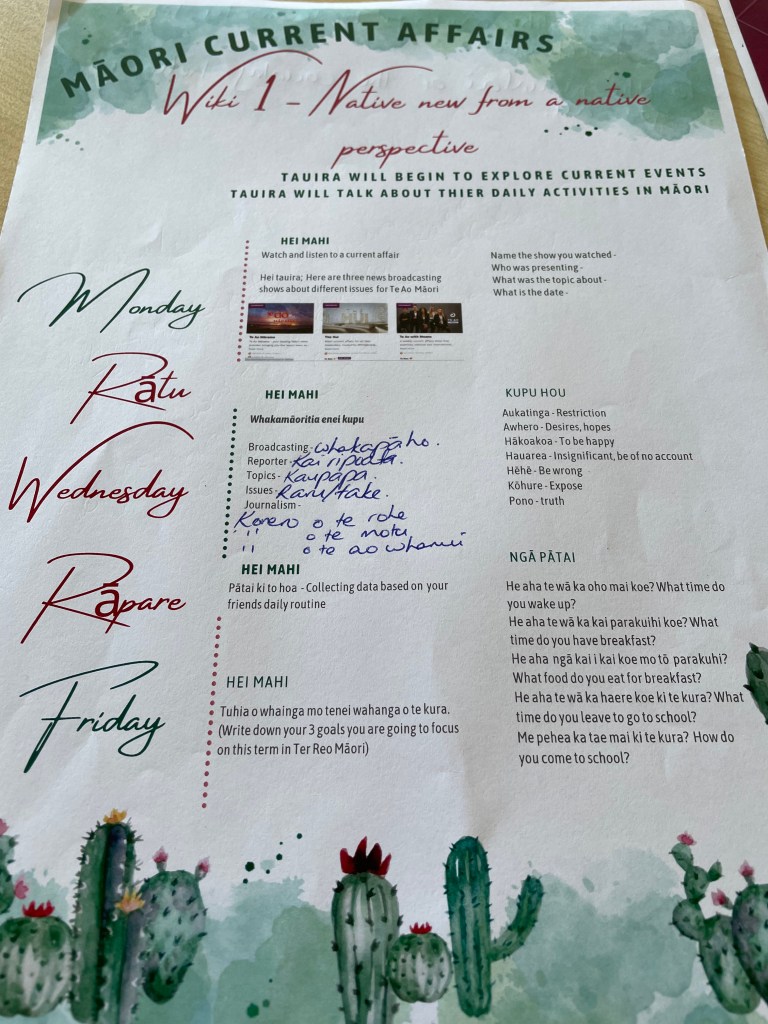
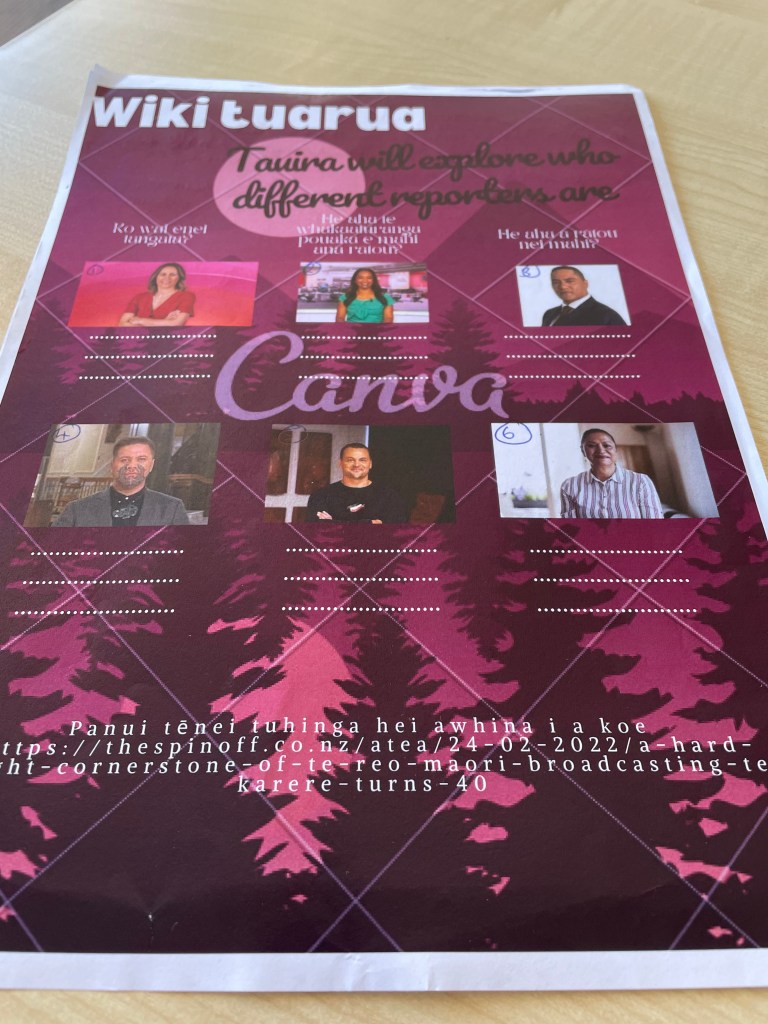
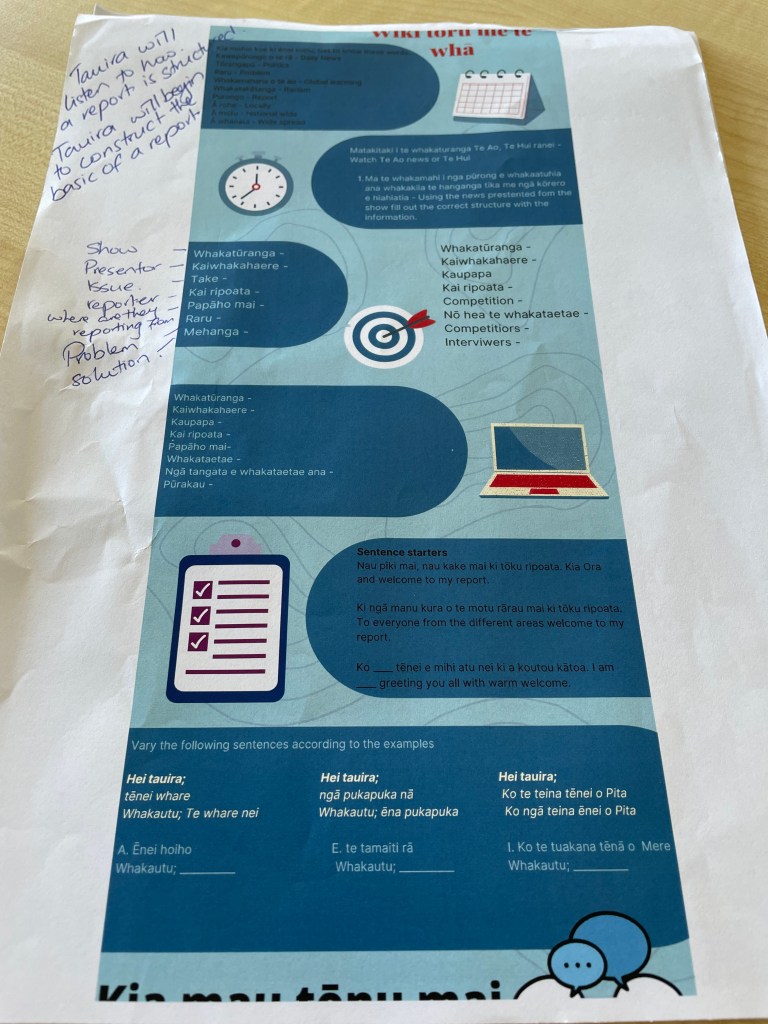
Canva – she uses canva to make her weekly plans and resources for her ākonga; she has to pay for her own rauemi as the school will not provide a budget for this;
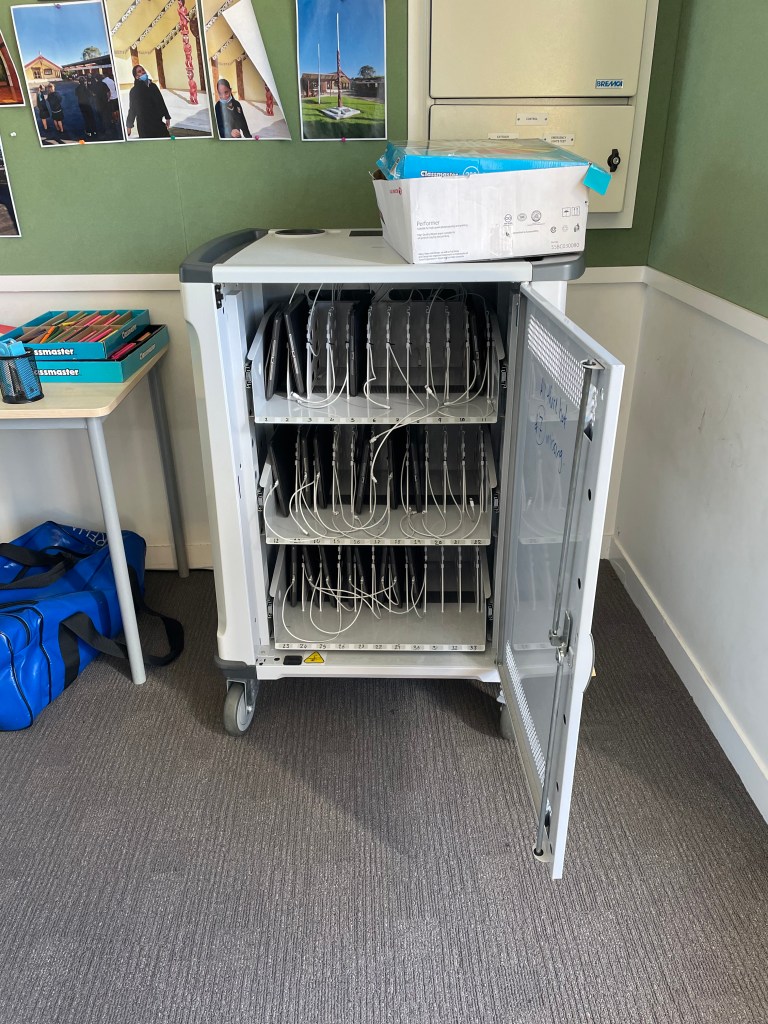
īPapa/ iPads – she has īPapa, which I thought was cool, but she was unhappy about them being the most outdated ones or hand-me-downs from other departments who have the newer models;
Māori Television – uses clips from Te Ao Mārama and Te Hui (Māori news and current affairs) for her whakarongo tasks;
Māori To Go (McKinnon, 2016) – only uses Nadine McKinnon’s Māori To Go to fill in gaps and teach grammar as her students cannot make full paragraphs by just using this pukapuka alone;
He Pūtea Reo: a revision book for School Certificate (Cormack, 1984) – although it is old, it is still gold for Whaea Ngāhuia. she uses Ian Cormack’s He Pūtea Reo more often than others, as the sentence structures are simpler and easier to follow;
Kōrero Māori Mai: speak to me in Māori (Pyatt, 2009) – also uses Jenny Pyatt’s Kōrero Māori Mai series, which contain dialogue cards or prompts to allow ākonga to hold simple conversations in te reo Māori.
Ākonga feedback
- Do you find the writing exercise hard to complete?
- Student response: 80% yes, 20% sort of.
- Do you enjoy this listening activity?
- Student response: 100% yes, I like hearing te reo Māori being spoken.
Uncle Bronson Seiuli – Gagana Sāmoa
Tōna Momo
Uncle Bronny (as we call him in our Toki whānau of Te Ahitū) has always reminded me of a Samoan or Tongan elder. He is wise, observant, attentive, and can tell a good story. I love that he can crack so many jokes while still keeping a straight face, he honestly makes me laugh. Uncle Bronny is organised, and has a strong confident presence that his ākonga respect and look up to.
Year 9 Gaga Sāmoa
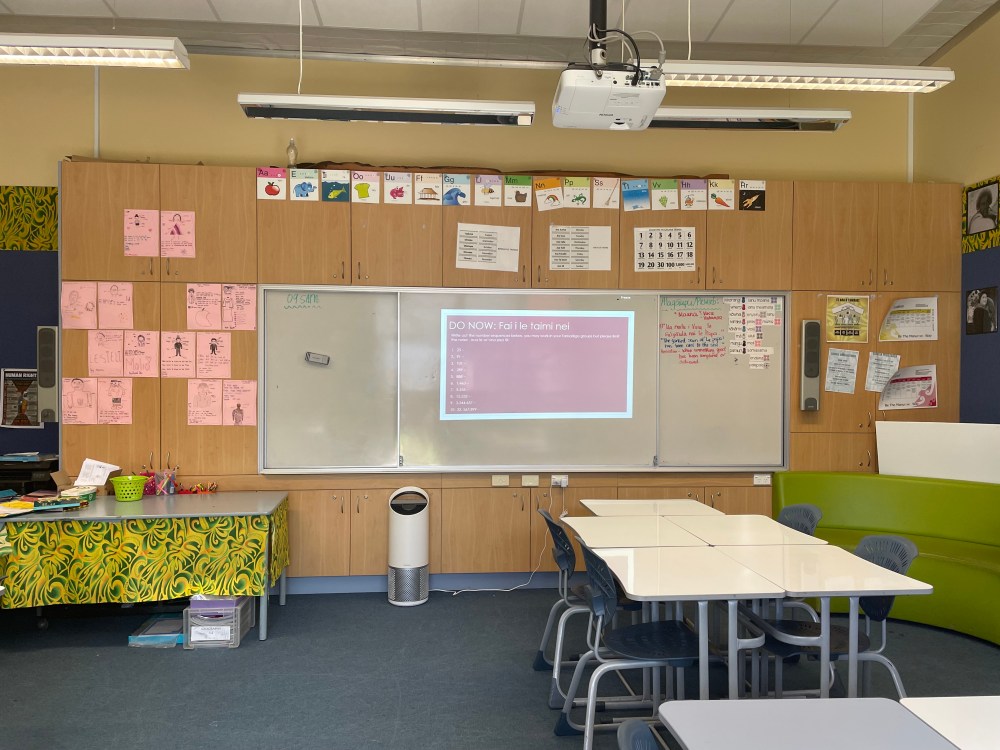
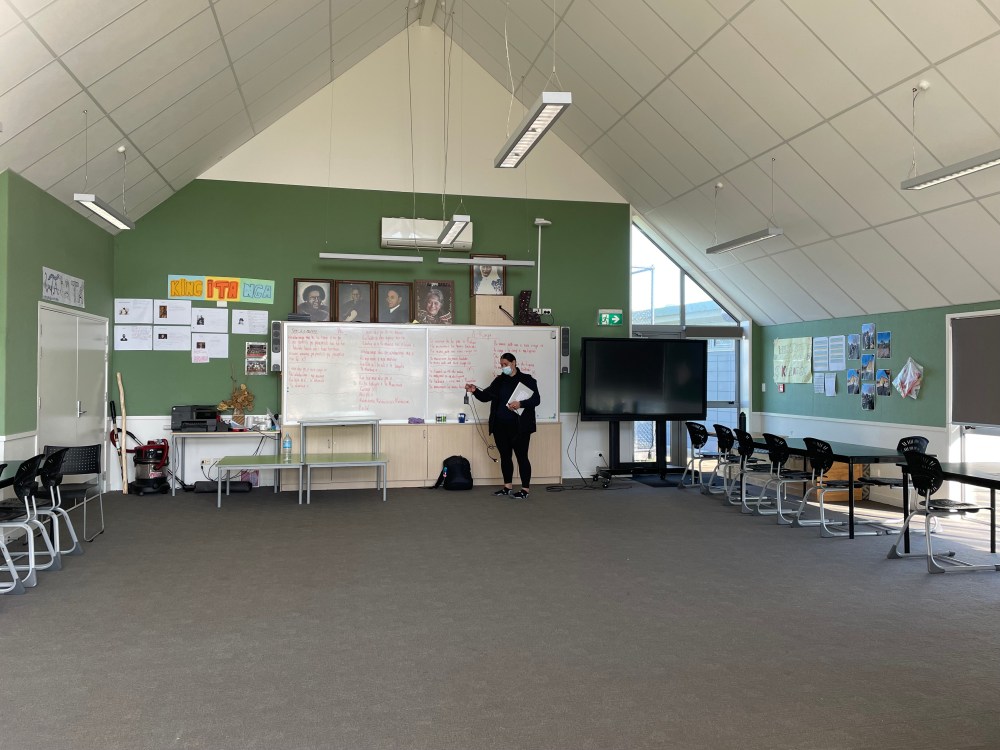
I got to observe Uncle Bronny teach his new rotation of Year 9 ākonga. The Year 9 cohort are rotated every term, much like us at Tāmaki College.
Uncle Bronny shares his class with three other language teachers, which causes issues for ākonga. For instance, his new Year 9 class arrived 15 minutes because their class was changed.
Like me, Uncle Bronny plays music in the background, which helps to set a chill vibe for the class. His ākonga, I observed, were engaged in all the activities. There were a few ākonga who could speak or understand gagana Sāmoa (or both). The ones who did not speak or understand, showed a hunger for their mother tongue.
- LOTU
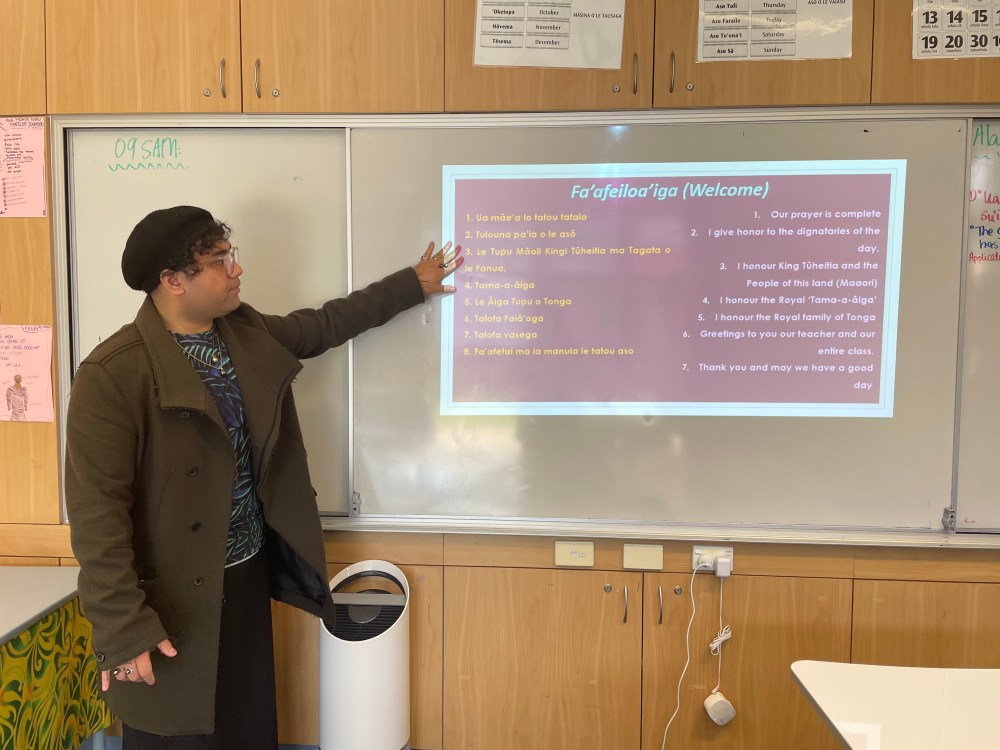
- WELCOME: Fa’afeiloa’iga
- PREVIOUS LESSON: Reflect on what was learnt/taught previously –
- INTRODUCTION: fa’a tūlima
- L.O: goes over learning outcome
- to be able to read, write and pronounce numbers from 1-20 and beyond and use these in a sentence.
- to be able to identify times of the day and use them in a sentence
- DO NOW: Fai i le taimi nei – write out the number sequences.
- They work in their Tamaāiga groups.
- Hundred – selau
- Thousand – afe
- Ākonga are invited to go up and write the answers on the board
- They work in their Tamaāiga groups.
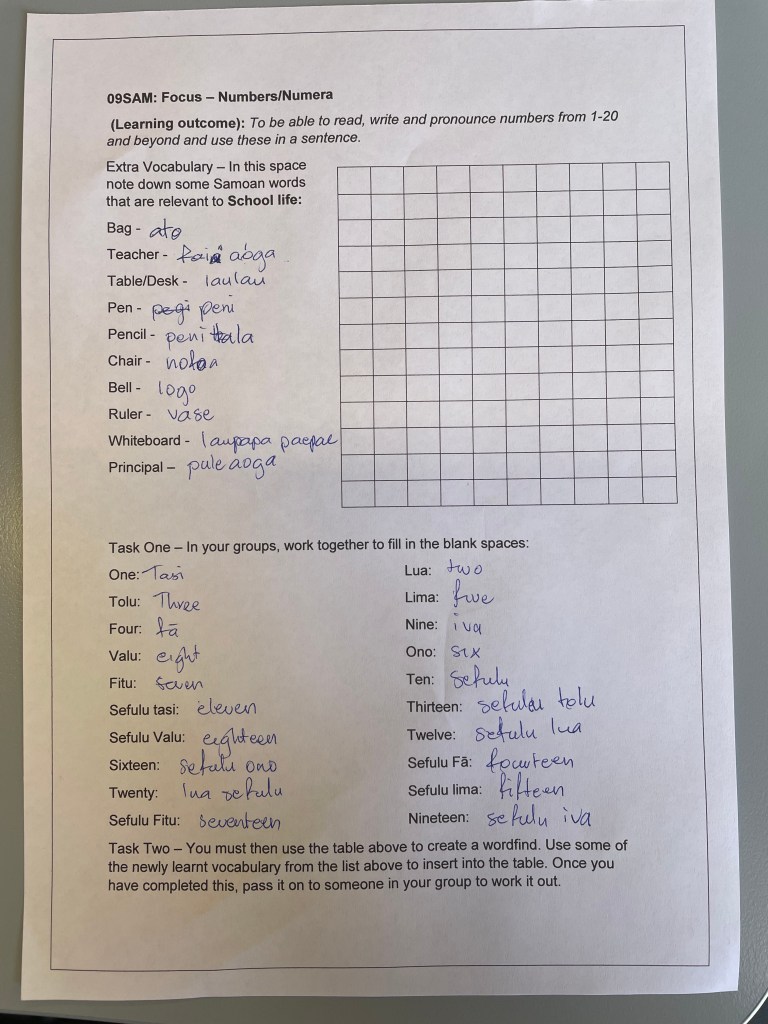
- ACTIVITY SHEET:
- individual work
- find and write translations for English and Sāmona wors
- use these words to create their own word find
- individual work
- NEXT LESSON: talks about what they are learning next:
- times of the day is the next learning topic
Ōna Pōtae Maha
Some of Uncle Bronny’s other responsibilities include tutoring the Samoan and Tongan cultural groups. He also teaches both gagana Sāmoa and lea faka-Tonga.
I feel as though Māori and Pasifika kaiako are constantly replied upon in these lower decile schools to carry a lot of responsibilities because the school population and community are often largely Māori and Pasifika.
Wall Displays
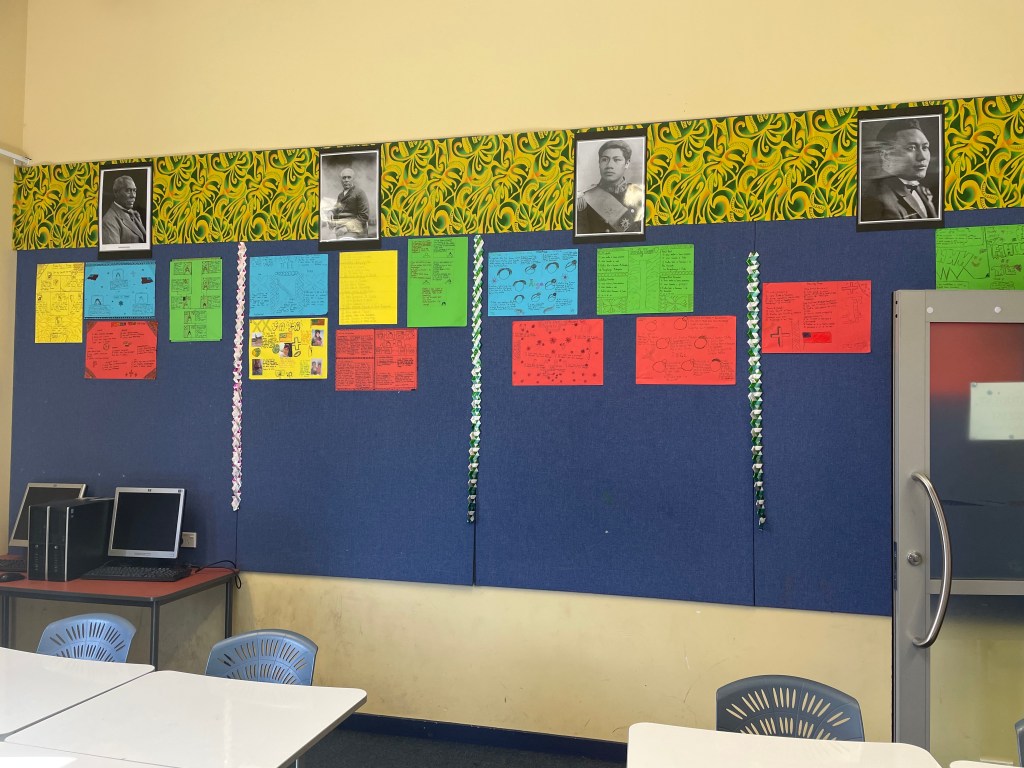
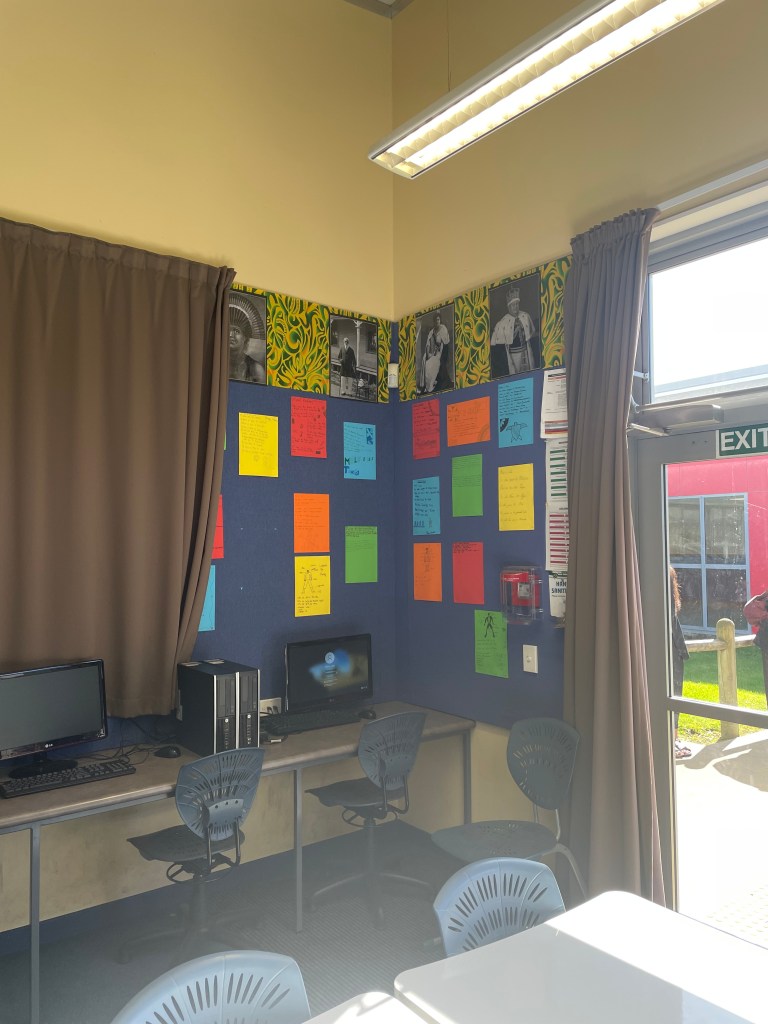
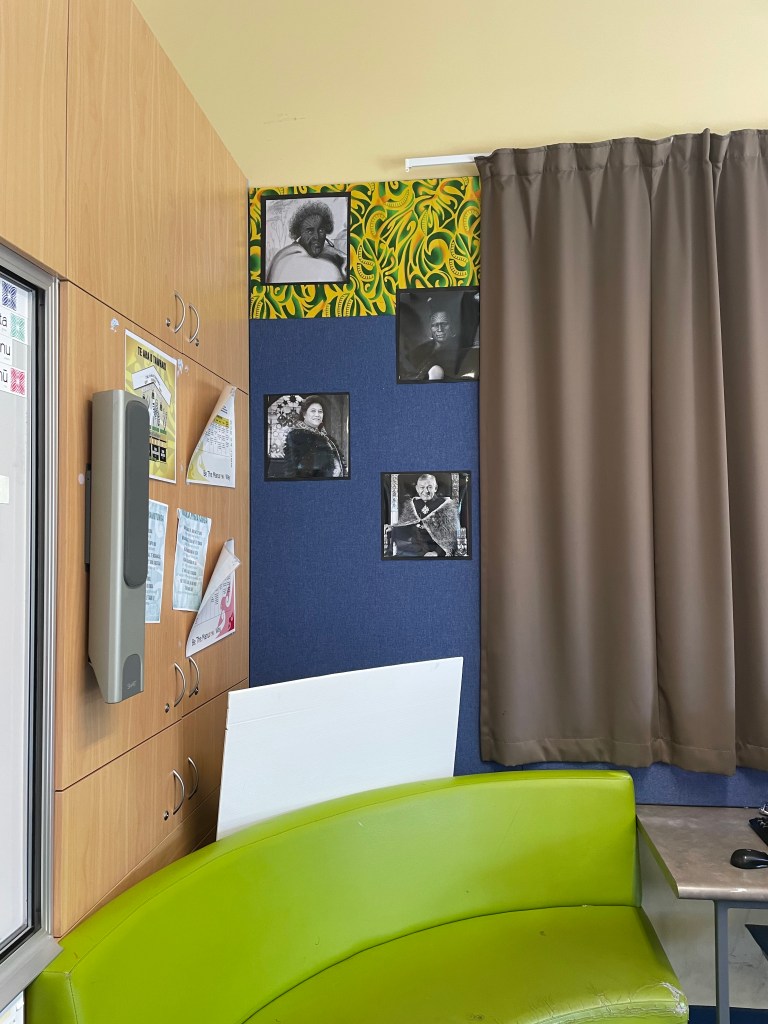
I was really drawn to the images of the Māori, Samoan, and Tongan royalty. He explains that he added the Māori kings and queen on his wall to give credence to the tangata whenua, and the mana whenua of the area upon which the school sits. He got me thinking about my own display of the Kāhui Ariki.
Issues
According to Uncle Bronny, resourcing is the most time consuming part of his mahi.
Quick Reflection
It would appear that Māori and Pasifika languages kaiako go through similar struggles. We take on too much for too little and given very little support.
Mrs. Linda Sime – Langua Española
Tōna Momo
Mrs. Sime is stern, strong, but fair, which clearly demarcates her as a leader and a good one at that. She teaches Spanish, Sāmoan, and ELL while also heading the Languages department. She is organised, adaptive in her practice, and is always willing to try new things.
Year 9 Spanish Class
While Spanish and English are the languages of instruction, fa’a Samoa is what manages and runs in her Year 9 Spanish class. Mrs. Sime is an adept border-crosser. She is firmly rooted in her own ancestral language and culture which has allowed her to traverse into other cultural and linguistic domains with ease and confidence while still maintaining her own. She switches between three languages through the lesson, English, Spanish, and Sāmoan. She gives a telling-off to the excitable corner of ākonga in Sāmoan before she goes back to instructing the class in English and modelling sentences in Spanish. It was so cool to hear and watch.
Device Traffic Light
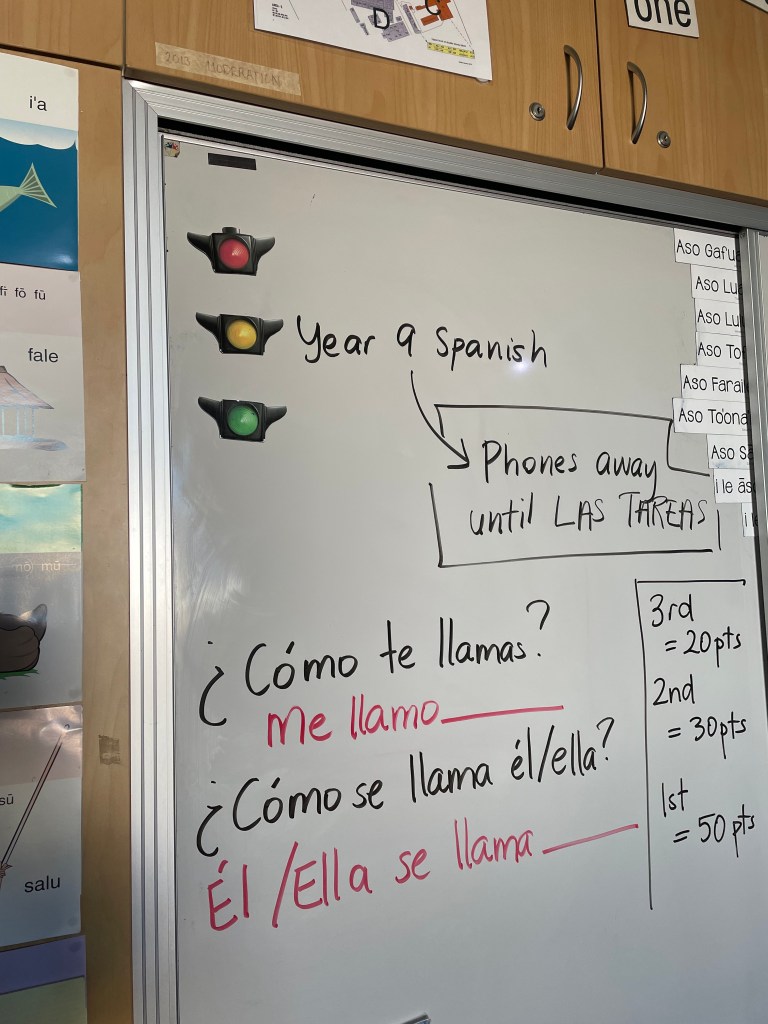
The device traffic light is such an awesome idea! Mrs. Sime uses it to manage device use in her classroom, which is something I have been trying to solution in my own classroom setting.
Typhoon Game
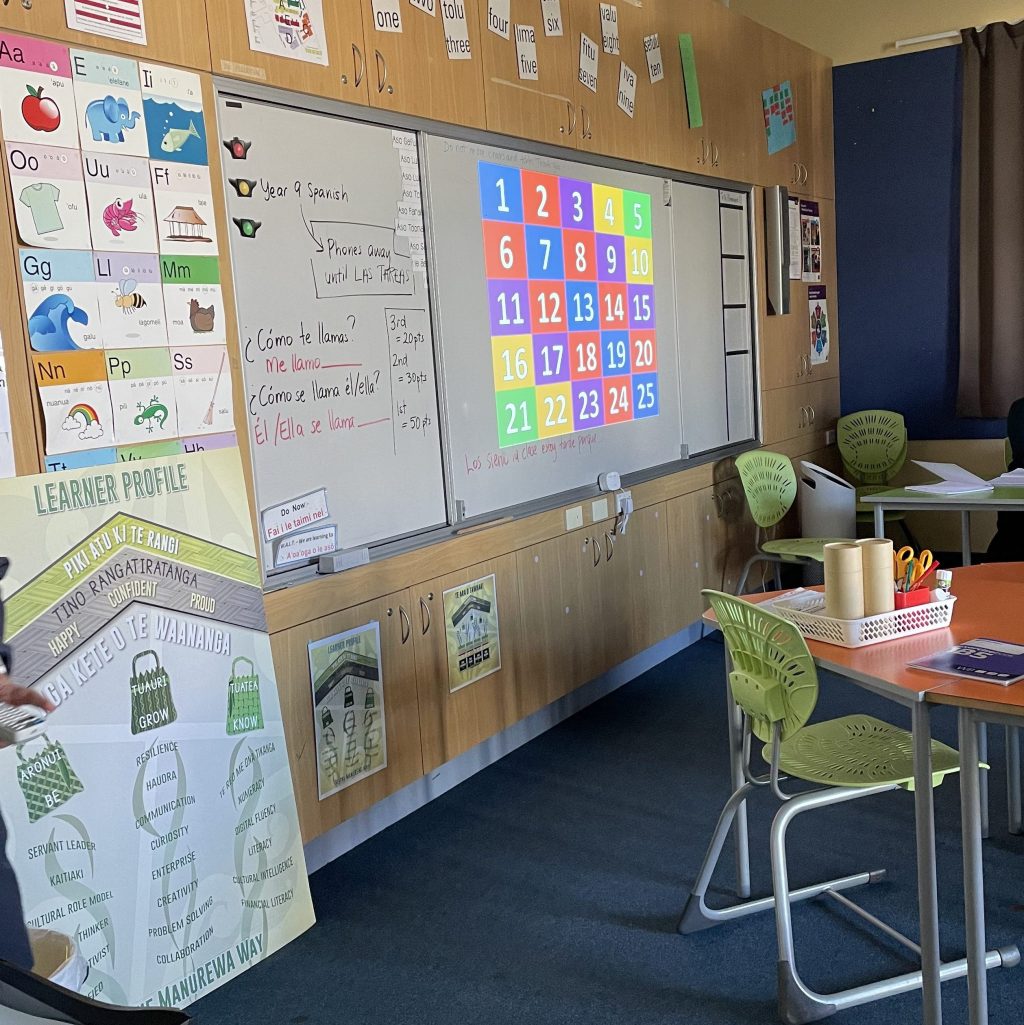
The junior classes love this game.
How do you play?
- Each table is a team
- The teams choose a buzzer
- Ākonga select a number on the grid and have to answer the hidden question
- The first person to stand has 5secs to answer
- The penalty for not answering in 5secs or if they answer wrong the whole team is out and their team cannot answer until their next turn
They do weekly games and the winners are announced weekly based on total points.
POINTS CHART
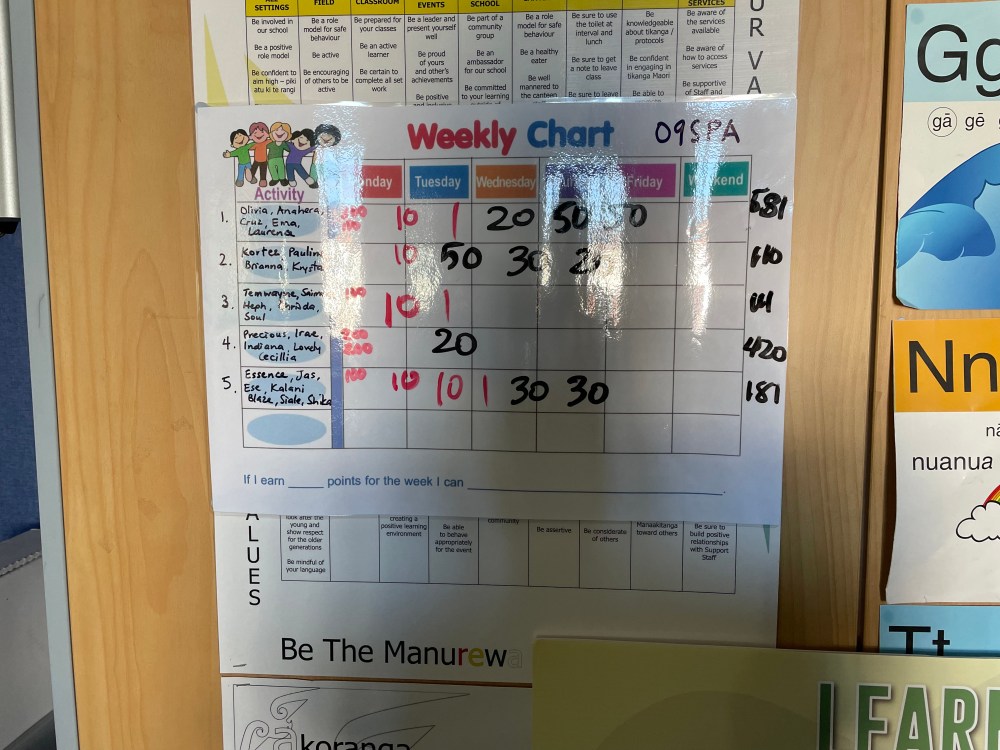
Mrs. Sime organises weekly games for her junior classes and the winners are announced weekly based on the total points on the weekly points chart.
The games and points system is Mrs. Sime trying to maintain ākonga engagement.
Ngā Tohutoro
Durie, M. (1998). Whaiora: Maori health development. Auckland: Oxford University Press, pp. 68–74.
Educational Framework. (n.d.). Manurewa High School. Retrieved August 12, 2022, from https://www.manurewa.school.nz/about/educational-framework.
Sean Ellison, Angeline Greensill, Michael (Malibu) Hamilton, Marleina Te Kanawa, & James Rickard. (2012, October 1). Tainui Oral and Traditional Report. In Ministry of Justice (Wai 898, # A99). Ministry of Justice. Retrieved August 15, 2022, from https://forms.justice.govt.nz/search/Documents/WT/wt_DOC_42317979/Wai%20898,%20A099.pdf.
Learning Values. (n.d.). Manurewa High School. Retrieved August 12, 2022, from https://www.manurewa.school.nz/about/learning-values.
Local History | Korero o Nehera. (n.d.). MANUREWA MARAE. Retrieved August 13, 2022, from https://www.manurewamarae.co.nz/local-history–korero-o-nehera.html
Manurewa High School | Education Review Office. (2018, June 28). Retrieved August 12, 2022, from https://ero.govt.nz/institution/99/manurewa-high-school.
Royal, T. A. C. (2015, April 20). Hawaiki – The significance of Hawaiki. Te Ara – the Encyclopedia of New Zealand. Retrieved August 14, 2022, from http://www.TeAra.govt.nz/en/object/476/tawhaki.
 Te Kōpaki a Ruiha Epiha