DAY 2 І Tuesday 20 April, 2021
Project-Based Learning (PBL)
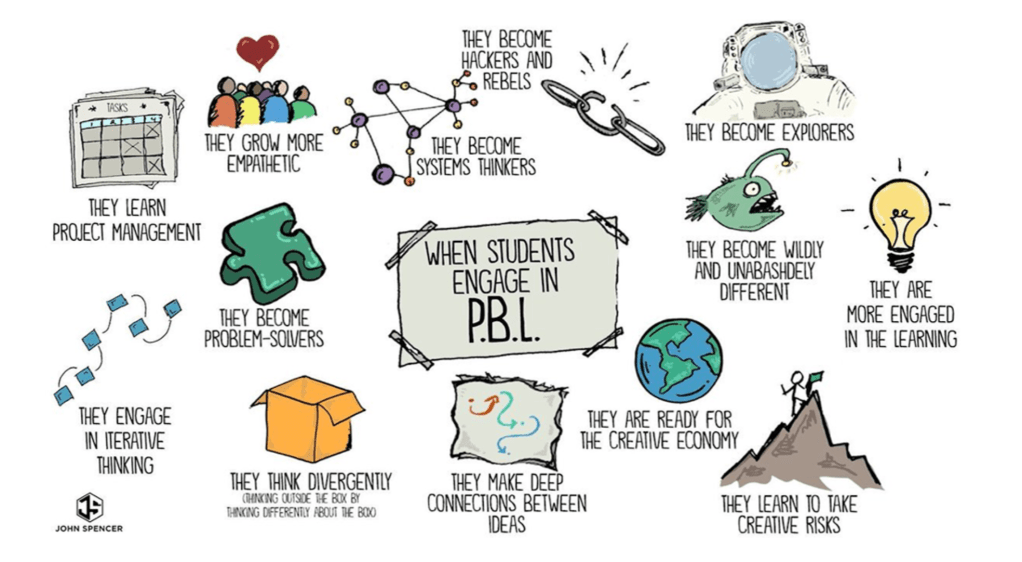
In the inquiry process, ākonga have identified what they want to know. Through the inquiry process, ākonga may discover a problem or learning scenario for which ākonga would like to create a solution. Therefore, ākonga will take this problem or learning scenario and then go through the design thinking process to arrive at a tangible solution.
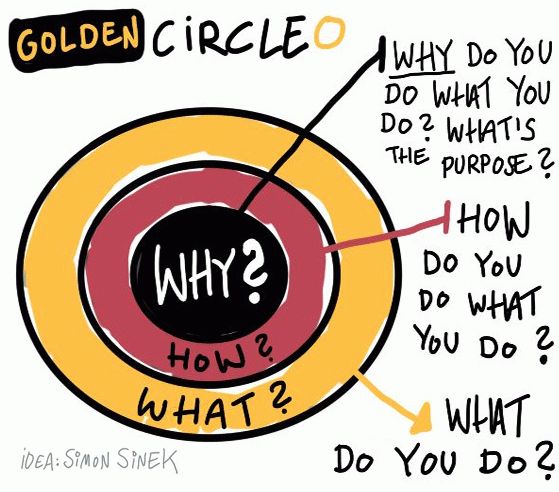
Golden Circle (Simon Sinek, 2009)
Simon Sinek’s (2009) Golden Circle speaks to every individual who has lost motivation to do what they are doing. Sinek’s (Ibid) Golden Circle offers a means to inspire and motivate action by getting the individual to start with why preceded by how and what. The Golden Circle also offers an inquiry framework for project-based learning in the education space. In the project-based inquiry process, the Golden Circle questions would look like the following:
- Why is it important to solve this problem?
- How will you create the product to solve the problem?
- What will you produce to solve the problem?
PBL, inquiry, and place-based learning fit within this Golden Circle framework of why, how, and what.
Rachel Tuwhangai’s Project
Rachel spoke about the personal investigation she underwent to solve the issue of her dogs barking whenever she received visitors at her whare.
- Why: There is a risk of her puppies being removed if they don’t stop barking.
- How: How can I stop my puppies from barking when people come to her house?
- What: What can I do, create, or buy to solve this problem?
Possible solutions explored: various collars, snacks, high-pitched noise gadgets, dog house, leash, wrapped up newspaper for whacking the dogs.
Solution: Rachel’s solution was a salu (a Samoan broom). Rachel would only have to waive the salu, and the dogs would stop barking. Later she would discover that her husband used the salu to discipline the dogs in her absence, which is why the dogs stopped bark when she waived the salu.
Design Thinking Process
When you are undergoing a project, you first need to identify the problem: what do you want to solve? Then you need to build empathy or understanding around the person/people for whom this solution will serve: for whom do you want to solve which problem? Once you have collated the information gathered, you need to ideate or brainstorm a whole lot of ideas you could explore to solve the problem: which ideas could solve the problem? After the ideation phase, you will describe and create something that will solve the problem: what exactly is the solution? Finally, you will test the product and gain user feedback: what does the user think about your solution?

The underlying commonality of the three approaches (PBL, inquiry, and place-based learning) follows a proactive problem, process, and product pathway.
Problem → Process → Product
Integrated/ Interdisciplinary/ Inter-curriculum Education
The last pedagogy discussed was integrated units. Integrated education is a collaborative process whereby several staff members from different departments create a whole unit based on one topic, principles agreed upon by the group, curriculum links to the various subjects, and community links (if based on local curriculum). These units evolve around one task but are credited in multiple ways. For example, you could do an integrated unit around the marae, and students could potentially acquire 30 credits (minimum) from various subject areas.
How do you plan for an integrated unit?
IMPORTANT: You must have staff buy-in, which can be very difficult.
Start with collaborative brainstorming and plan with the other subject teachers.
You would plan as follows (in this order):
- Year Level: what year level will be the focus?
- Members: who are the kaiako present?
- Date: what date was the planning completed?
- Topic / Learning Scenario / Problem
- Principles: What fundamental principles or values will you agree to in terms of working together?
- Ethics: do you plan on selling it? Do you plan on using it in your master’s thesis or conference?
- Curriculum links: what curriculum links will you bring into this topic/learning scenario/problem?
- Local curriculum: are you doing local curriculum? What does your school identify as important for ākonga to learn at your kura? Who or what are your community links?
Click here for Rachel Tūwhāngai’s example of an Integrated Internal Assessment Resource.
Kaiako as Kaiārahi
There is no linear way of solving issues. Project-based inquiry and place-based learning are all ways in which ākonga can explore or investigate a problem. All three can be employed and experimented with simultaneously within an integrated curriculum as they all share the same objective. All the above approaches and pedagogies encourage ākonga to be creative, critical thinkers, work individually and in groups, be prepared, manage their time efficiently, and articulate, communicate, and convey their ideas. These are all employable attributes that aim to prepare ākonga for the creative economy and develop a love for learning. As kaiako, our only role in these learner-centred approaches is to be kaiārahi or guides for our ākonga.
“Our role becomes the coach or the guide and the kids are the problem solver. So they [the ākonga] solve the problem and we just coach and guide them”
Rachel Tūwhāngai, April 20, 2021
NGĀ TOHUTORO
Sinek, S. (2009). Start with why: how great leaders inspire everyone to take action. New York: Portfolio.
Vygotsky, L. S. (1978). Mind in society: The development of higher psychological processes. Cambridge, MA: Harvard University Press.
 Te Kōpaki a Ruiha Epiha