Observation of Tāmaki Primary | Wednesday 25 May 2022
with Whaea Lee-Ann, Whaea Saf, and Whaea Pare
Away School Visit #2
He aha te kaupapa?
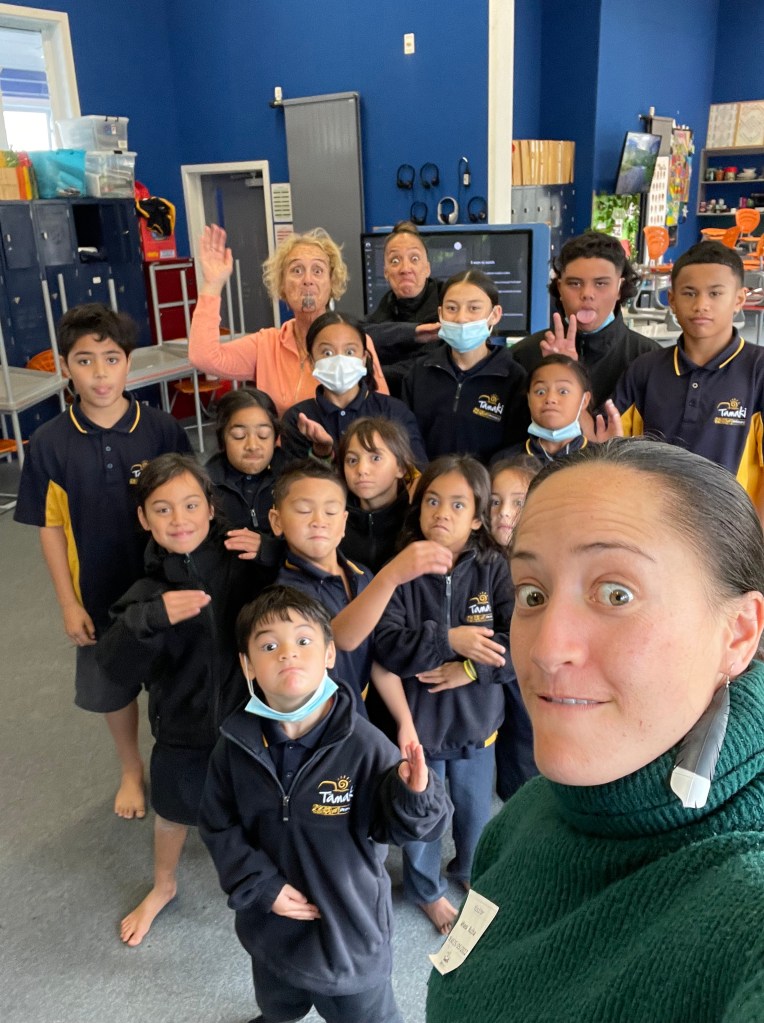
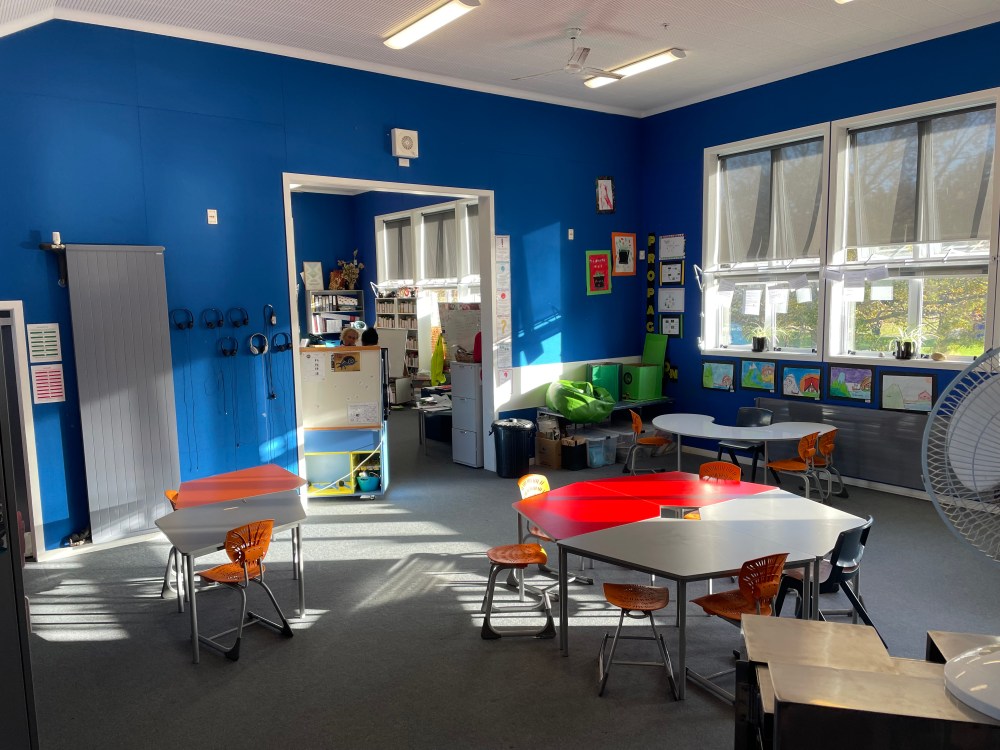
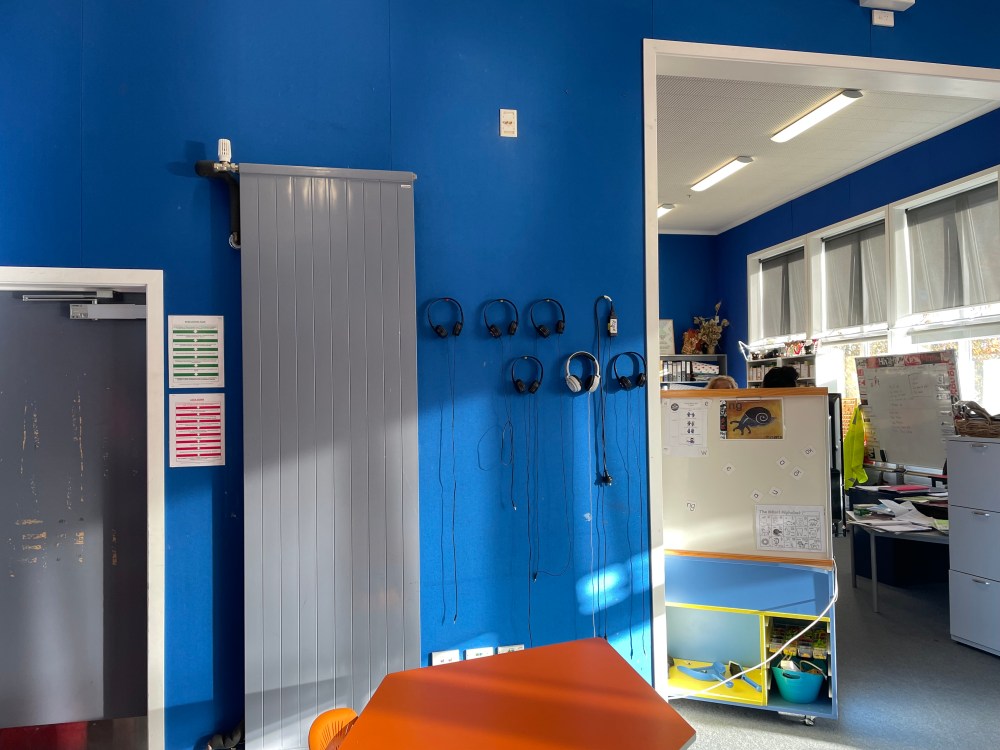
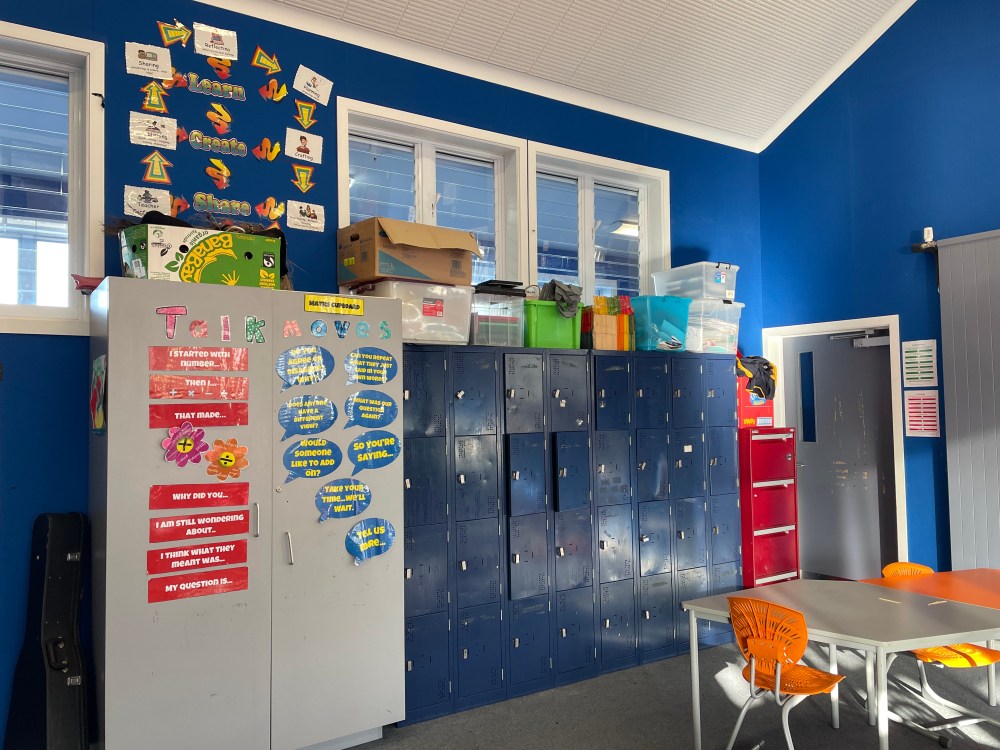
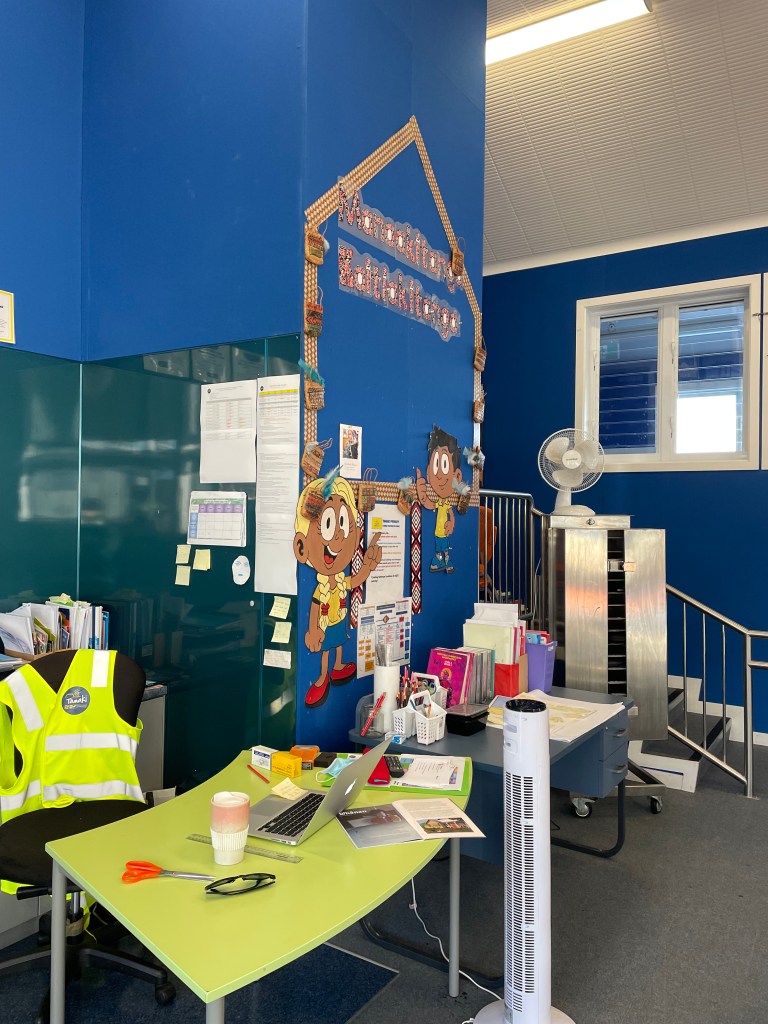
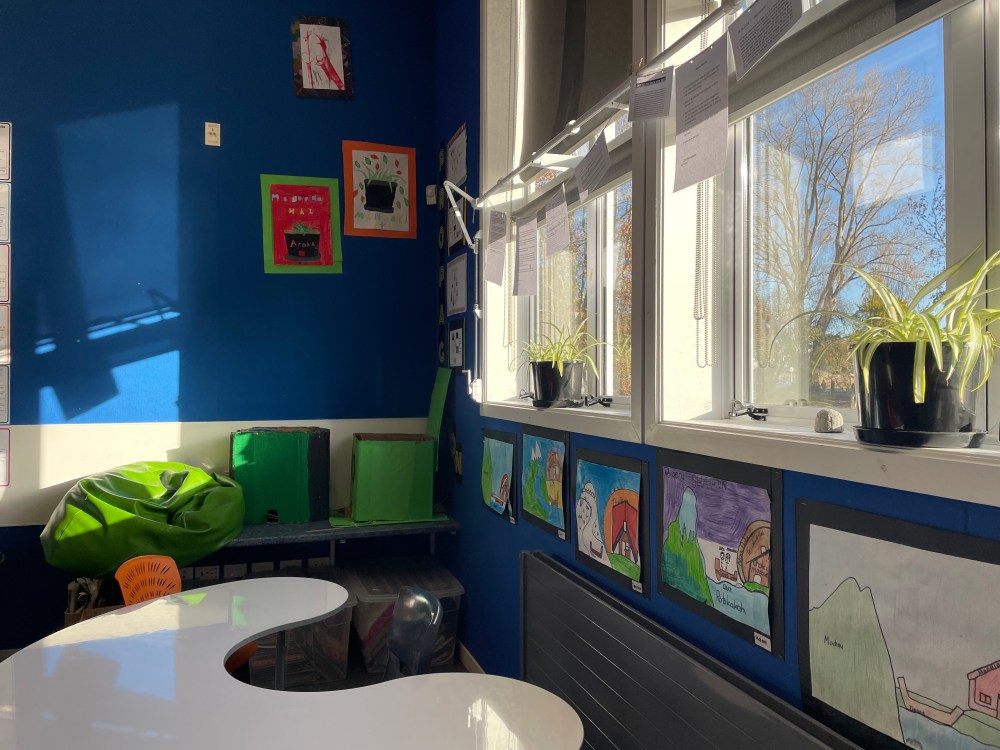
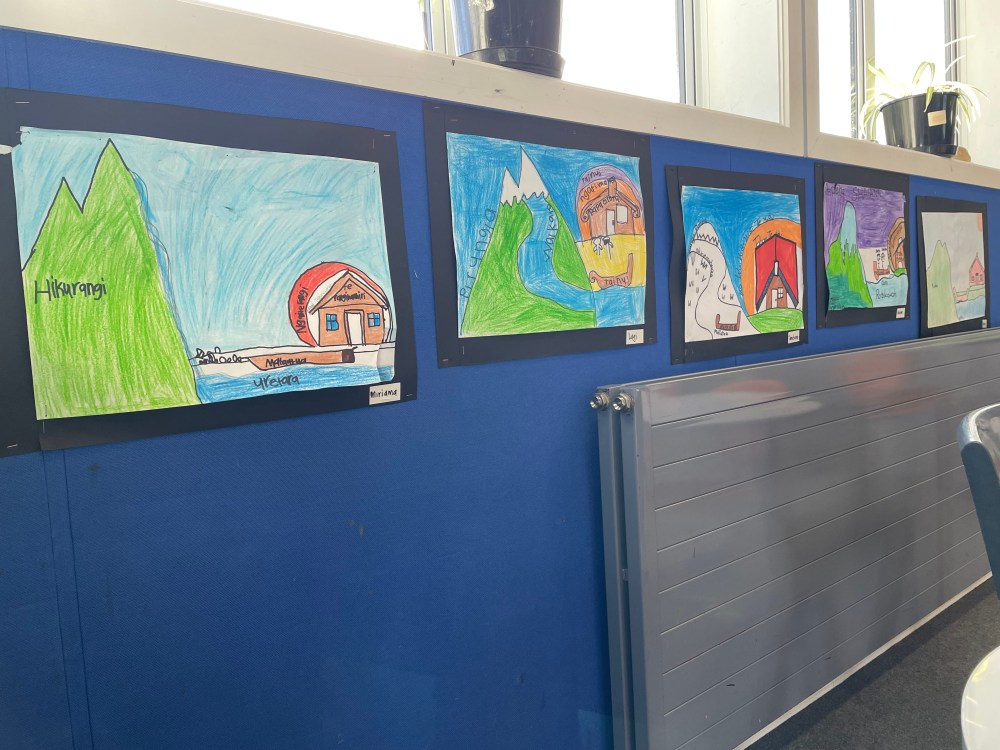
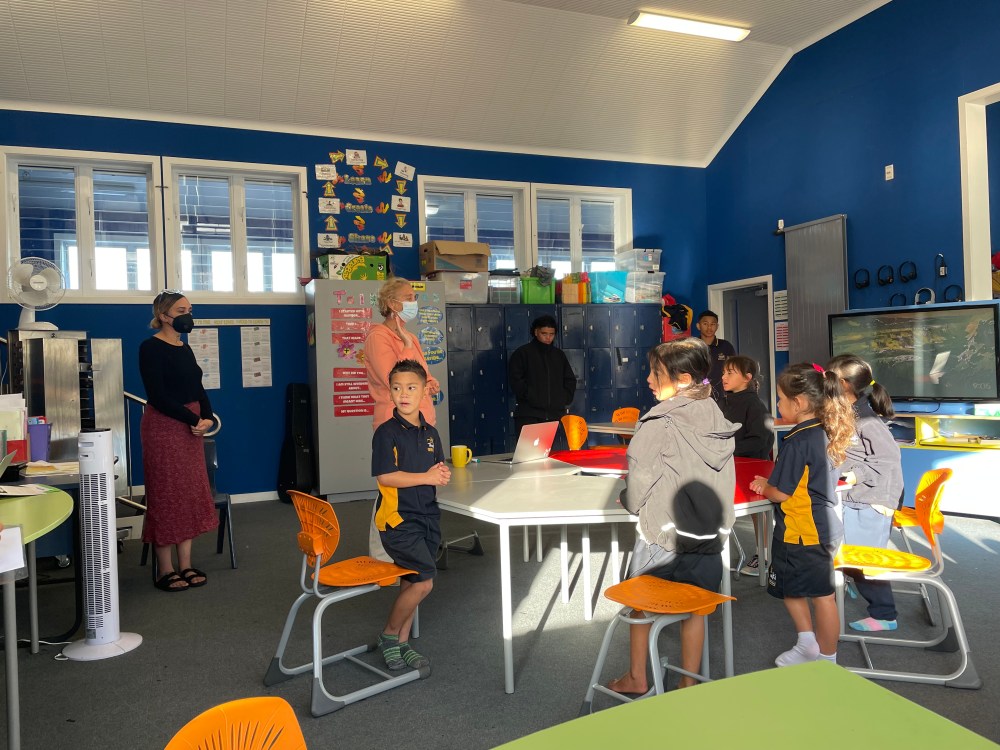
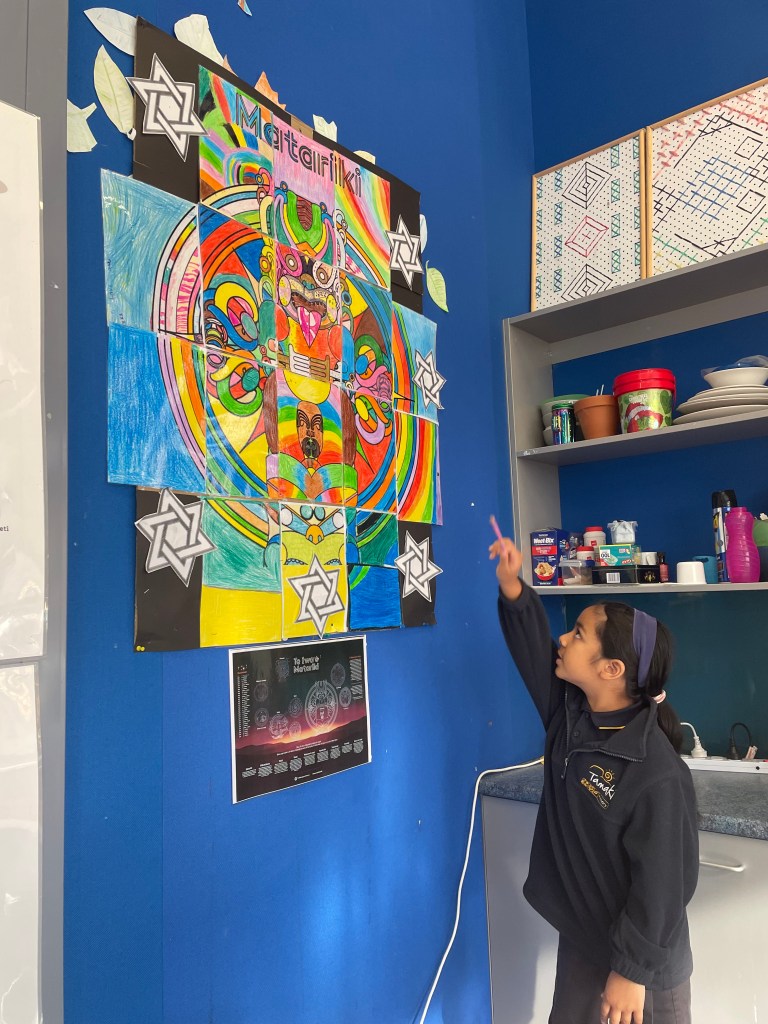
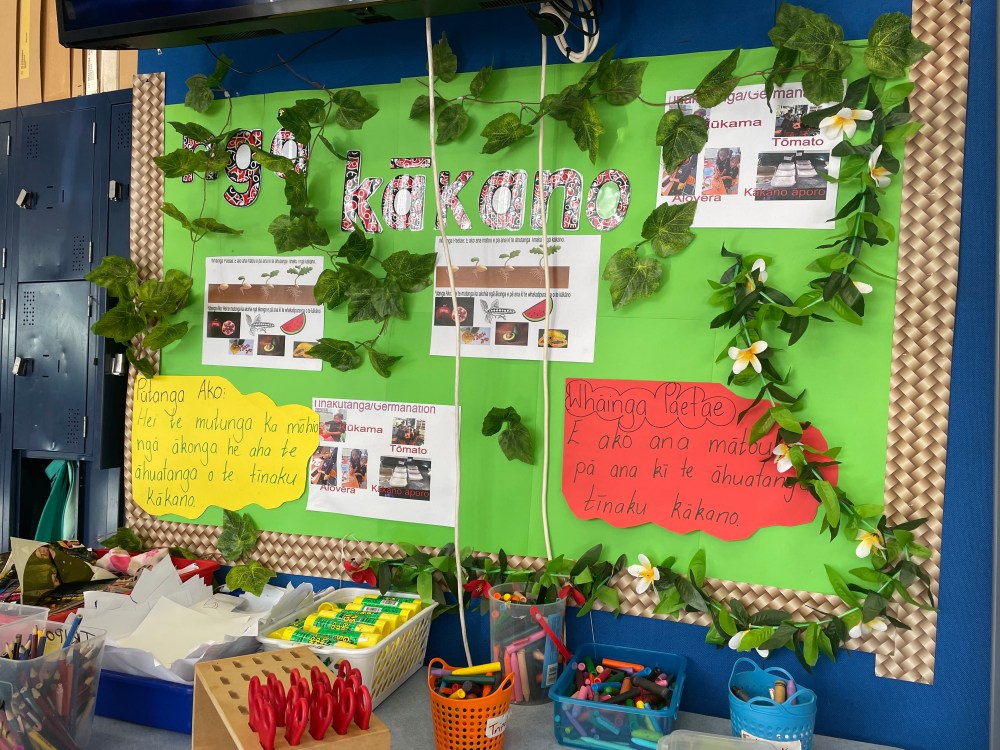
Upon entering into Te Puna Wairua you get the sense that you are walking into a Kura Kaupapa Māori. The tamariki’s shoes are neatly placed in boxes outside the akomanga next to their bags. Te Puna Wairua consists of two classrooms that open up into each other. All the classroom walls are covered and decorated with Māori educational posters, as well as mahi and artwork made by the tamariki. Circular shaped tables are methodically placed in different parts of both rooms. You hear tamariki speaking and playing in te reo Māori with their peers.
There is a 50/50 split in terms of the language of instruction, making Te Puna Wairua a bilingual unit. Making it a bilingual unit was a request made by the whānau and hapori.
Te Aho Matua forms the philosophical base for education and instruction in Te Puna Wairua. The immediate vibe of the akomanga is everyone here are like a whānau. The tamariki are enjoying educational achievement and involvement as Māori within a Māori learning context.
In one room the tuakana are taught in te reo Pākehā. In the other room (where the entrance is) the teina are taught in te reo Māori. However, both tuakana and teina come together every morning for karakia (prayer), hīmene (hymns and songs), mihimihi (greetings), and pānui (notices).
The kaitiaki of these tamariki and spaces at the time of my visit were Whaea Lee-Ann, Whaea Safron, and Whaea Pare.
At 9am we were ushered to the front of the larger akomanga, where everyone sat and wā tikanga was convened.
“Ko te kaupapa o te akomanga nei, ko Te Aho Matua“
Ngā Kaiako
Whaea Safron (aka Saf)
Whaea Saf is a learner of te reo Māori and teaches a myriad of topics to the ākonga pakeke. Whaea Safron’s focus is to teach the pakeke how to write in English.
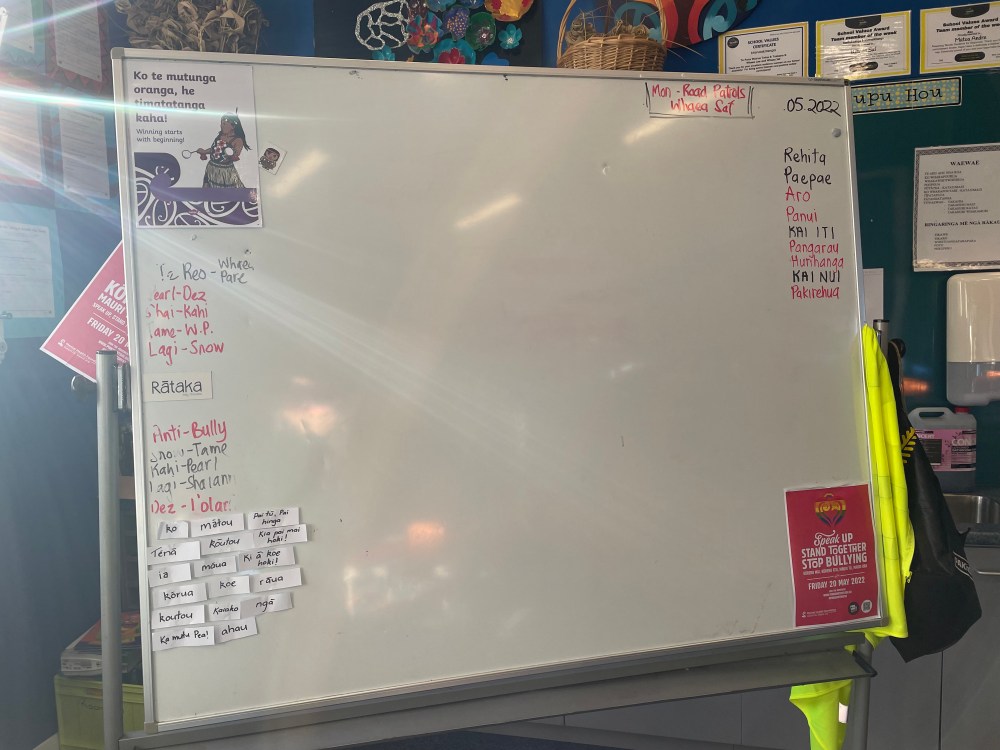
WHITEBOARD: Has posters of different kupu groups on one side of the whiteboard – including tūmahi (verbs), tūāhua (adjectives), tūingoa (nouns), tūpou (pronouns), kīwaha (colloquialism), tūhono (conjunctions), rirohanga (possessives), tūwāhi (locatives), and subordinating conjunctions – which she uses to brainstorm kupu in their revision mahi.
REVISION: She revises what they learned the day before. Whaea Saf allows students to provide kupu pākehā and kupu Māori under the posters.
WHERE IS THE KAIAKO: Whaea Saf stands at the front of the classroom by the whiteboard and prompts ākonga about learnings from the previous day by using the posters taped to the whiteboard.
REFLECTIONS: Whaea Saf allows ākonga to do reflections: questions include; what was your highlight yesterday? What is was your lowlight yesterday? What can you do better?
Whaea Lee-ann
Of Ngāti Porou descent, Whaea Lee-Ann is the epitome of wahine toa, tino rangatiratanga, Te Aho Matua, manaakitanga, and aroha. She holds all of these spaces with power, strength, resilience, and love. Though she is slight in stature, her voice and presence reverberates and fills the rooms. She is loud, she is proud, and she is here!
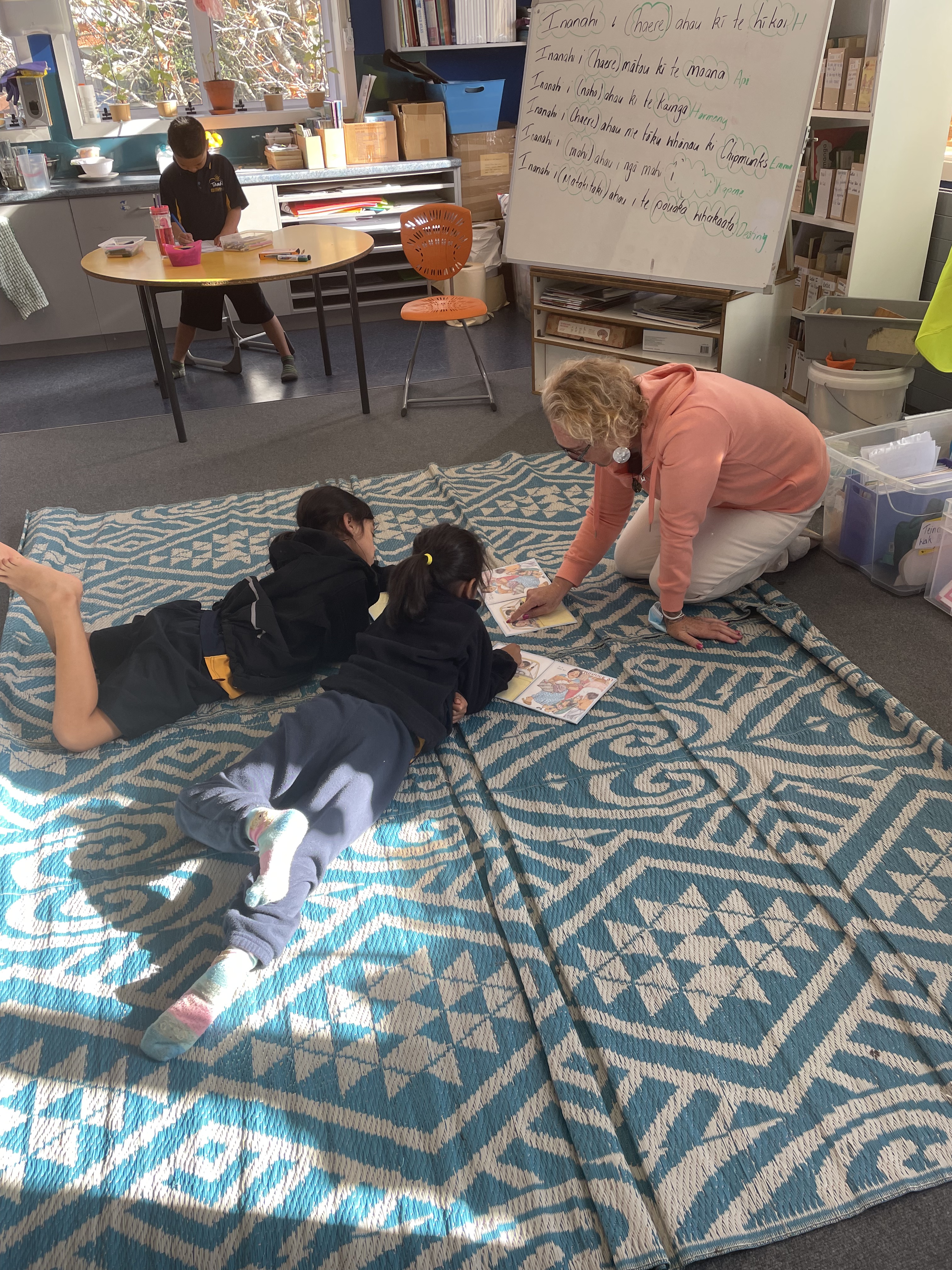
PĀNUI STRATEGIES: I observed Whaea Lee-Ann teach the babies how to pānui in te reo using a number of strategies:
- Pointing to follow their reading – ākonga use their finders to guide their reading of kupu
- Kōrero ā-pānui – reading while they are pointing at the kupu
- Modelling – Whaea Lee-Ann models the sentences first and then invites ākonga to join in as a group to them read together
- Identifying words through dictation – ākonga point to words in the sentence that Whaea Lee-Ann reads out
- Repetition – Whaea Lee-Ann uses a lot of repetition
- Asking and answering question form ‘what’ – ākonga are asked what the kupu Māori is for things that are in the pukapuka (He aha te kupu Māori mō….?)
- Asking and answering question form ‘where’ – ākonga are asked where the kupu are located in the pukapuka (Kei hea te kupu….i roto i te pukapuka?)
- Drawing – ākonga are to select a page they liked the most and to write it in their pukapuka tuhituhi, with the date as well as a pikitia (picture) to accompany the story
Whaea Pare
TRANSITIONING PAKEKE: Whaea Pare is a L.A.T kaiako who creates personalised plans to accelerate the learning of ākonga who need help in certain areas such as pānui, tuhituhi, kōrero, and whakarongo. Her primary focus is to prepare these tamariki for easy transition into kura tuarua the following year.
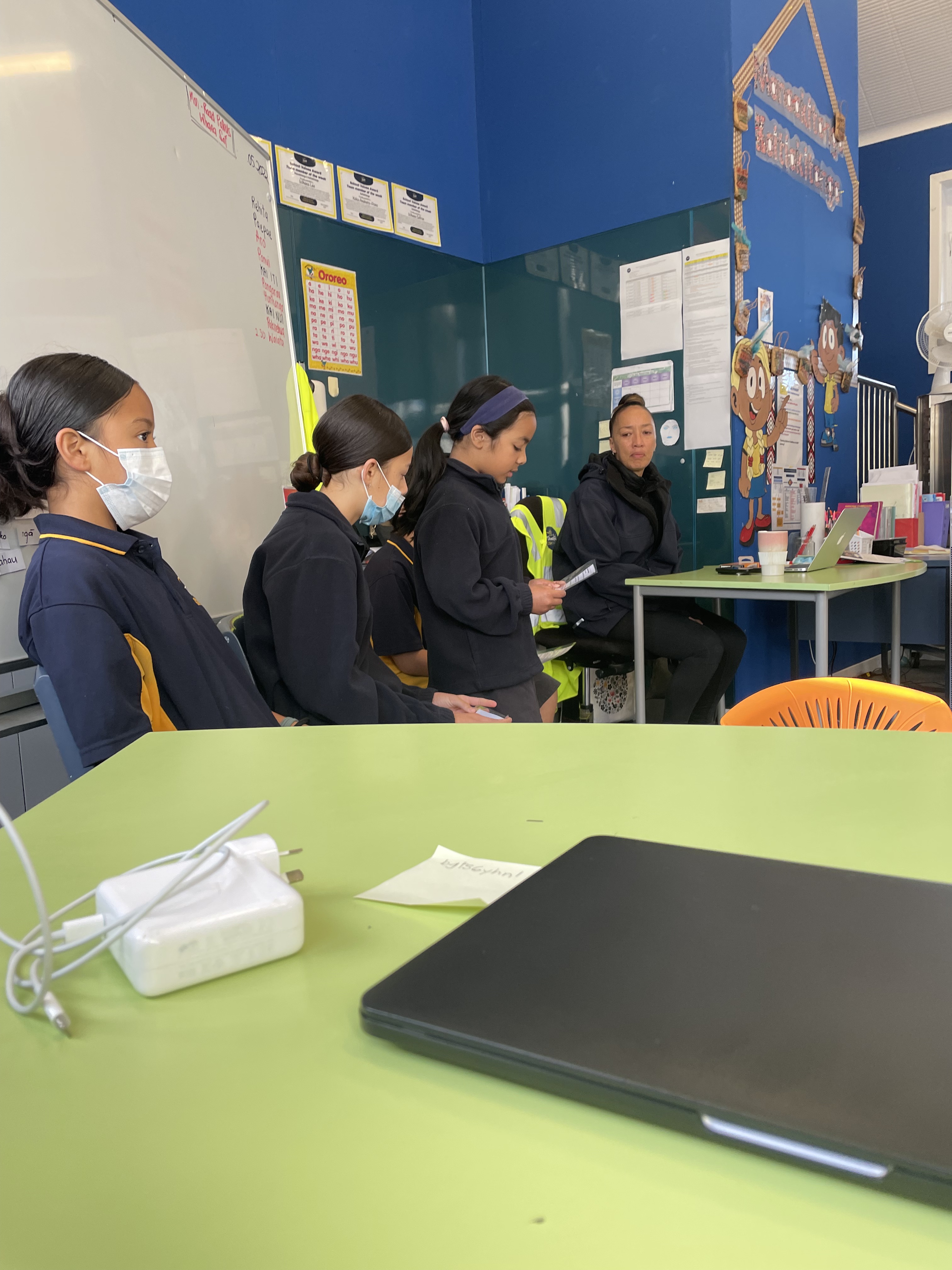
Morning Routine – Wā Tikanga
Paepae – consists of four ākonga who sit at the front (in front of the whiteboard), each with a role and responsibility.
The tikanga process is as follows:
1 – Karakia waerea – opening prayer lead by the paepae
2 – Hīmene – hymn/song lead by the paepae
3 – Karakia – prayer lead by the paepae
4 – Pānui ā ngā ākonga – notices are opened to the classroom
5 – Mihi a tētahi ākonga ki te pae – one student from the classroom to thank the paepae
6 – Pānui ā ngā kaiako – notices are opened to the teachers
7 – Aro ki te wetereo – look the what topics/language features will be the focus for the day
Hurihanga Pītoitoi – Round Robin
The week before they had been taught some effective strategies to teach numeracy by Bruce Taplin from Tui Tuia Learning Circle. Therefore, they they were trialling a new kēmu (math game) for the first time with the tamariki. These games and strategies are meant to help fill the gaps in their ākonga’s mātauranga pāngarau.
Whaea Lee-Ann is always looking for new ways to enable her ākonga to enjoy learning pāngarau.
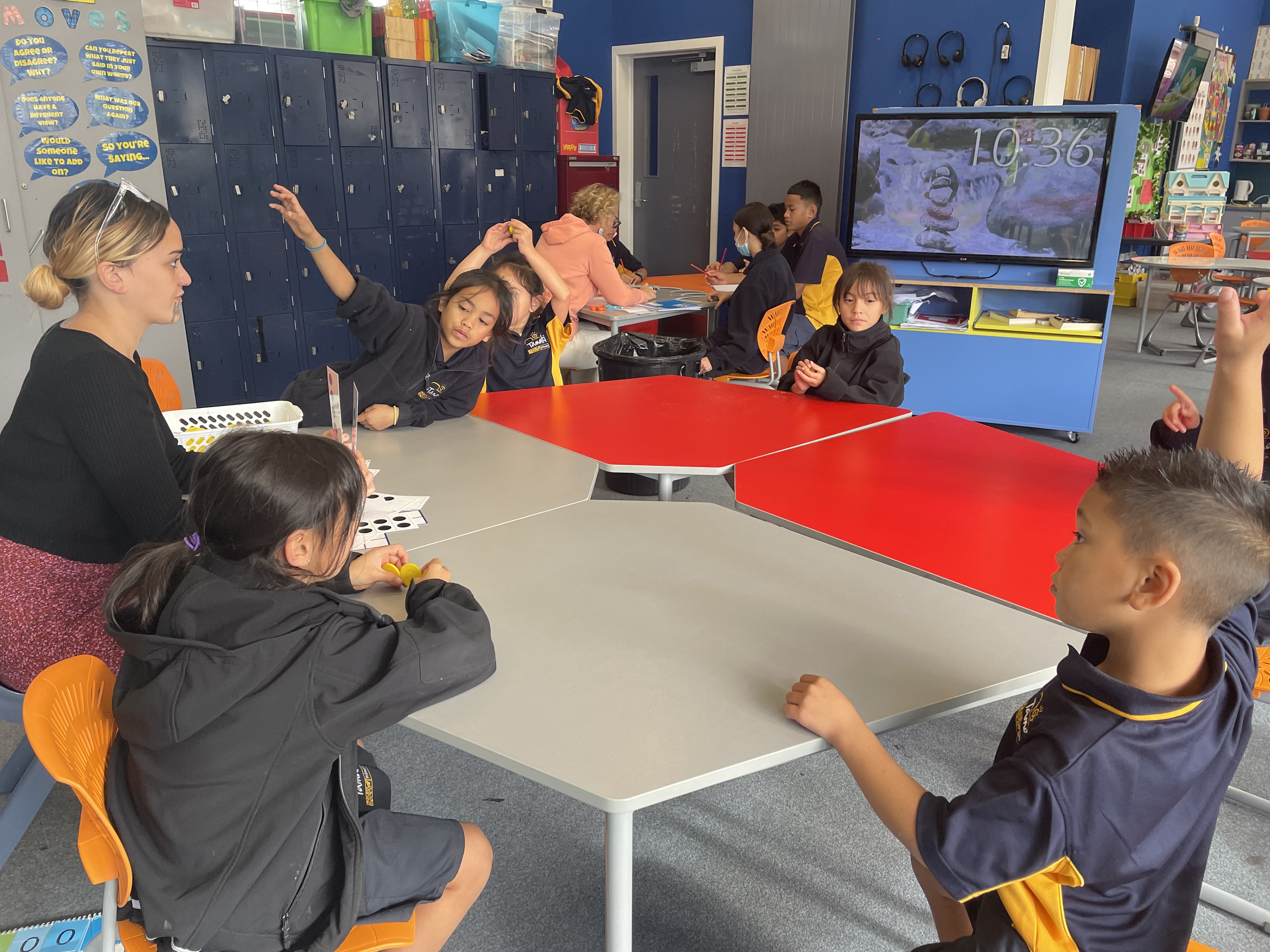
After Lunch, the tamariki were put into three groups of different ability levels. There were three stations, where each kaiako were stationed. At each station there were resources that catered to every ability level.
Observation of Hurihanga Pītoitoi
Groups
After lunch, the tamariki were put into three groups of different ability levels. There were the babies, the taitamariki who were still developing their numeracy skills, and the last group were the pakeke and advanced numeracy learners.
Explanation
Whaea Lee-Ann speaks very clearly and switches between English and te reo Māori to explain the task. She explains the reason and whakapapa kōrero about the programme. She also explains why the groups are in the groups they are in.
Resources
At each station there were scaffolded resources that catered to every ability level.
Rotations
It was 20 minutes at each rotation before change-over.
Stations
There were three stations, where each kaiako were stationed.
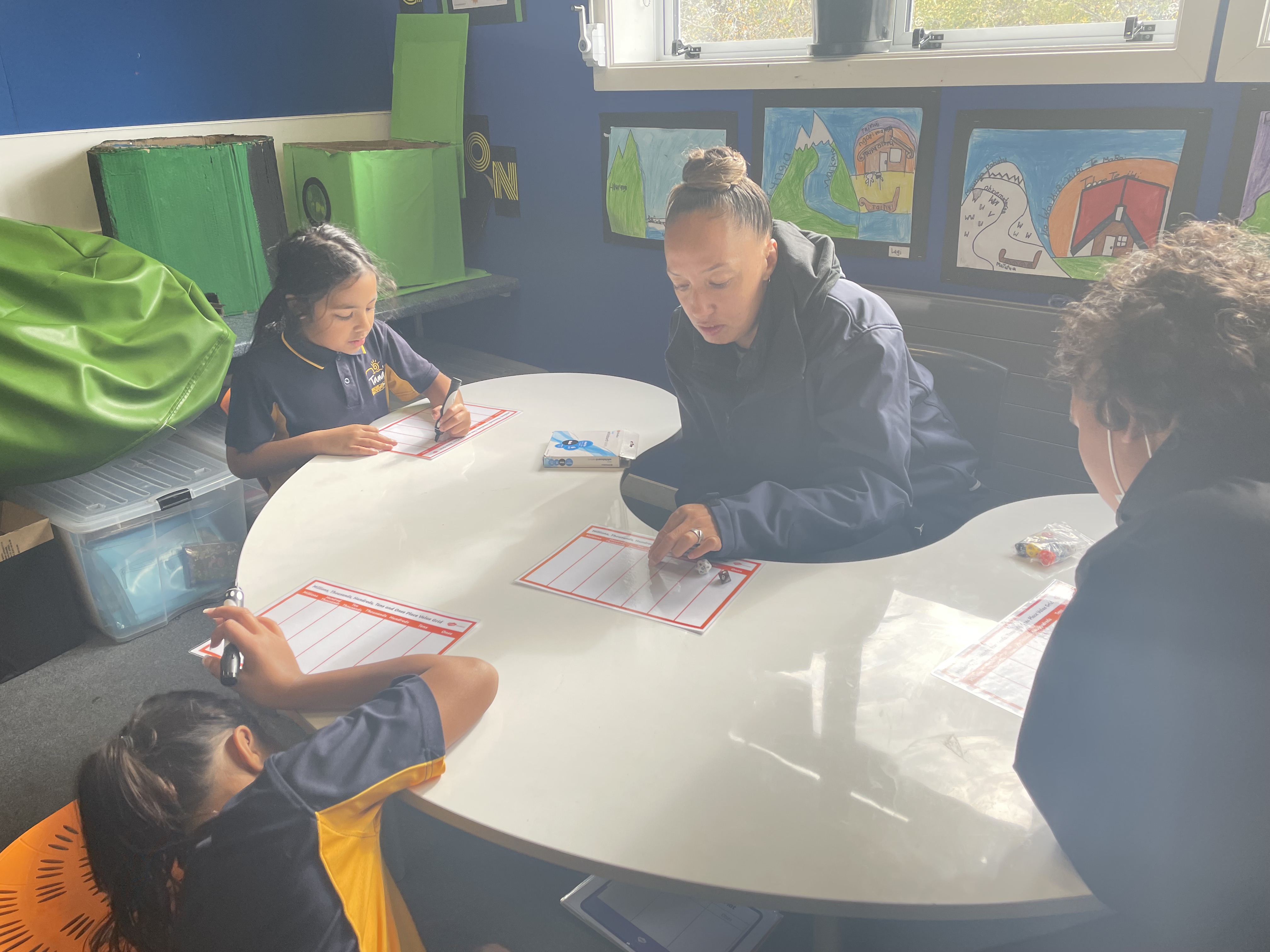
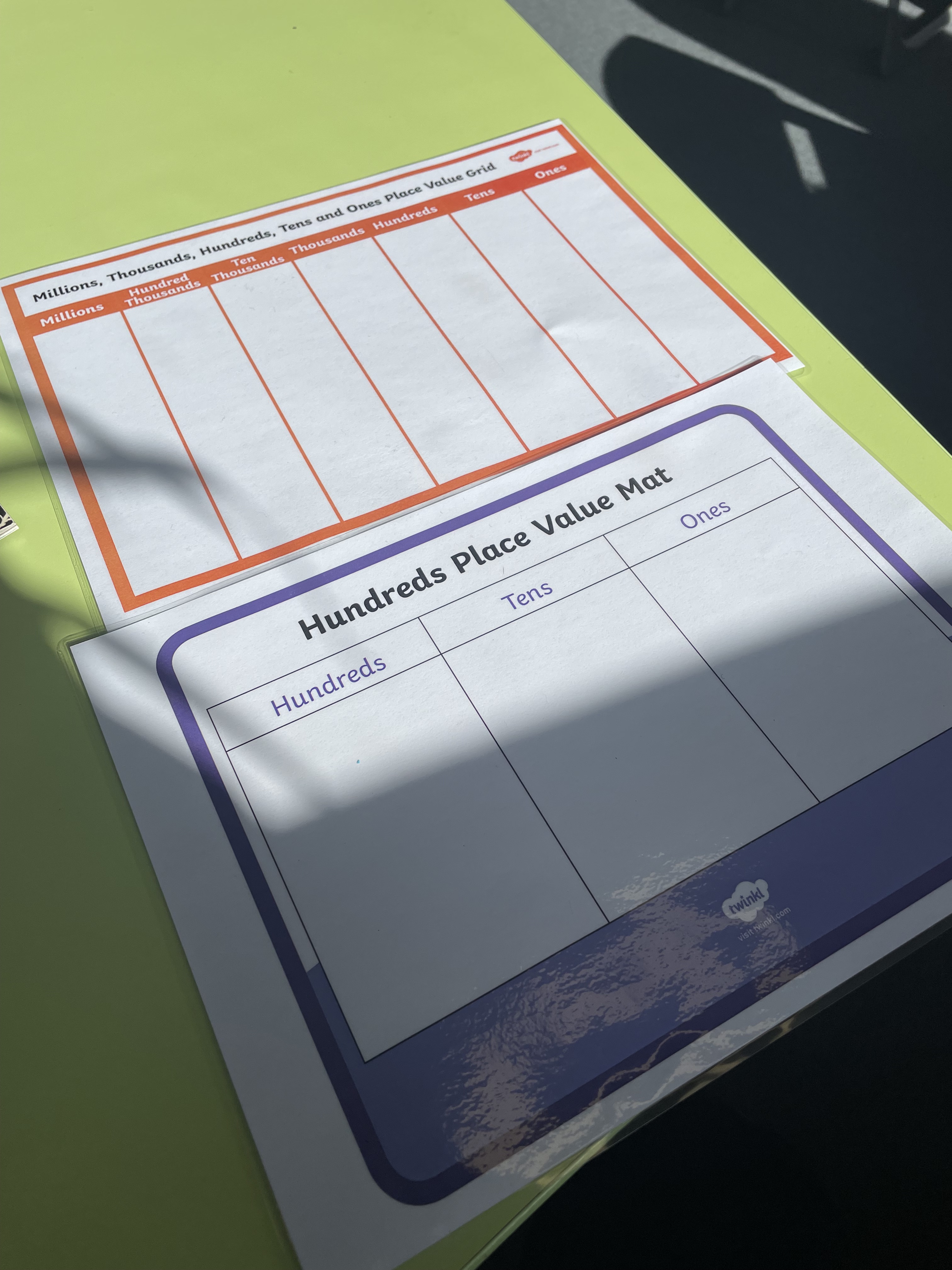
- Place-value Station: This was where ākonga learned to write place values using place value mats and 12 sided dice.
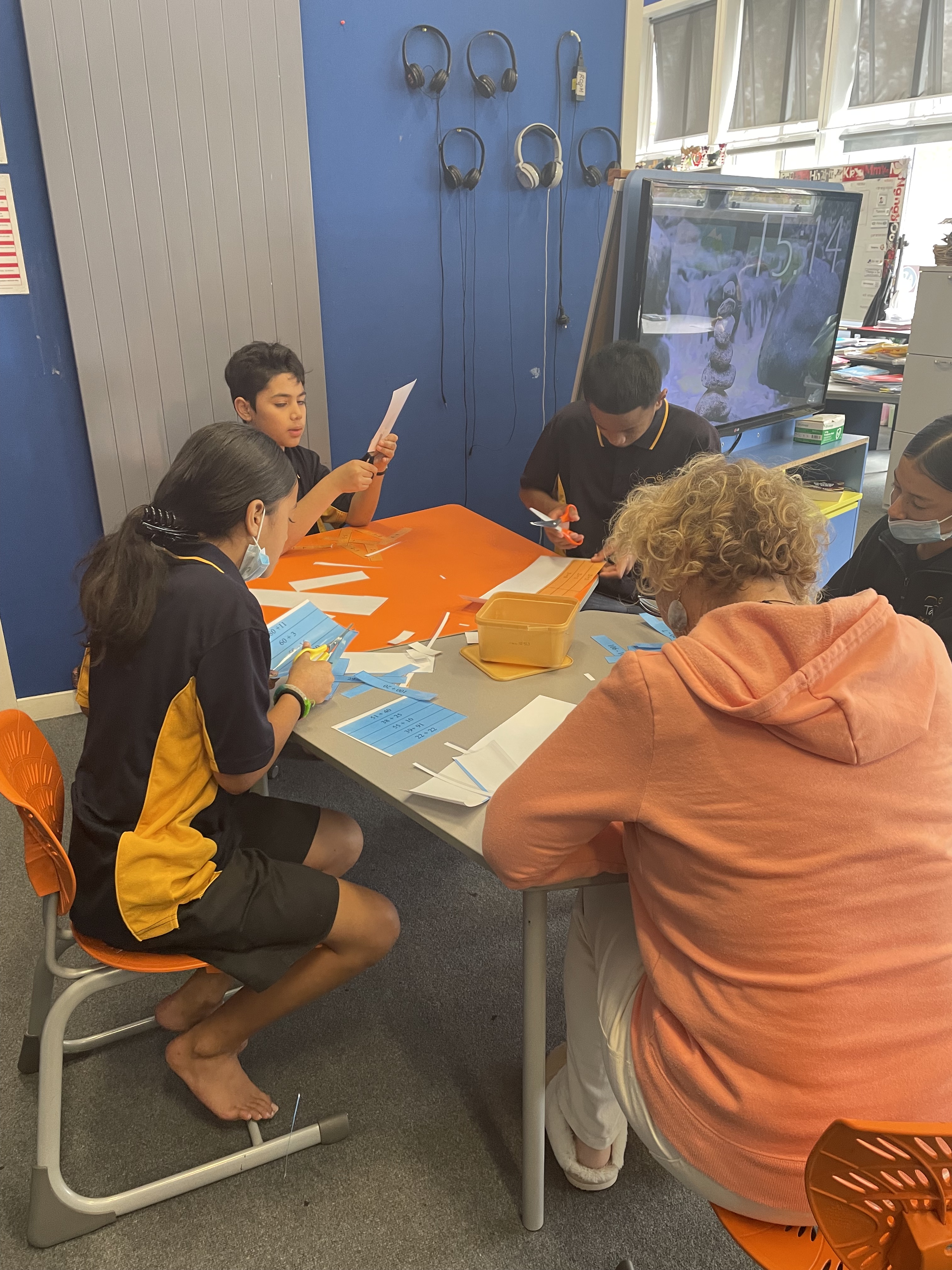
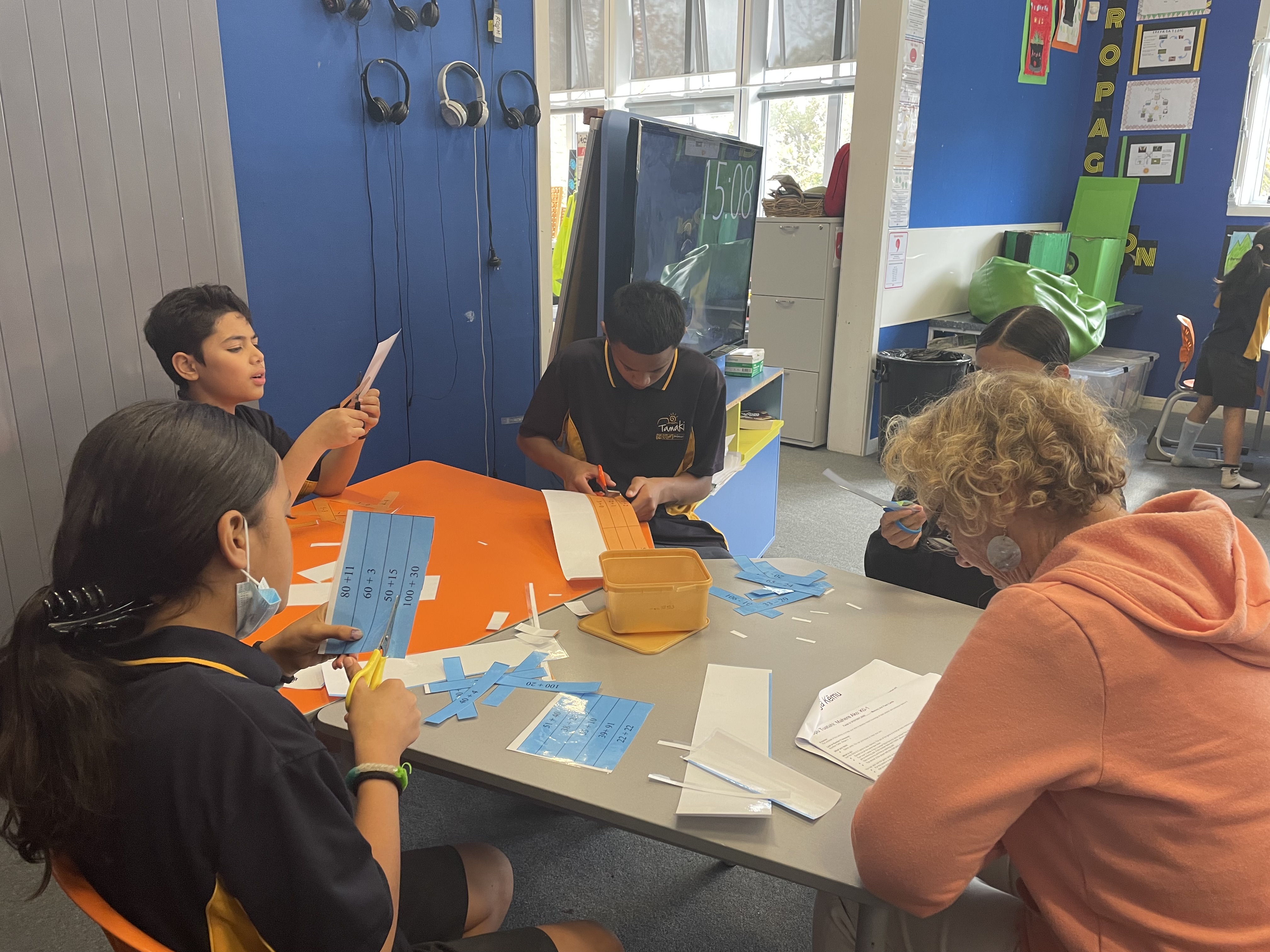
- Plus/ Minus Cards Station: Here the ākonga are taught strategies to quickly add or subtract using colour coded cards. The blue adding cards were used with the taitamariki developers, both the blue adding and subtracting cards were used with the higher ability pakeke learners. The simpler orange adding and subtracting cards were used with the babies.
- Kāri Anga Tekau (10 Grid Cards) Station: For the pēpī, the game was to call out the number of dots on the grids. For the higher ability ākonga, 3-4 ākonga had to pīrori (roll) the mataono (six sided die) and then decide where to put those tohu tau (number) on their place value mat (i.e. 100s, 10s, or 1s). Once the ākonga put the tohu tau (number) in a particular place value, they were not allowed to change it. The ākonga with the highest number won.
While Whaea Lee-Ann is teaching her ākonga, she is also disciplining one of the ākonga that was misbehaving by making him write his numbers.
Whakaaro Huritao
There was allocated reflection time on the hurihanga pītoitoi games. Whaea Lee-Ann understands that there were some work-ons for next time. “It is only through repetition and constant practice that we will get it!” (Whaea Lee-Ann).
Whakakapinga – Closing
Roll Call
After kairānui, the roll was called. When their names are called they would respond with “Ahiahimārie!” Reinforcing the greetings and farewells they were learning earlier in the day.
Other events
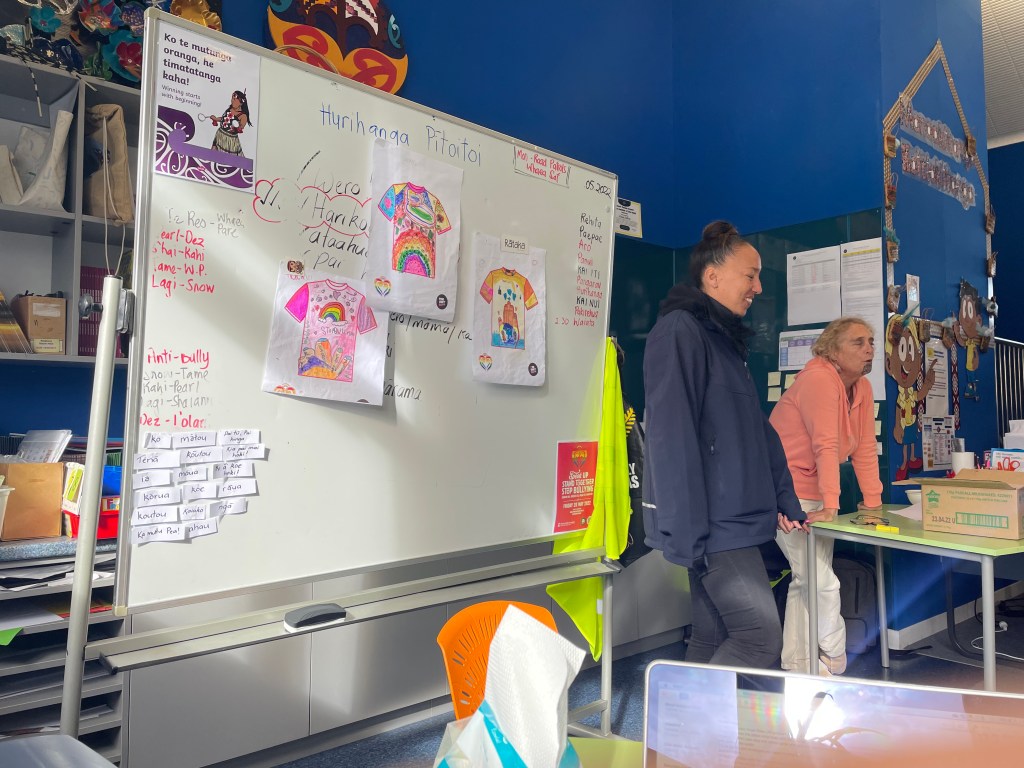
Pink-shirt day: There was a presentation of the first three winning ākonga for each year level for the best pink shirt day colouring-in sheet.
Samoan language week: The Samoan class joined with Puna Wairua to teach them the Samoan National Anthem.
Whakaaro Huritao – Reflection
These are the responses by ākonga about the Hurihanga Pītoitoi
HARIKOA
TINO ĀTAAHUA
IT WAS GREAT!
IT WAS FUN!
MĪHARO!
CHALLENGING AND EASY AT THE SAME TIME.
IT WAS FUN ONCE I GOT IT!
TŌNA PAI (OKAY)
MOVING TOO FAST!
 Te Kōpaki a Ruiha Epiha