Away School Visit #3
Observation of Aorere College
Wednesday 8 June, 2022
9am-3pm
I had the privilege of sitting with Whaea Waitonga for a day. The following are my observation notes and photos taken of the akomanga…
Some key takeaways:
- Booklets for Junior classes (as homework or extension work)
- Embed tikanga akomanga into my classroom – tikanga and te reo go hand-in-hand
- Creative use and re-use of TIK assessment resources
- Higher expectations re punctuality and device use
- Strengthening whakarongo skills in junior classes
- Teaching te reo through waiata and haka
- Display ideas
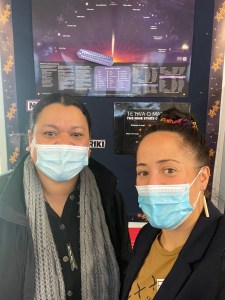
Waitonga Seumanu
Kaiako Te Reo Māori & Tikanga ā-Iwi
Whaea Waitonga has a warm āhua, and in her bare feet she walks in her akomanga with humility and grace, but with quiet confidence.
Start of class
- Kaiako and ākonga remove shoes when entering the akomanga
- Strong emphasis on tikanga at the start of class
- Uses the wheelofnames.com website to randomly elect who will be the kaiwhakahaere of the class – this is the person who selects who will lead the karakia, the hīmene, and who stands to mihi.
- Karakia tīmatanga was Te Karakia mō Te Reo Māori (nā Tā Kingi Matutaera Ihaka)
- Mihimihi is delivered by a Year 13 ākonga (reads from his book)
- Waiata hīmene is Whakataka te Hay (sung by the whole class)
- Whaea Waitonga does the roll call
- Introduction of the new ākonga in the akomanga
- Whakataukī o te rā – Toitū te mara a Tāne, toitū te marae a Tangaroa, toitū te whenua
Tikanga i roto i te Akomanga
I have been pondering ways to normalise tikanga, whakataukī, mihi, and waiata into my classroom routine. Tikanga and te reo Māori go hand-in-hand and are interdependent on one another. Koia e kīia nei, “ko te reo me ngā tikanga.” Whaea Waitonga has provided an avenue to explore and try. We do karakia, but we do not have a kaiwhakahaere, we do not sing a hīmene, nor do I have my ākonga stand to do a mihi. I also want to start introducing a new whakataukī at the beginning of each lesson.
Level 1 – Year 11 Class
- Tikanga – Karakia/Mihimihi/Hīmene
- Information transfer exercise – preparing for Waihanga Tuhinga assessment
- Announcing trip for Senior Waka Hourua trip – must ask how they organised this and who with?
- Talks about the tikanga process for the whakatau for next weeks trips
- Announcement
- Kaiako reads out the paragraph and ākonga draw a picture
- Karakia Whakamutunga
Kaiako Māori are Realistic and Resourceful
This kaiako does a lot of whakarongo tasks with her ākonga. She understands that whakarongo is the first skill that must be mastered in order to master the other language modes. The whakarongo scripts she uses are the assessments from the TKI website. Whaea Waitonga is realistic when she comments that the students are not at the proficiency level to be able to pass these assessments without some assistance. She uses the same assessment but often changes it slightly.
Level 3 – Year 13 Class
- Tikanga – Karakia/Mihimihi/Hīmene
- Working on Te Awa Rere booklet
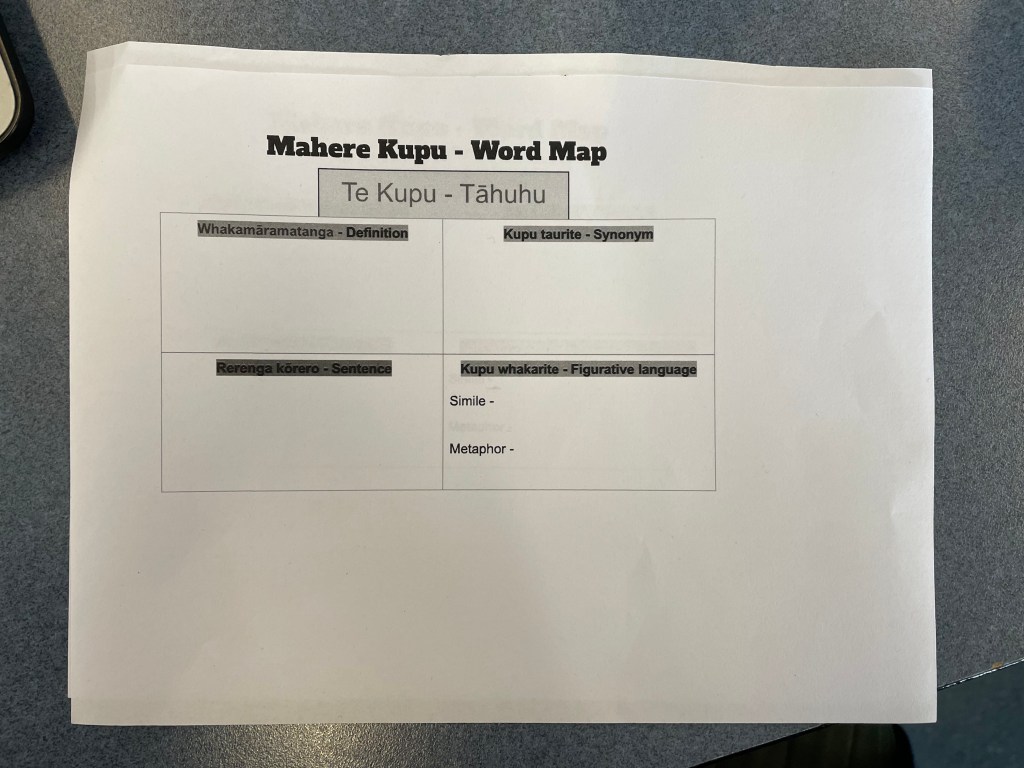
- Mahere Kupu – Word Map
- Karakia Whakamutunga (i.e., Unuhia, Unuhia, Unuhia)
Kaiako-Ākonga Relationships
Ākonga demonstrate respect and admiration for their kaiako, who holds herself with her head high. She models self-pride and self-confidence in her Māori identity. Three students arrive late with passes. No students are using their phones. Although these are standard routines in most schools, punctuality, and appropriate device use in the classroom are a school-wide issue for our kura.
Te Ora o te Reo
- There is a genuine hunger for te reo Māori by all her ākonga who walk through her doors.
- One ākonga was preparing for Ngā Manu Korero.
- One Year 11 ākonga answers all the pātai very confidently, thus demonstrating good understanding of the kōrero Whaea Waitonga dictates to the class
Tōna Momo
Whaea Waitonga, like myself, mixes and mingles and continuously checks on her ākonga. Waitonga maintains high expectations for her ākonga at all times. The work is pitched at the correct level for her ākonga and she pushes them to complete their tasks at a high standard. As well as teaching te reo Māori, Whaea Waitonga also teaches junior level Tikanga ā-iwi. He pūkenga tōna momo!
Te Ao Haka
Aorere is a pilot school for Te Ao Haka. Whaea Waitonga’s Te Ao Haka class is mixed-level. In the lesson her goes over external assessments for each year level. I have realised the importance of teaching te reo through waiata and haka. Waiata and haka also raise the pride of our ākonga Māori in their tuakiritanga.
The Classroom Walls
These images are pictures taken of Whaea Waitonga’s room walls. I really liked her kīwaha posters and the mihi template she had put on the wall. I find it interesting what kaiako choose to put on their walls. Most akomanga I have viewed so far, either have mahi by past ākonga, or are covered in a random assortment of Māori language, or Māori history posters. Because my wall space is much smaller compared to Whaea Waitonga’s, I must be very selective with what I put on them. I want to make my walls more interactive. I think it is important to ensure the walls are an extension of my teaching resources. Students should be able to look to the walls for information. This was a lesson I learned when I observed a few of my ākonga looking to my walls for answers to questions I would ask them about Māori grammar and words, e.g. the days of the week, the time, sentence structures, high frequency words, etc.
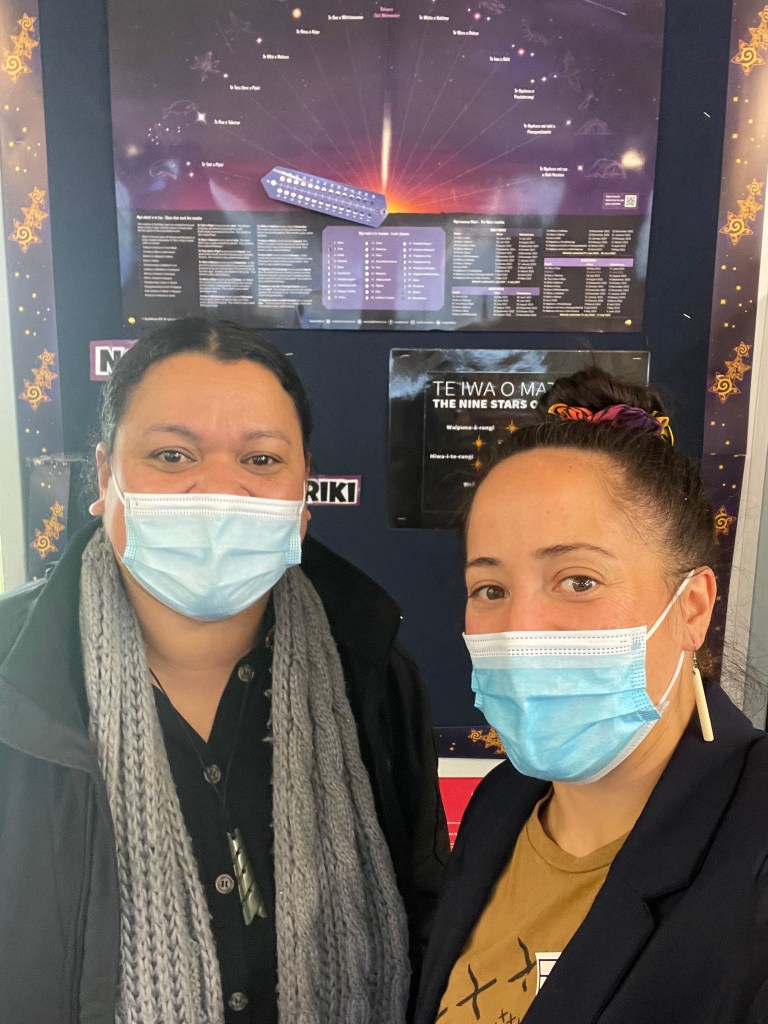
Whaea Waitonga & Whaea Ruiha 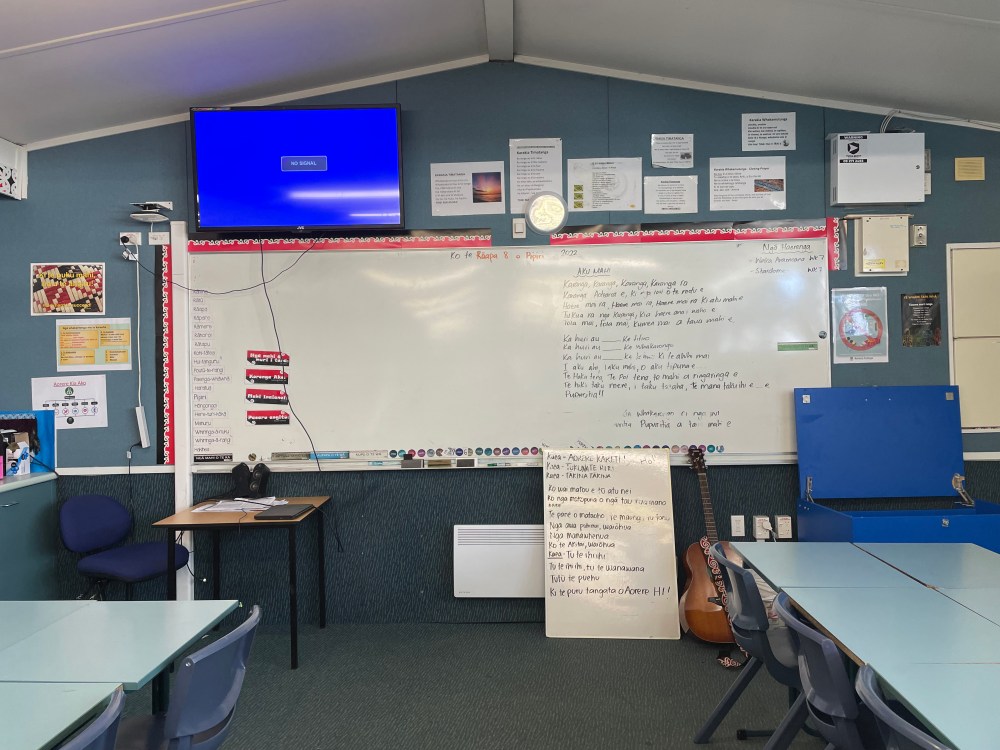
Whiteboard at the front of the akomanga 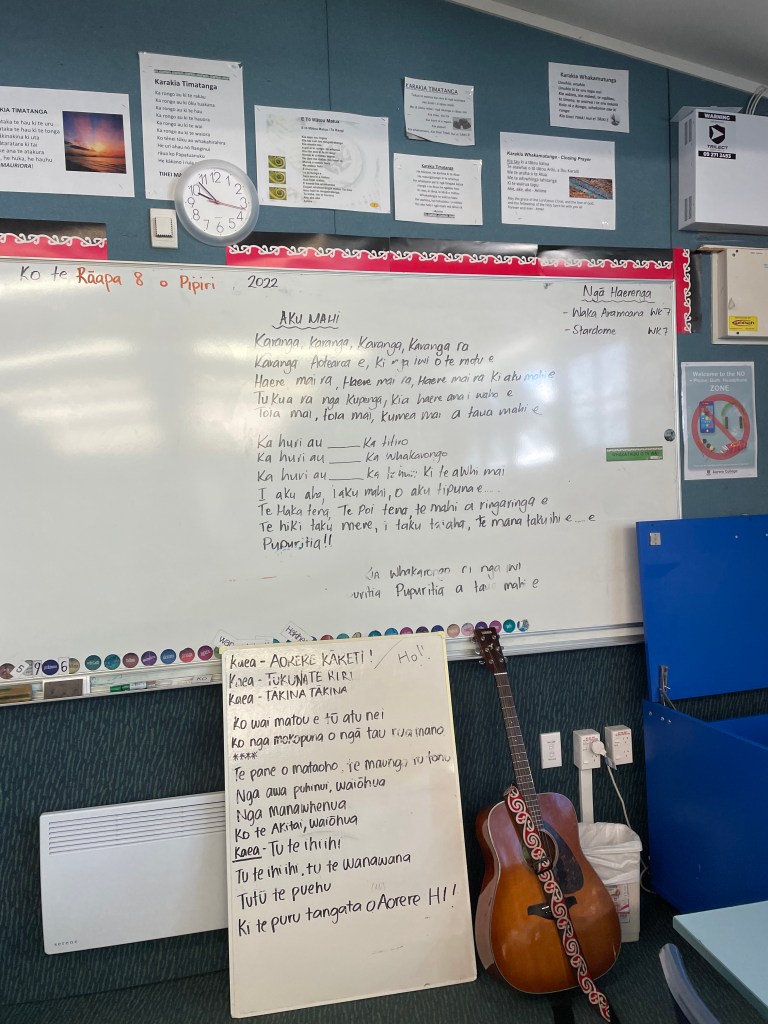
School waiata and haka 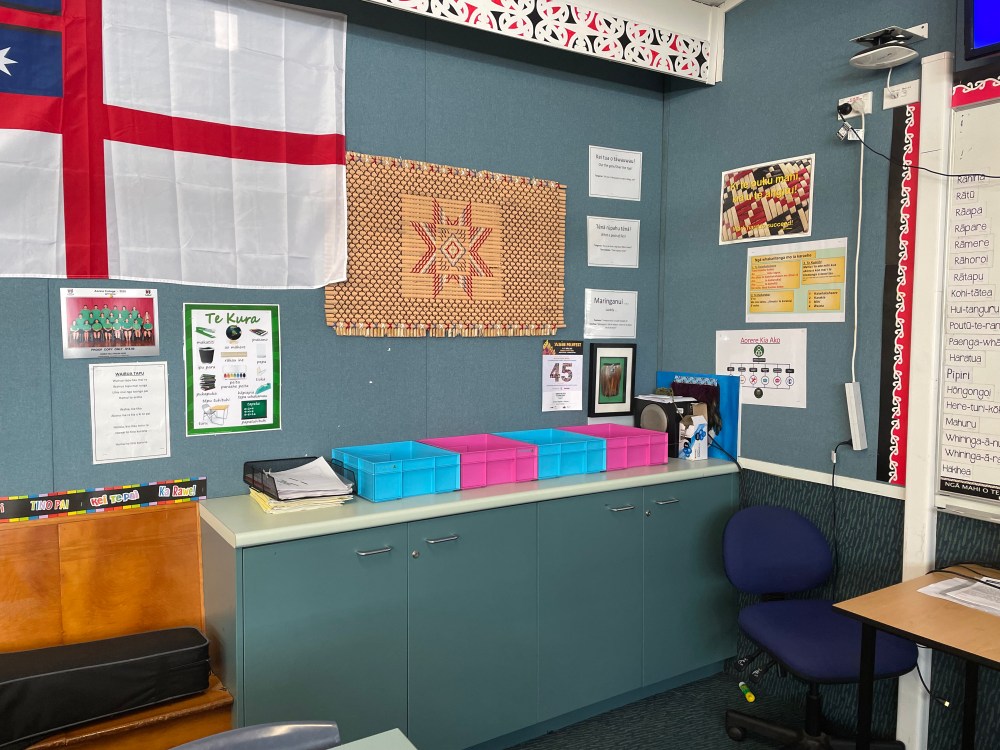
Tēpu rauemi – Resource table 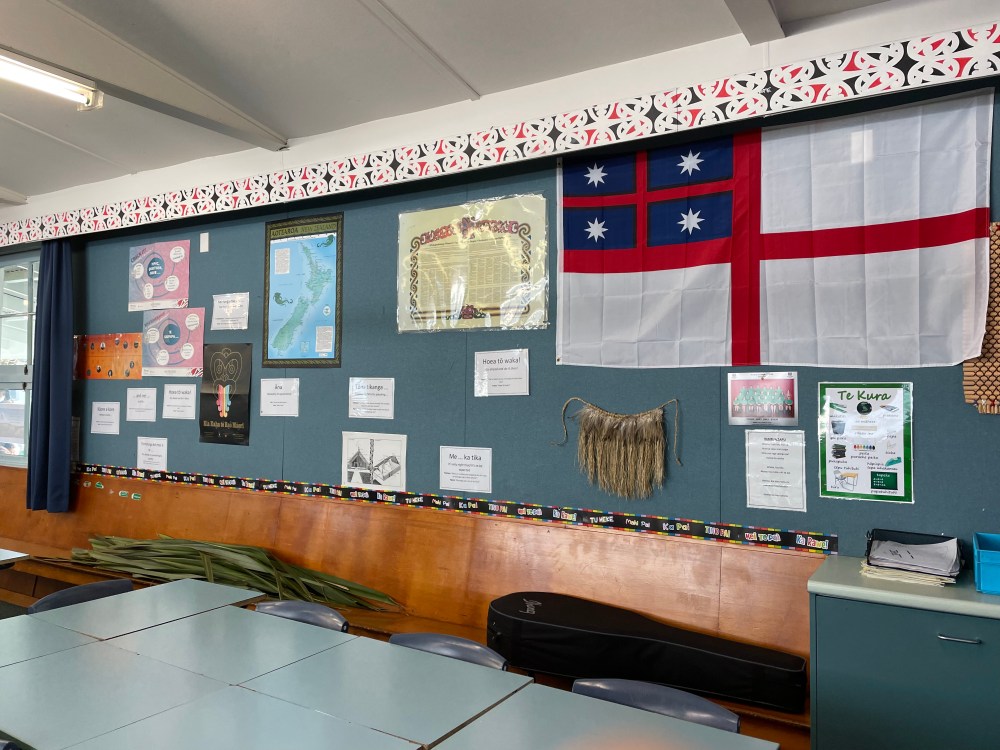
Wall displays 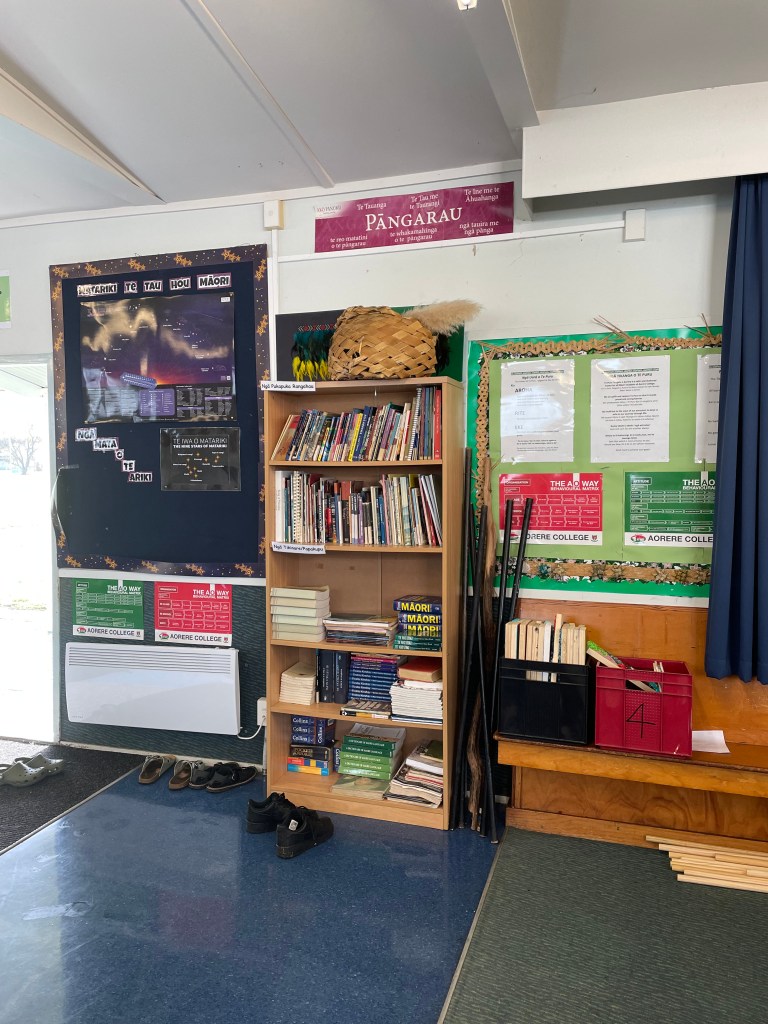
Rauemi 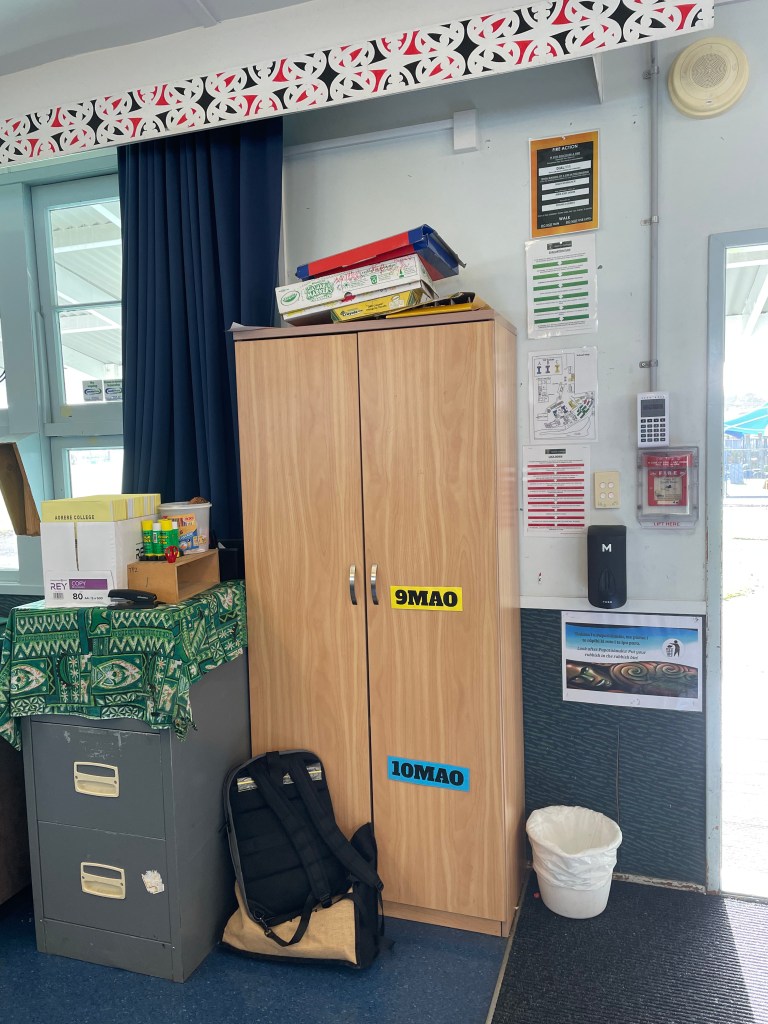
More ākonga rauemi 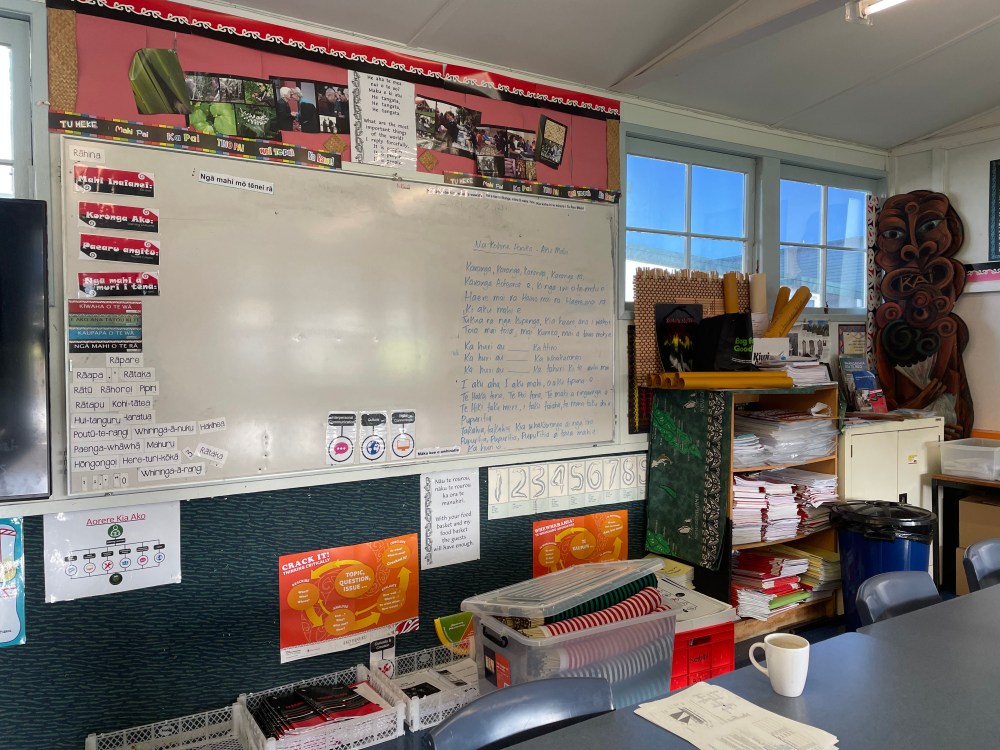
Second whiteboard at the back of the akomanga 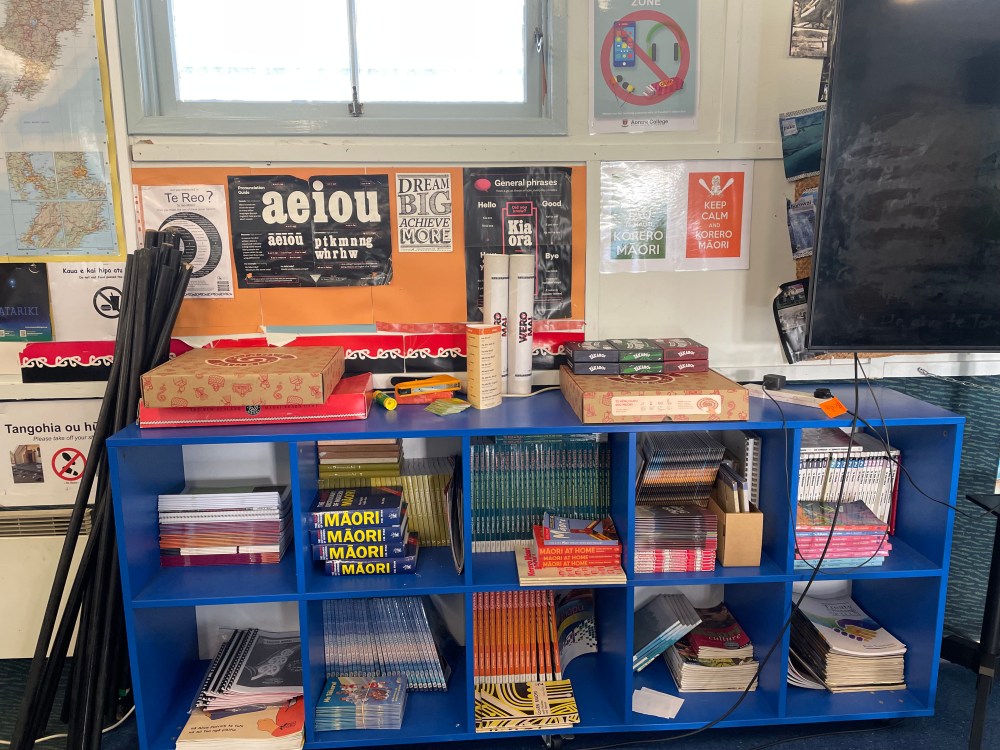
Rauemi – kēmu, kupu taka, etc 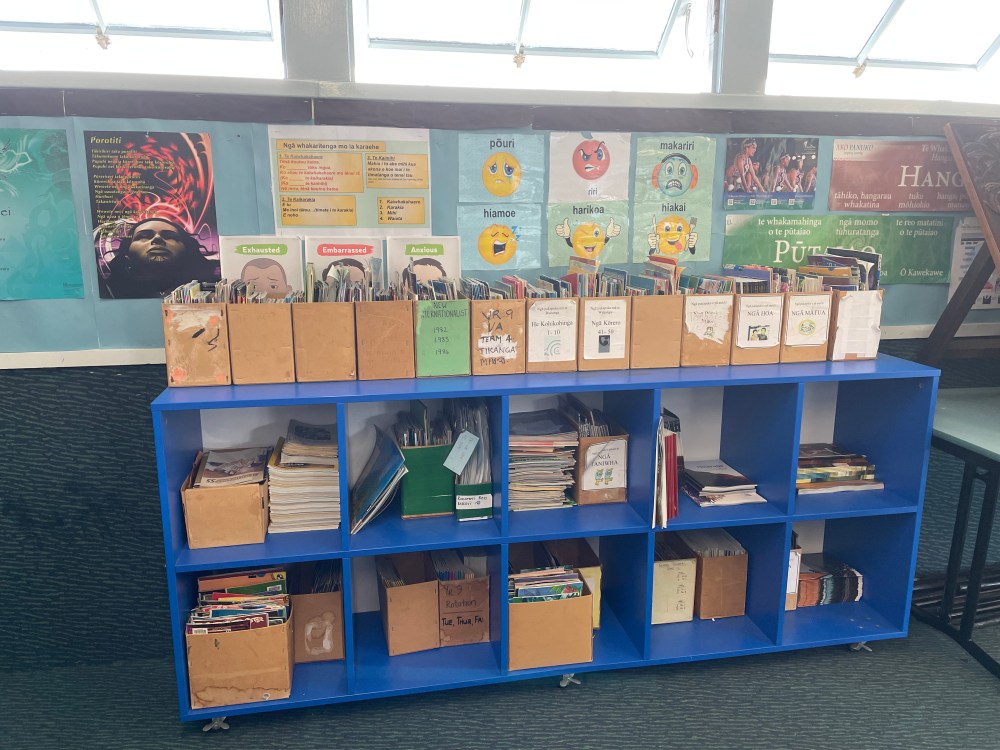
Rauemi – readers 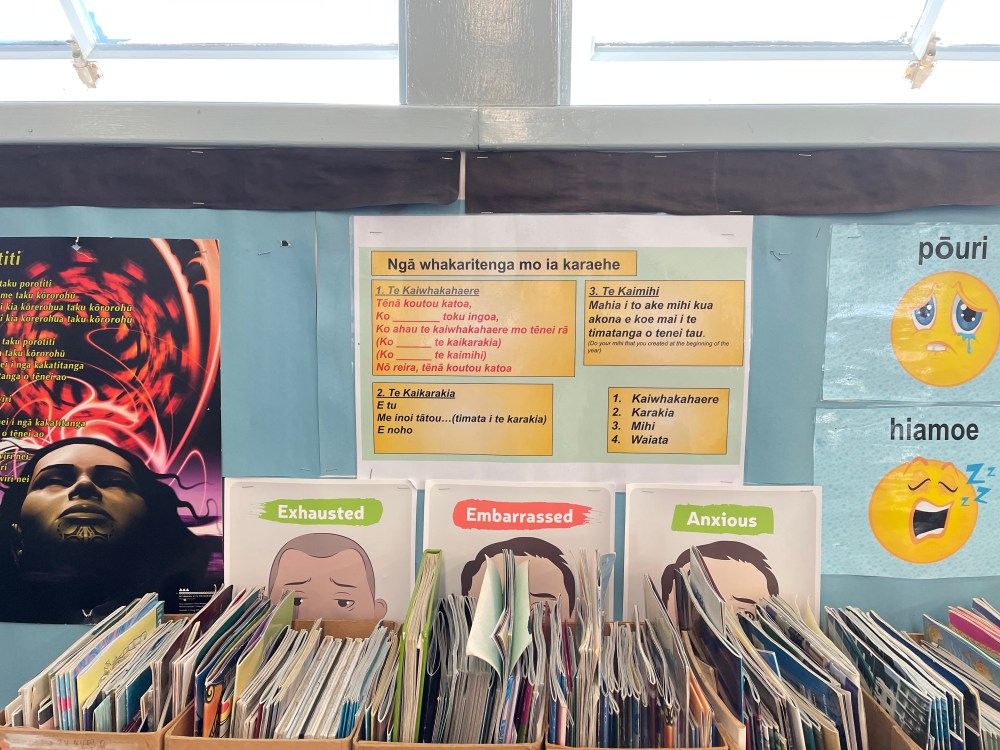
Tikanga akomanga poster 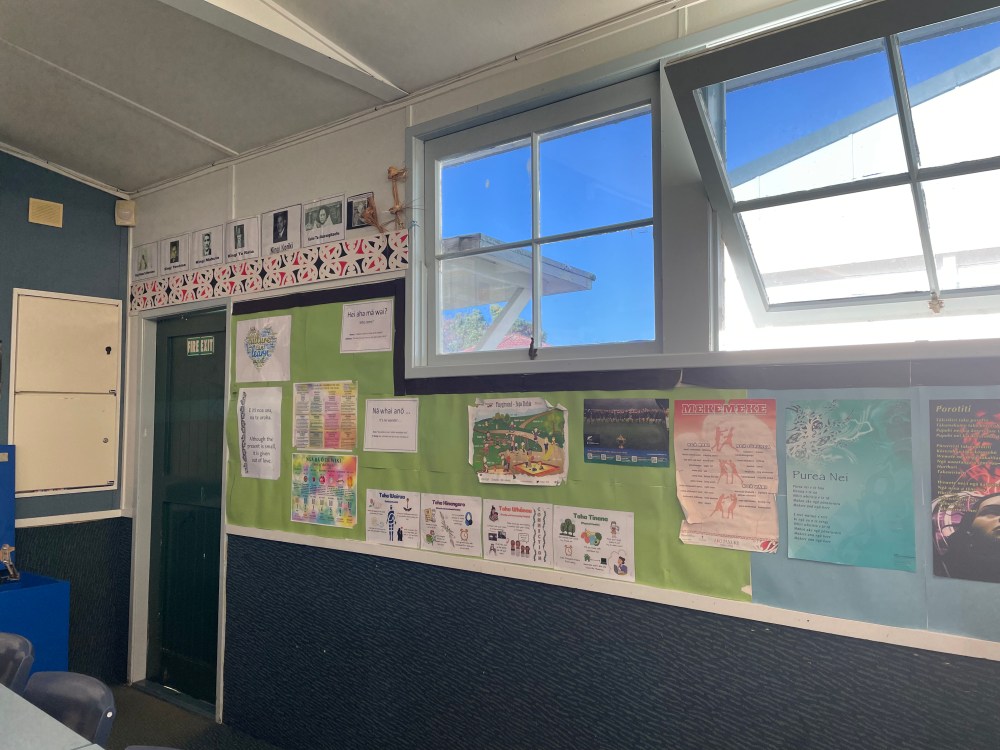
Te Reo Māori posters 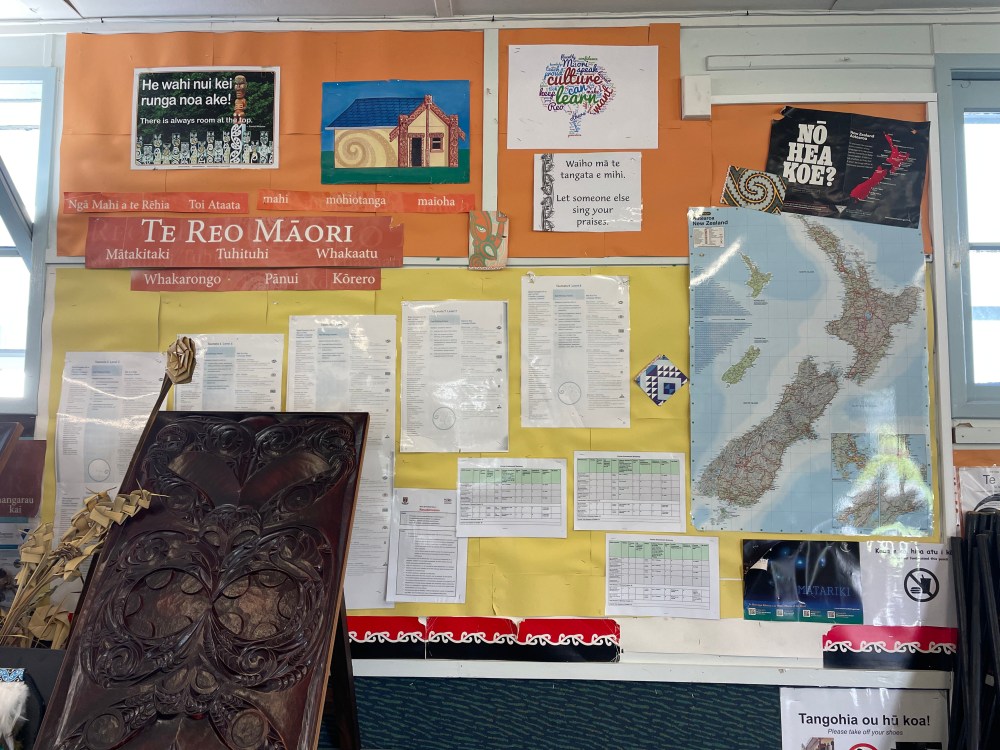
Assessment information & requirements Wall
Ētahi Whakaaro|Some Thoughts
I can confidently say that te reo and tikanga Māori are thriving at Aorere College. I have come away with so much learnings, including how I present myself as a kaiako Māori. It is also important to be more vigilant in my expectations for my ākonga to be punctual, use devices appropriately, as well as to normalise tikanga and whakataukī in my class. What I had also learned was that as high as our expectations are of our ākonga, we must also be realistic and quite resourceful in how we prepare our ākonga (i.e. those who havefor their internal and external assessments. Whaea Waitonga also reminded me of the importance of fostering and strengthening the listening and comprehension skills of my ākonga through the use of a myriad of whakarongo tasks (i.e. drawing dictation and information transfer). It is my first time seeing the use of the mahere kupu or word map – this is great way to raise word awareness and promotes a deeper understanding of kupu within familiar and unfamiliar contexts.
 Te Kōpaki a Ruiha Epiha