Thursday 29 April 2021|The Narrows Landing, Hamilton

Kaikauhau/ Facilitators:
Betty (Pēti) Dickson & Rauhina Cooper
Ngā Hua Akoranga/ Learning Outcomes:
- Gain a better understanding of the importance of te reo ā-waha in literacy
- Increased confidence in teaching te reo ā-waha in the classroom
- Increased knowledge of a variety of teaching and learning strategies for ‘whakarongo’ and ‘kōrero.’
Ētahi Rauemi | Some Resources
You can find these rauemi on the Ako Panuku website.
Workshop Name: Kia Wana te Ako – He Pūkōrero te Pūrākau
This was a 1-day workshop designed for kaiako to further develop their knowledge and practice in teaching whakarongo (listening) and kōrero (speaking). This workshop was facilitated mainly in te reo Māori through the context of ‘pūrākau.’ Pēti and Rauhina offer pūrākau as a way of teaching te reo Māori, with a particular focus on te reo ā-waha. Pūrākau as a pedagogy sets a solid foundation of oral and aural language learning in order to strengthen the ākonga’s reading and writing skills.
Why is ‘whakarongo’ and ‘kōrero’ important in learning how to read and write?
According to Pēti and Rauhina, whakarongo and kōrero are the foundations of literacy. Pēti and Rauhina use whakapapa to organise their thinking around teaching and learning te reo Māori from a Māori perspective. Te Whakapapa o Te Whānau Reo (see below), devised by Pēti and Rauhina, provides the order of importance that kaiako should give to teaching and developing communicative skills. Whakarongo and kōrero are the mātāmua (eldest of the family) and should be taught first. Pānui and tuhituhi are the pōtiki (youngest of the family); therefore, they should be developed last. The following whakapapa is not evidence-based, but it is based on the experiences and professional teacher judgement of kaiako in their learning and teaching journeys (Dickson & Cooper, 2021).
In most instances, whakarongo and kōrero are left out, and students are swamped with pānui and tuhituhi. Pēti Dickson states:
“Kia noho mātamua mai a Reo ā-Waha ki te pīnati o te tamaiti”
Pēti Dickson, April 29, 2021
In other words, kaiako must set a good foundation of oral language to strengthen the reading and writing skills of our ākonga.
I takea mai a Reo ā–Waha i hea?
Where do you think ‘reo ā-waha’ originates from?
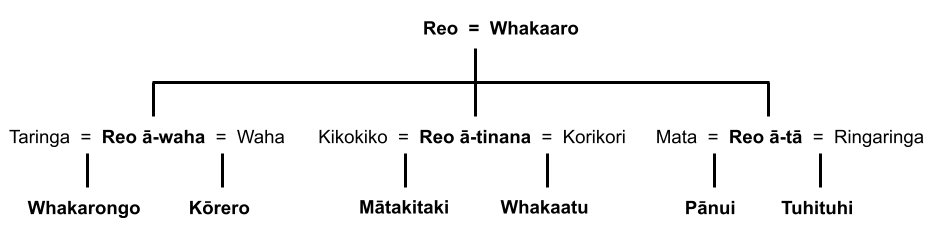
E whakaako rānei koutou i te reo ā-waha?
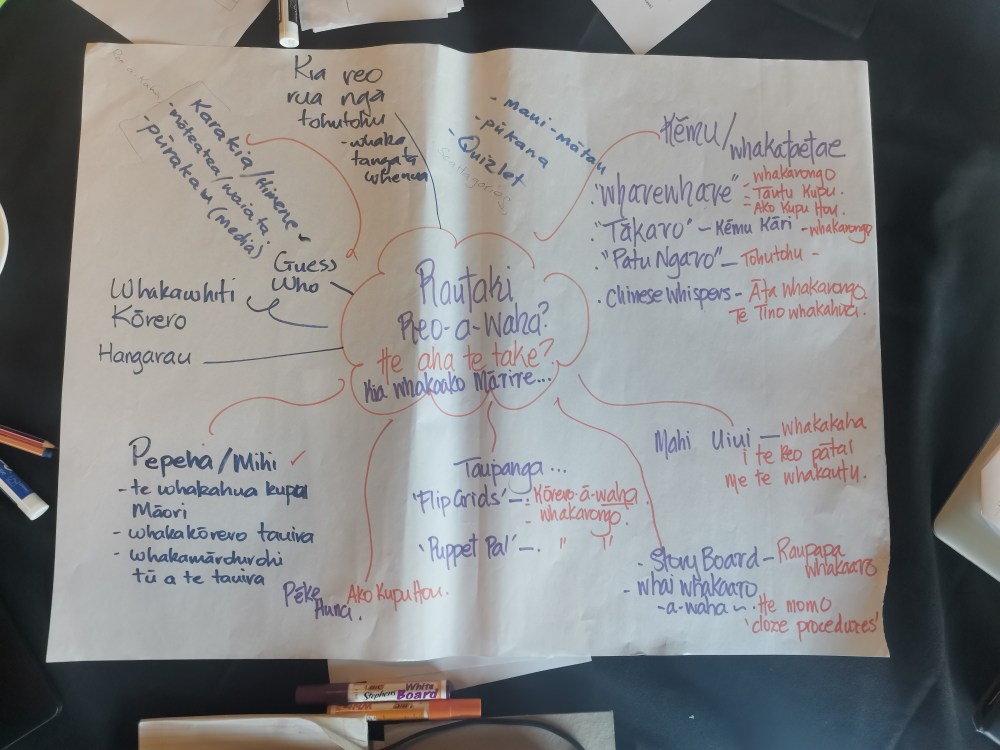
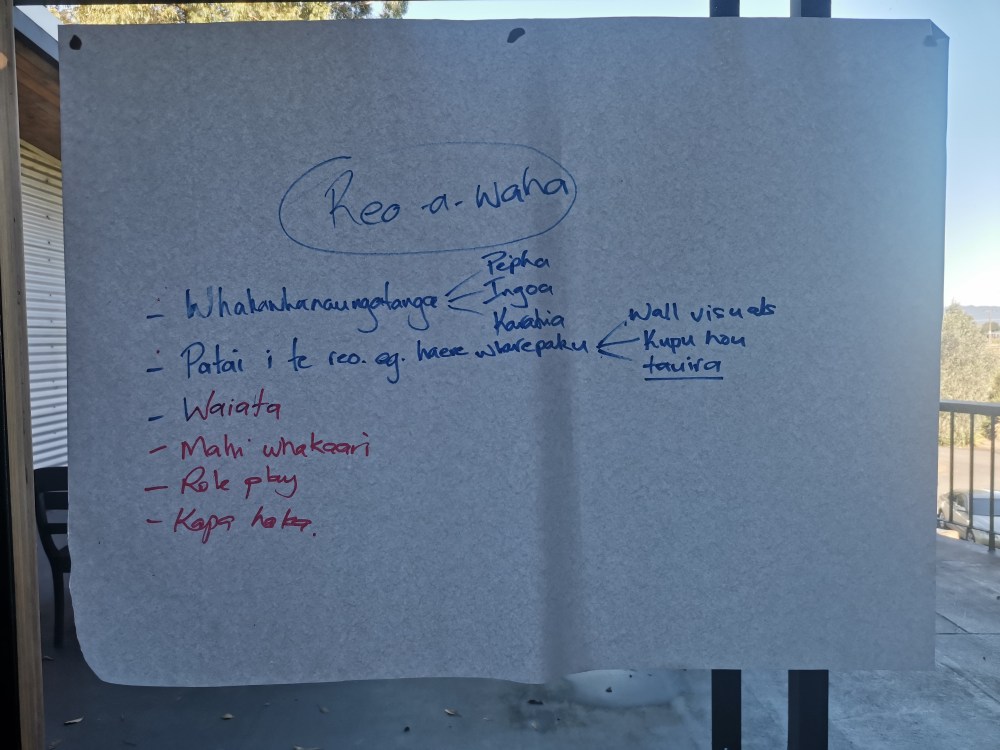
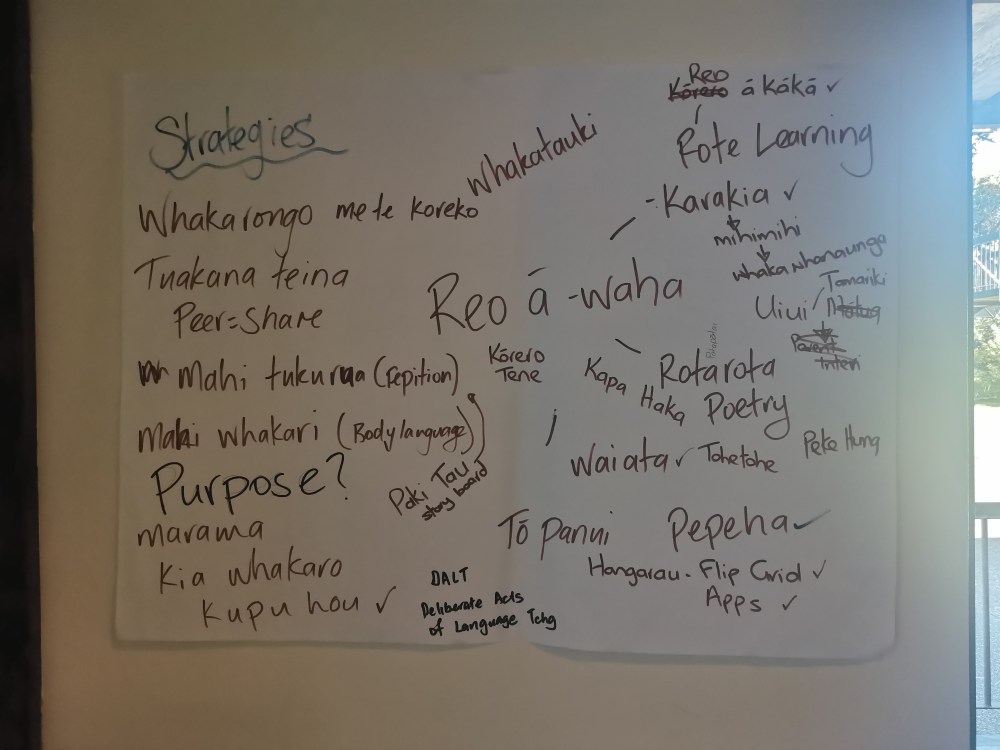
How do you teach reo ā-waha? What strategies do you use? For what purpose?
All our tables were tasked with doing a collaborative brainstorm of the strategies and purpose of the strategies we use in our akoranga.

He Reo Pūrākau
Ko te pūtake o te pūrākau whakamārama, he whakamārama i te takenga mai o ngā āhuatanga o te ao me te hua o aua āhuatanga ki te tangata.
Source: He Manu Tuhituhi, He Tuhinga Pūrākau Whakamārama
Hei tā Rauhina rāua ko Pēti, he horopaki te pūrākau hei ako i te reo ā-waha. Pūrākau, according to Rauhina and Pēti, offers itself as a Māori pedagogy for teaching oracy in te reo Māori. It is one of the very few heritage language teaching strategies that can be employed in both a Māori- and English-medium classroom setting.
Pūrākau are usually descriptive, therefore it is about building a picture. The following language features should be developed when scaffolding ākonga towards writing pūrākau:
| Tohu i te wā | Tērā he wao…, i onamata…, i neherā… |
| Reo take me te pānga | Nā te …i …, nā runga i tērā…, ahakoa … , nā konā |
| Tūhono | Kātahi ka…, nā te mea, ā…, otirā |
| Whakaahua | Tīramarama mai ana, anō he porotiti, ngā makawe urukehu |
TĪWHIRI: When selecting a pūrākau to use, ensure it is one that the ākonga are familiar with (i.e., Ranginui and Papatuānuku or Māui).
The pūrākau we worked with at the workshop was the story of Hinepūtehue.
He Pūrakau mō Hinepūtehue
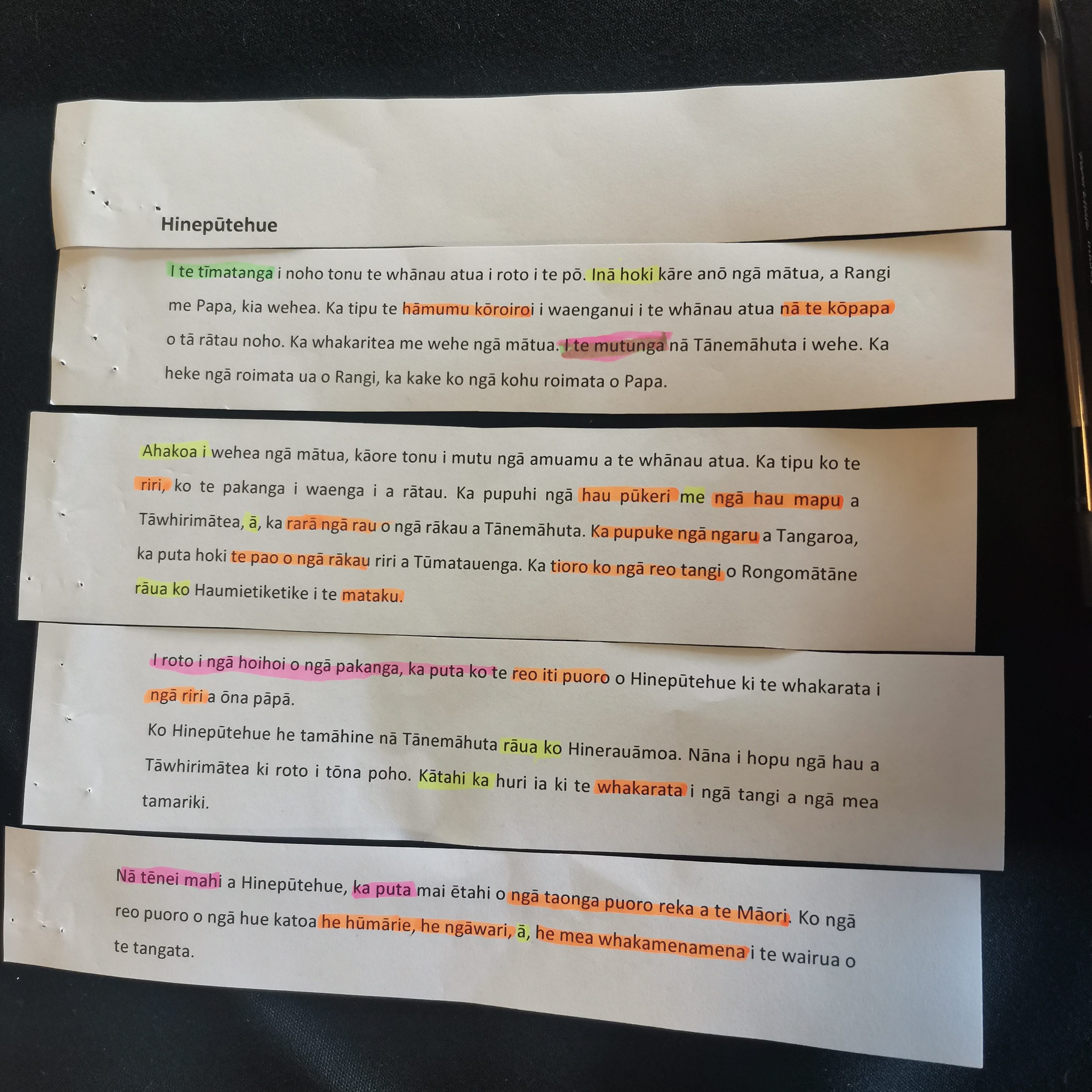
I te tīmatanga i noho tonu te whānau atua i roto i te pō. Inā hoki kāre anō ngā mātua, a Rangi rāua ko Papa, kia wehea. Ka tipu te hāmumu kōroiroi i waenganui i te whānau atua nā te kōpapa o tā rātau noho. Ka whakaritea me wehe ngā mātua. I te mutunga nā Tāne Mahuta i wehe. Ka heke ngā roimata ua ō Rangi, ka kake ko ngā kohu roimata ō Papa.
Ahakoa i wehea ngā mātua, kāore tonu i mutu ngā amuamu a te whānau atua. Ka tipu ko te riri, ko te pakanga i waenga i a rātau. Ka pupuhi ngā hau pūkeri me ngā hau mapu a Tāwhirimātea, ka rarā ngā rau o ngā rākau a Tāne Mahuta, ka pupuke ngā ngaru a Tangaroa, ka puta te pao o ngā rākau riri a Tūmatauenga, ka tioro ko ngā reo tangi o Rongomatāne rāua ko Haumietiketike i te mataku.
I roto i ngā hoihoi o ngā pakanga, ka puta ko te reo iti pūoro o Hinepūtehue ki te whakarata i ngā riri a ōna pāpā.
Ko Hinepūtehue he tamāhine nā Tānemāhuta rāua ko Hinerauamoa. Nāna i hopu ngā hau a Tāwhirimātea ki roto i tōna poho. Kātahi ka huri ia ki te whakarata i ngā tangi a ngā mea tamariki.
Nā tēnei mahi a Hinepūtehue, ka puta mai ētahi o ngā taonga reo pūoro reka a te Māori. Ko ngā reo pūoro o ngā hue katoa he hūmārie, he ngāwari, ā, he mea whakamenamena i te wairua o te tangata.
Source: He Manu Tuhituhi, He Tuhinga Pūrākau Whakamārama
Rauhina and Pēti put us into pairs for our first ngohe.
Ngohe 1: Whakamahere Kupu
Mahi Takirua – Paired Activity
Tukanga | Process
Write as many kupu for each of the following:
- Tohu i te wā
- Reo whakamārama/ reo take me te pānga
- Tūhono
- Whakaahua
Below is the collaborative brainstorm my partner and I did.

Ngohe 2: Mahi Whakarongo
Mahi Takitahi – Individual Activity
Tukanga | Process
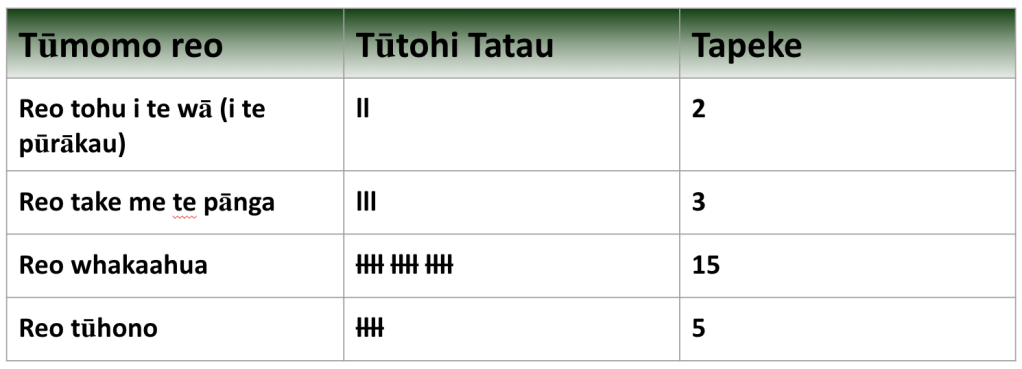
Listen for kupu for each of the following from the pūrākau about Hinepūtehue while keeping a tally:
- Reo tohu i te wā
- Reo whakamārama/ reo take me te pānga
- Reo tūhono
- Reo whakaahua
Below is an example of how ākonga can record what they hear.
TĪWHIRI: Make sure you name the strategy you use so that when you use it again, you don’t have to explain it, ākonga already know how it is run.
Ngohe 3: Kimihia tō hoa
E hiahiatia ana | You will need
- Copies of cards of pairs of items.
- Enough pairs so that each student has one of each pair. If there is an odd number, the kaiako will need to participate.
- If there are more ākonga than pairs – develop extra pair cards, or have two sets of cards.
Tukanga | Process
- Half of the class is given a card with one of the items from each pair. The other half will receive the other item, e.g., tote – pepa.
- Ākonga talk to each other, giving clues, asking questions, or describing what is on their card in order to find the partner to their card.
- If their kōrero doesn’t match, they simply say, E kāo; Ehara au i tō hoa.
- If they find their partner, they sit together.
- When everyone has found their partner, each pair reads out their items.
Ngā ture | Rules
- Ākonga must not show their card to another student. This is an oral activity involving listening and speaking (reading).
- Ākonga should not tell each other who has their matching card — they must find their partner themselves.
Tauira Rauemi | Example Resource (see below)
| Hatupatu | Kurangaituku |
| Hinepūkohurangi | Te Maunga |
| Te Rā | Māui |

Ngohe 4: Kei roto i te kāpata o tōku kuia ko…
This kēmu is used to activate the auditory memory (maumahara ā-rongo) of your ākonga. The hope is that the list gets longer after a period of using this ngohe.
Tukanga | Process
This is a kupu game that follows 5 steps:
- Listen
- Remember
- Process (strategies ākonga use to process the information)
- Recall
- Reproduce (in some form)
Example – Hei Tauira
Kei roto i te kāpata o Kuia ko…
Tētahi Taniwha,
Me tētahi Kamuputu
Me tētahi rākau,
Me tētahi kererū
Me ētahi whetū
Me tētahi whakakai
TĪWHIRI: Do this ngohe after morning tea or lunch to settle the students to get them ready to learn. Do this ngohe everyday.
Ngohe 5: Whakaraupapahia te Tuhinga kua Tapahia – Oral Strip Story
Mahi Takirōpū- Group Activity
There are TWO different ways to use this ngohe:
- To find meaning (in complete sentences/paragraphs)
- To teach grammar (not complete sentences/paragraphs)
He mahi whakaraupapa tēnei ngohe i tētahi tuhinga kōrero. Mā te reo ā-waha e kawe ai tēnei ngohe.
Before undergoing this ngohe, practise the reo whakaraupapa – what words do we use in Māori to order things and people? For example, ko koe te tuatahi, ko au a muri atu i a koe, ko koe whai muri i au, etc.
Tukanga | Process
- This is a group task – size of the group should be the same as the number of strips in the text.
- Mix the strips and hand out randomly – one per ākonga.
- Ask ākonga and write on the whiteboard, any language they need to understand the text on their strip.
- From this point the kaiako keeps out of the discussion, other than to help any students who might be really confused by a word or the process.
- Each ākonga reads out their strip to the group (without showing it to their peers).
- Ākonga then discuss the text to sequence it together correctly.
- When the group is satisfied with the sequence, they each recite their sentence in the agreed order.
- If the sequence is wrong, simply indicate that it is incorrect (without saying where) and allow them to work it through again.
Hei āwhina i ngā ākonga | Support for Students
- Ākonga should read their strips aloud to get the gist of the text BEFORE starting to sequence the strips.
- Encourage ākonga to think about the types of words that can come next, for example if a strip ends with a word such as ka or te think about what type of words can come next.
- The first time ākonga read their strip it can be helpful to ‘read aloud’ the punctuation as well as the words in case there are clues in the punctuation, e.g., a full stop will be followed by someone who has a capital letter.
Te ture | Rule
Ākonga must not show their strip to anyone else.
TĪWHIRI: Make sure the story is pitched at the right level for your ākonga. Do not use a pūrākau that your ākonga do not know.
Below is the oral strips we had to put in the correct order using our pānui, whakarongo, and kōrero skill
Ngohe 6: Te Tuhonohono i te Kīanga – Mix and Match
He mahi pānui tēnei. The Main objective is to match the English text to their Māori equivalent.
E hiahiatia ana | You will need
- A selection of phrases from within a pūrākau, that have been cut and mixed up.
- The English translation of each phrase, or an equivalent example in te reo Māori.
- Cut up cards for phrases. Students then work in pairs to match the Māori and English correctly.
Tauira Tuhinga 1 | Example 1
Ahakoa i wehea ngā mātua, kāore tonu i mutu ngā amuamu a te whānau atua. Ka tipu ko te riri, ko te pakanga i waenga i a rātau. Ka pupuhi ngā hau pūkeri me ngā hau mapu a Tāwhirimātea, ā, ka rarā ngā rau o ngā rākau a Tānemāhuta. Ka pupuke ngā ngaru a Tangaroa, ka puta hoki te pao o ngā rākau riri a Tūmatauenga. Ka tioro ko ngā reo tangi o Rongomātāne rāua ko Haumietiketike i te mataku.
Nā tēnei mahi a Hinepūtehue, ka puta mai ētahi o ngā taonga pūoro reka a te Māori. Ko ngā reo pūoro o ngā hue katoa he hūmārie, he ngāwari, ā, he mea whakatau i te wairua o te tangata.
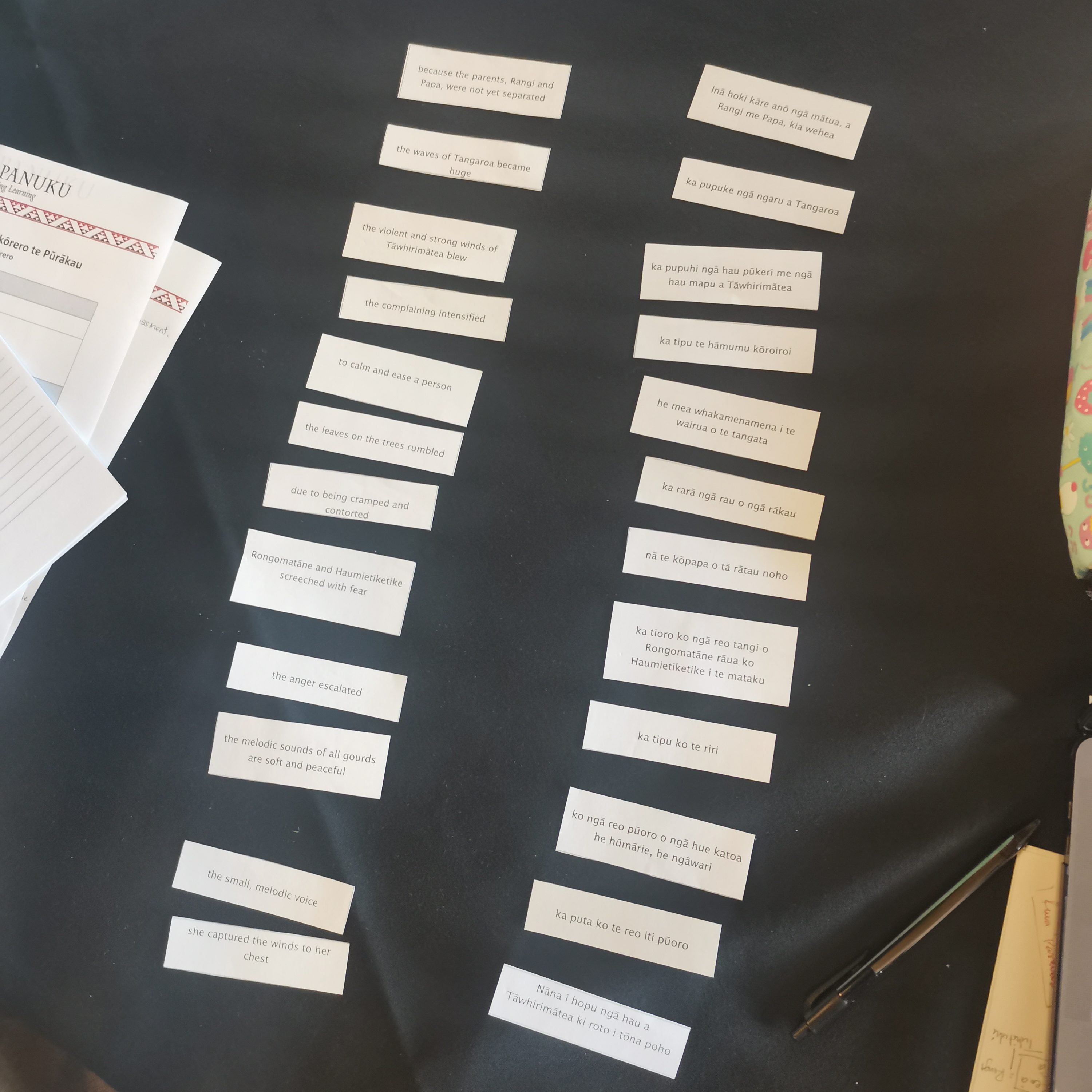
| Kīanga reo Māori i te pūrākau | Kīanga reo Pākehā i te pūrākau | |
| 1 | Ka tipu ko te riri | the anger grew |
| 2 | Ka pupuhi ngā hau pūkeri | the violent winds blew |
| 3 | ka rarā ngā rau o ngā rākau | the leaves of the trees rattled (& hummed) |
| 4 | ka puta hoki te pao o ngā rākau riri | and the weapons pounded |
| 5 | Ka tioro ko ngā reo tangi o Rongomātāne rāua ko Haumietiketike i te mataku | The cries of Rongomātāne and Haumietiketike shrieked with fear. |
| 6 | Nā tēnei mahi | As a result |
| 7 | ka puta mai ētahi o ngā taonga pūoro reka a te Māori | some of the beautiful instruments of the Māori were created |
| 8 | he mea whakatau i te wairua o te tangata. | a means to soothe the soul of a person. |
Below are the kīanga we had to match up.
Ngohe 7: Pao! Pao!
Use this strategy to learn the words to anything you want them to learn, i.e., karakia, waiata.
Tukanga | Process:
Ākonga reiterate the words of a song/prayer without the tune.
Ngohe 8: Waihangahia te Pūrākau
- He aha ngā wāhanga o te pūrākau? What are the parts of a pūrākau?
- He aha ngā tohu tuhituhi ka kitea i roto i te pūrākau? What are the written features identified in a pūrākau?
- He aha ngā āhuatanga reo o te pūrākau? (Tuhia ētahi tauira o ngā momo reo ki te papamā hai kōrerotanga).What are the types of language in pūrākau?
TE REO PŪRĀKAU | STORY-WRITING/-telling LANGUAGE
- Te reo whakaahua/ Descriptive language (kiripuaki, tūtohu whenua/ characters, landmarks)
- Te reo whakaraupapa/ Sequencing (kia pai te rere o te kōrero/ to ensure the story flows)
- Te nuka reo/ Literary devices (ngā whakarākeitanga/ embellishments, Māori phraseology, kīwaha, whakataukī, etc.)
- Te tohu tuhituhi/ Features of written language (ngā kārawarawatanga/ punctuation, paragraphs, grammar)
E hiahiatia ana | You will need
- A selected pūrākau (one that is being studied, or known)
- A series of pictures that relate to the pūrākau
- Examples of phrases and language noticeable in pūrākau
HEi Mahi:
- Use the pictures below to create the pūrākau
- Remember to use the relevant language structures used to write pūrākau.
- Look at the picture then write your kōrero in the box provided (the first one has been done for you).
TĪWHIRI: Expose ākonga to text in order for them to write their own text.
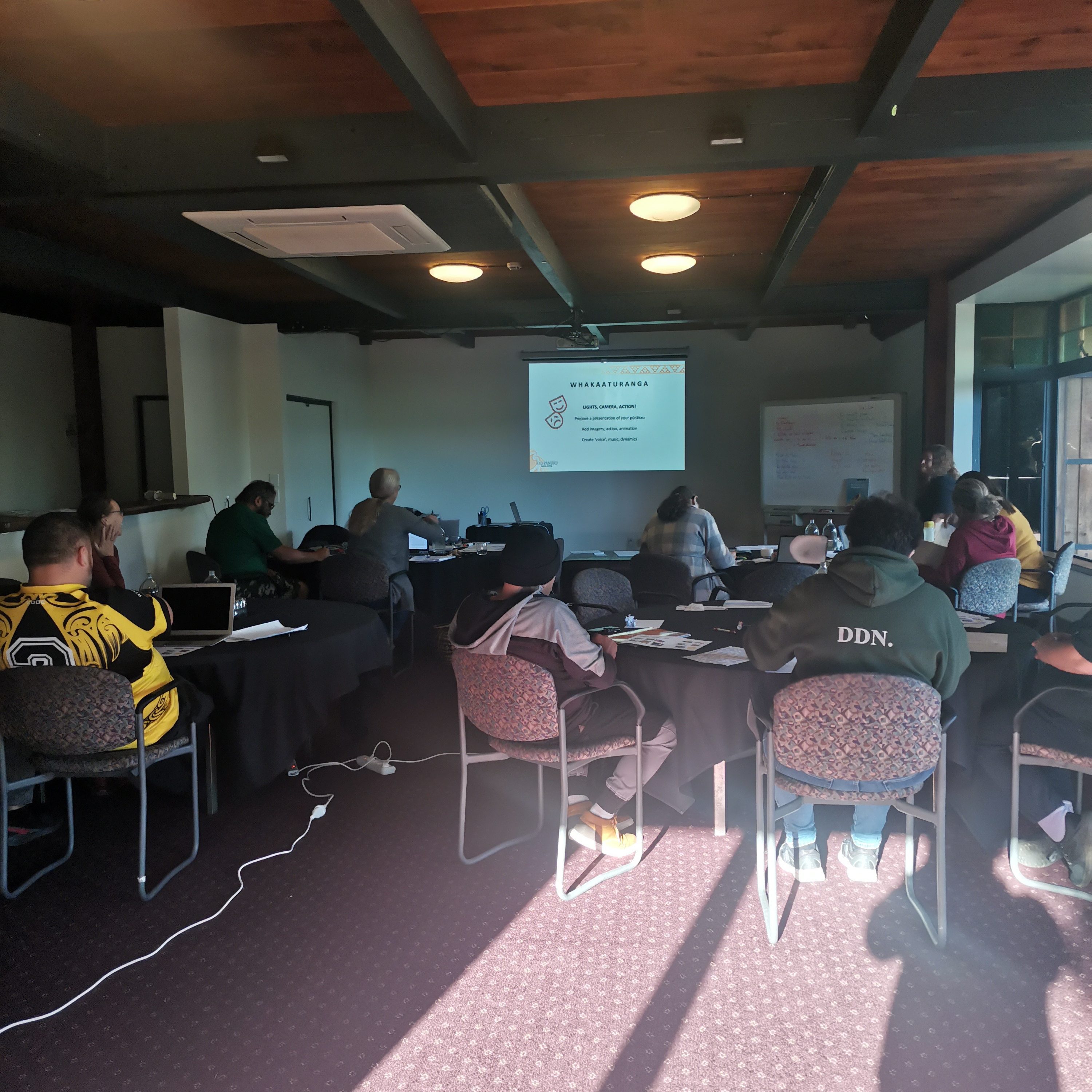
Lights, camera, action!
Mahi Takirua – Paired Activity
Rauhina and Pēti put us into pairs and then allocated each pair a popular Māori pūrākau to write about in te reo Māori. I riro i a māua ko taku hoa te pūrākau mō te wehenga a Ranginui rāua ko Papatūanuku te tuhi. my friend and I were given the story about the separation of Ranginui and Papatūānuku to write about. Once completed, one of us had to narrate the pūrakau, while the other had to act out the pūrākau.
Below is the story we wrote:
He Pūrākau mō te Wehenga a Ranginui rāua ko Papatūānuku
I te wā o Rangi rāua ko Papa, ka rongo i ngā amuamu me te hōhātanga a ngā tamariki. Nā te aha? Nā te pouri kerekere, nā te takeo, nā te kōpa hoki o tā rātou noho ki waenganui i ō rātou mātua. Kāore e taea te paku aha. Nā tēnā ka whakatau rātou kia wehe ia a Rangi rāua ko Papa. Ka kowhiringia ko Tāne-te-Waiora, ko Tāne-whakapiripiri, ko Tāne-te-wānanga, otirā ko Tāne Mahuta tēna mahi te whakatutuki. Ko tōna tuara ki te uma o tōna whaea, ko ōna waewae ki te poho o tōna matua. Nā whai anō, ka wehe a Rangi rāua ko Papa. Heoi, kīhai ētahi i whakaae ki te wehenga a ngā mātua, nōreira ka tipu te riri o te whānau atua. Mea rawa ake ka pakaru te pakanga ki waenga i ngā tukana me ngā teina.
Ētahi Whakaaro Huritao | Some Reflections
These activities would work within a traditional teaching context which follows the PPP (Presentation, Practise, Production) model. This is also a great way to scaffold pūrākau writing. My only wondering is whether it would work in a English-medium setting where ākonga have little to no knowledge of te reo and pūrākau Māori. I feel like i would need to strip it right back to just teaching my ākonga about the pūrākau and then introducing sentence types such as rereāhua, rerewhakaahua, reremahi, rerewāhi, rerewā, etc. However, these ngohe would work with my more fluent ākonga.
 Te Kōpaki a Ruiha Epiha